How to Use This Calendar
Gardening success hinges on timing. Plants respond to soil temperature, day length, and moisture - not the calendar date - so tasks listed here are tied to seasonal conditions rather than fixed months. Because the U.S. spans multiple climate zones, a task that happens in March in Georgia may not apply until May in Minnesota. Before diving in, learn how USDA hardiness zones work and how to apply that data to your specific yard.
If you're just getting started, our beginner's guide to setting up a home garden covers site selection, soil basics, and first plantings before you dig in here.
| USDA Hardiness Zones in U.S. | Zones 1-13 (1 = coldest, 13 = warmest) (USDA Agricultural Research Service) |
| Last frost date importance | Defines safe transplant window for warm-season crops |
| Soil workability test | Squeeze a handful - it should crumble, not clump |
| Typical indoor seed-start lead time | 6-8 weeks before last frost (tomatoes, peppers) |
| Recommended mulch depth for beds | 2-3 inches of organic material |
| Average weekly water need (established plants) | 1-1.5 inches per week |
| Best window for spring bulb planting | Fall, before ground freezes solid |
| Mild-climate cool-season gardening zones | Zones 7-10 (winter crops viable) (USDA Plant Hardiness Zone Map) |
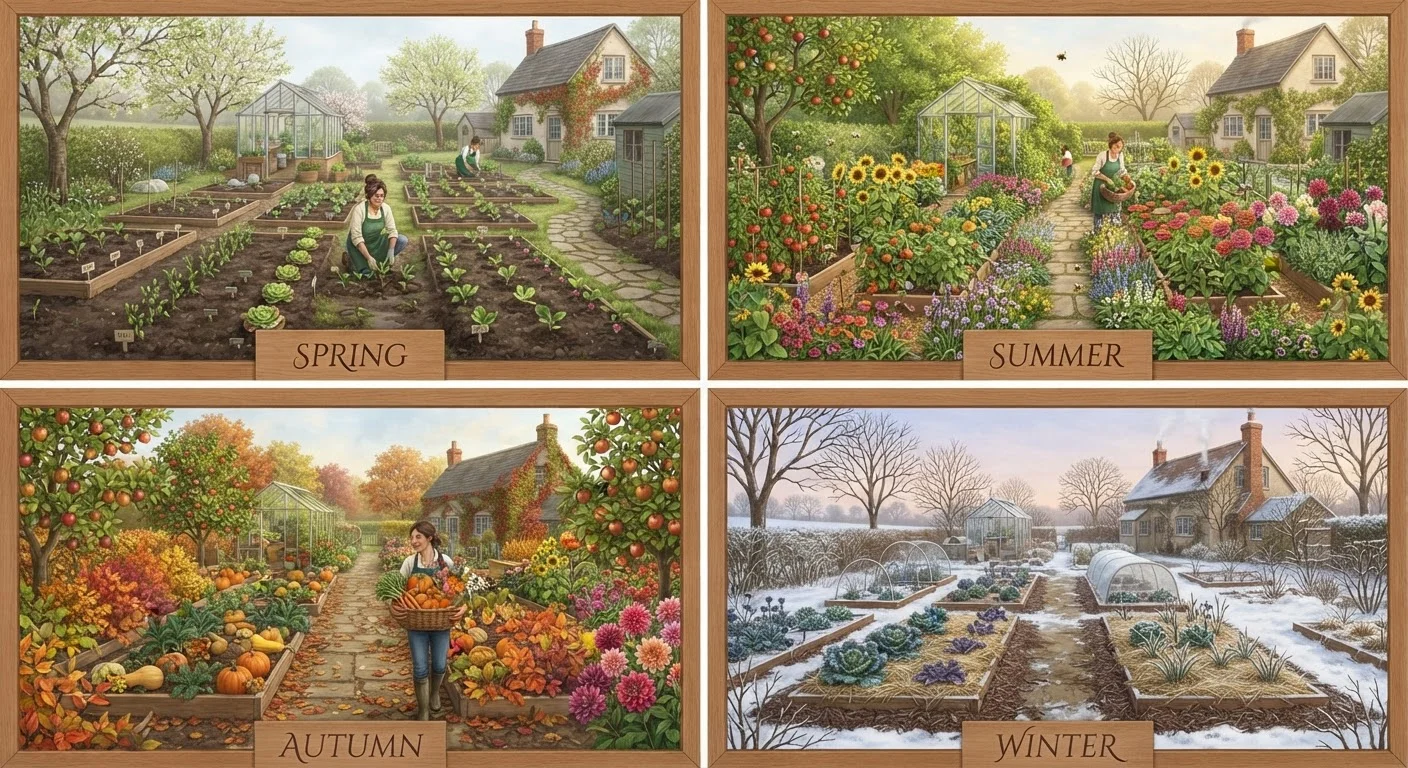
Spring: Wake the Garden Up
Spring is about preparation as much as planting. Resist the urge to work soil while it's still waterlogged - squeezing a handful should crumble, not clump. Key spring tasks include:
- Test and amend soil. A basic soil test (available through many cooperative extension offices) reveals pH and nutrient gaps. Add compost or lime as indicated before planting.
- Clean up winter debris. Remove dead stems, fallen leaves, and any mulch that has matted over emerging perennials.
- Start seeds indoors. Tomatoes, peppers, and eggplants typically need 6-8 weeks of indoor growth before transplanting after the last frost date in your zone.
- Prune dormant woody plants. Late winter through early spring - before new growth flushes - is the right window for most deciduous shrubs and fruit trees.
- Direct sow cool-season crops. Peas, lettuce, spinach, and radishes can go in the ground as soon as soil is workable, even if light frosts remain likely.
Deciding between annuals and perennials this season will shape how much replanting you'll do next year.
Summer: Maintain and Monitor
Summer shifts the gardener's job from planting to sustaining. Heat and drought stress are the primary threats in most regions. Focus on:
- Water deeply and infrequently. Most established plants benefit from 1-1.5 inches of water per week, delivered at the root zone. Early morning watering reduces evaporation and fungal risk.
- Mulch garden beds. A 2-3 inch layer of organic mulch moderates soil temperature, retains moisture, and suppresses weeds.
- Deadhead flowering plants. Removing spent blooms on annuals encourages continued flowering through the season.
- Scout for pests and disease. Early identification gives you the most management options. Inspect leaf undersides and stems weekly.
- Succession plant warm-season crops. Sow a second round of beans or summer squash 3-4 weeks after the first to extend harvest.
Incorporating native plants adapted to your region can significantly reduce summer watering and pest pressure compared to non-native ornamentals.
Fall: Protect, Divide, and Prepare
Fall is arguably the most productive season for soil and plant health work. Cooler temperatures make outdoor tasks more manageable, and the garden has time to settle before hard freezes.
- Plant spring-blooming bulbs. Tulips, daffodils, and alliums go in the ground in fall for spring display. Aim to plant before the ground freezes solid.
- Divide overcrowded perennials. Dividing clumps of hostas, daylilies, and ornamental grasses rejuvenates plants and creates free starts for other areas.
- Build or refresh compost. Shredded fall leaves are an excellent carbon source. Layer with nitrogen-rich kitchen scraps or fresh grass clippings.
- Apply a layer of mulch before first frost. Mulching beds after the ground cools (but before it freezes) insulates root zones through winter without encouraging mold beneath warm mulch.
- Bring in tender plants. Tropicals and frost-sensitive container plants need to come inside before temperatures consistently drop below 50°F.
For a comprehensive checklist of fall garden tasks timed around your first frost date, see Fall Garden Prep: What Needs to Happen Before the First Frost.
Winter: Plan, Rest, and Maintain Tools
In most U.S. regions, winter is the garden's rest period - and the gardener's planning season. Even in mild climates (USDA Zones 8-10), winter is the time for cool-season vegetables and structural maintenance.
- Review what worked. Keep a simple garden journal noting what thrived, what failed, and any pest or disease patterns to address next season.
- Order seeds early. Popular varieties from seed catalogs often sell out by late winter. Ordering in January or February secures the best selection.
- Clean and sharpen tools. Remove rust with steel wool, sharpen blade edges, and oil wooden handles to extend tool life.
- Prune dormant trees (where applicable). Late winter - when dormancy is deep but spring is approaching - is the recommended window for most fruit trees.
- In mild zones, plant cool-season crops. Kale, chard, garlic, and overwintering onions thrive in Zone 7 and warmer climates during winter months.
Winter is also the right time to coordinate outdoor upkeep with broader home maintenance. The seasonal home maintenance checklist covers the structural tasks - like winterizing pipes - that complement garden winterizing work.