
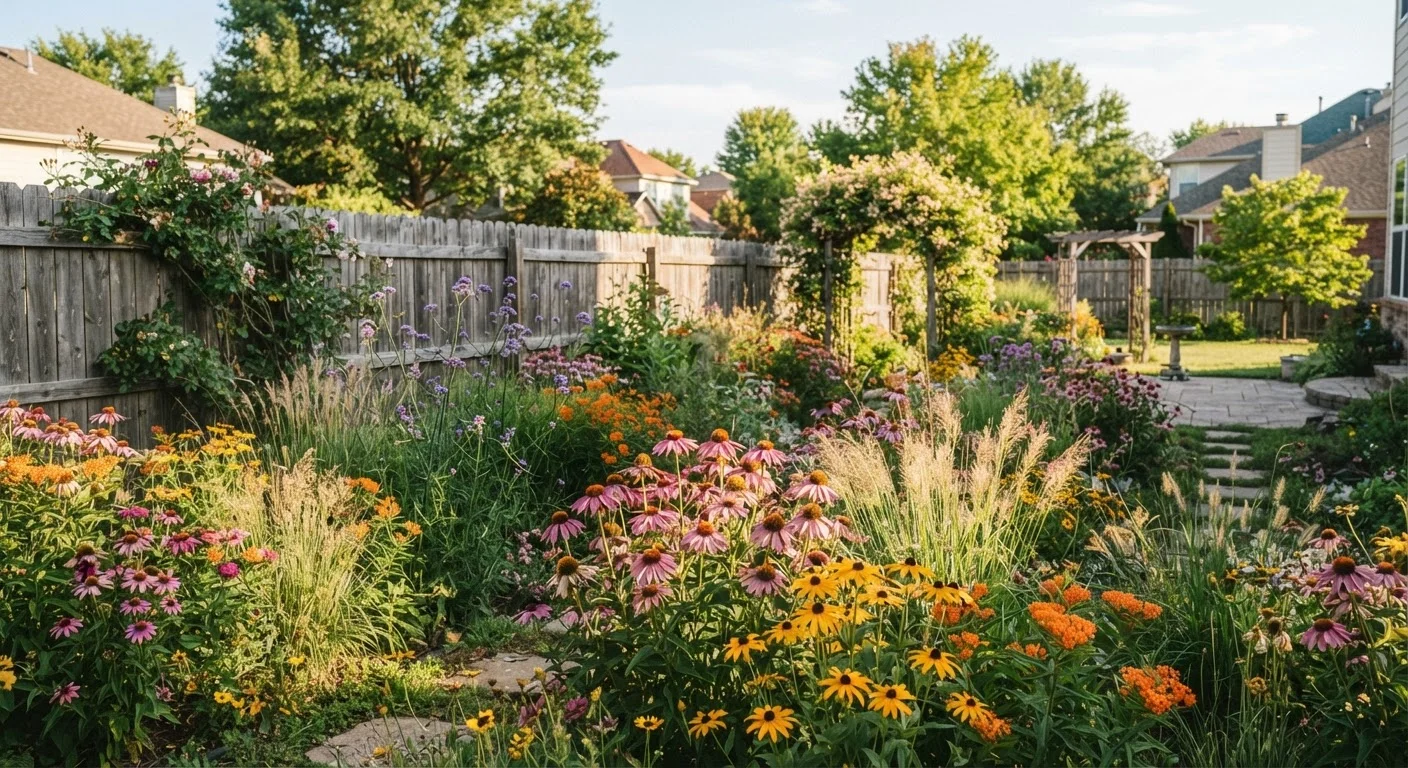
Why Native Plants Belong in Your Yard
Choosing native plants is one of the most practical decisions a home gardener can make. Plants that evolved in your region are already calibrated to local rainfall patterns, soil conditions, and seasonal temperature swings - which means less intervention from you once they're established. They don't need imported soil amendments to survive, and many are naturally resistant to the pests and diseases most common in their area.
Beyond maintenance savings, natives offer something non-native ornamentals often can't: ecological function. Native bees, butterflies, and birds depend on specific plant species for food and shelter. A garden anchored by native plants can quietly become a habitat patch, even in a suburban lot.
If you're newer to gardening, it helps to first understand your regional climate and hardiness zone. Our guide on hardiness zones and plant survival explains how to read zone data so you choose plants that can genuinely overwinter in your area. And if you're building a garden from the ground up, starting a garden from scratch walks you through site selection and soil basics before your first plant goes in the ground.
Plan for an Establishment Period
Most native perennials take one to two full growing seasons to develop the root systems they need to show their full drought tolerance and vigor. During this period, water consistently and hold off on judging performance. The phrase 'sleep, creep, leap' describes the typical pattern: slow in year one, modest in year two, thriving by year three.
Notable Native Plants Worth Growing
Purple Coneflower (Echinacea purpurea)
One of the most recognized native wildflowers in North America, purple coneflower thrives across a wide band of the central and eastern United States. It tolerates clay soils, handles summer drought reasonably well once established, and produces bold magenta blooms from midsummer into early fall.
Its seed heads are a reliable food source for goldfinches and other small birds through winter, making it a plant that works year-round even after flowering ends. It performs well in full sun and pairs naturally with native grasses for a prairie-inspired border.
Purple coneflower feeds pollinators in summer and seed-eating birds through the winter months.
Black-Eyed Susan (Rudbeckia hirta)
Cheerful, tough, and broadly adaptable, black-eyed Susan is native to most of the continental U.S. and thrives in a variety of soil types - including lean, disturbed soils where other plants struggle. It blooms prolifically in full sun during summer and attracts native bees and butterflies consistently.
Because it can behave as either an annual or short-lived perennial depending on climate, it often self-seeds generously. This makes it an excellent choice for naturalizing an area or filling gaps between slower-establishing perennials.
Black-eyed Susan self-seeds freely, filling garden gaps without any effort from the gardener.
Eastern Columbine (Aquilegia canadensis)
Eastern columbine is a graceful woodland native that bridges the gap between spring bulbs and summer perennials. Its distinctive red-and-yellow nodding flowers are one of the first spring nectar sources for hummingbirds and long-tongued native bees. It grows naturally in rocky, thin soils and tolerates partial shade, making it useful in spots that challenge most other flowering plants.
It self-seeds moderately and typically fades back in summer heat, leaving space for later-blooming companions to take over visually.
Eastern columbine is one of the first spring flowers to attract hummingbirds to a home garden.
Common Milkweed (Asclepias syriaca)
Milkweed is the only plant group on which monarch butterflies can complete their life cycle, making it ecologically indispensable. Common milkweed is native to the eastern half of the U.S. and produces fragrant pink flower clusters in early to midsummer. It spreads via both rhizomes and wind-distributed seeds, so it's best placed where it has room to naturalize.
For smaller spaces or tighter garden beds, swamp milkweed (Asclepias incarnata) or butterfly weed (Asclepias tuberosa) offer similar monarch support with a less aggressive growth habit.
Milkweed is the only plant on which monarch butterflies can complete their reproductive cycle.
Little Bluestem (Schizachyrium scoparium)
Little bluestem is a native warm-season grass found across prairies and open woodlands from the East Coast through the Great Plains. It's valued as much for its fall and winter appearance - turning a rich copper and burgundy as temperatures drop - as for its summer form. It grows in tight, upright clumps and holds its structure through snow, providing winter interest long after most perennials have died back.
It thrives in dry, poor soils and full sun, and requires virtually no supplemental watering once established, making it one of the most low-maintenance natives available.
Little bluestem turns vivid copper-red in fall and holds its structure well into winter.
Wild Bergamot (Monarda fistulosa)
Wild bergamot is a native mint-family perennial widespread across the eastern and central U.S. It produces lavender-pink flower heads that are magnets for bumblebees, hawk moths, and numerous butterfly species throughout summer. Its aromatic foliage is deer-resistant, an advantage in suburban and rural gardens alike.
It spreads steadily by rhizomes and can be divided every few years to prevent clumping. Wild bergamot performs best in average to dry soils with good air circulation - crowded, moist conditions can invite powdery mildew.
Wild bergamot's aromatic foliage is naturally deer-resistant while its flowers attract bumblebees all summer.
Douglas Fir (Pseudotsuga menziesii)
For gardeners in the Pacific Northwest and mountainous West, Douglas fir is a towering native conifer that anchors larger properties and provides year-round structure. It's not a plant for small urban lots, but for those with space, it offers dense wildlife habitat - nesting cavities, protective cover, and cone crops that feed squirrels and crossbills.
Young Douglas firs establish well from nursery stock and grow relatively quickly compared to other native conifers. They require minimal care once past the first few years and are highly adapted to the mild, wet winters of the Pacific Coast.
Douglas fir provides year-round wildlife habitat and needs very little care once fully established.
Building a Landscape Around Native Plants
A successful native plant garden rarely happens plant by plant - it works best when species are grouped by shared conditions. Pairing moisture-loving natives like swamp milkweed near low-lying areas and drought-tolerant species like black-eyed Susan on drier slopes helps each plant perform without extra intervention. For in-depth water-wise strategies, see our overview of drought-tolerant landscaping principles.
Native plants can also work well alongside carefully selected non-native species. Understanding the difference between plants that return each year on their own versus those that need replanting is covered in our guide on annuals vs. perennials. Many native perennials self-seed reliably, filling in gaps naturally over time. For those interested in how plant neighbors affect each other, companion planting strategies can help you plan combinations that support healthy growth across your whole garden.