What Defines an Annual vs. a Perennial
The distinction is rooted in plant biology. Annuals germinate, grow, flower, set seed, and die all within a single growing season. The plant is gone when frost arrives - but often leaves seeds behind. Common examples include zinnias, marigolds, petunias, and impatiens. Perennials, by contrast, die back to the ground in winter (in most climates) but regrow from their root system the following spring. Coneflowers, black-eyed Susans, hostas, and daylilies are familiar examples.
There's also a middle category worth knowing: biennials complete their cycle over two years, and some plants sold as annuals in cold climates are actually tender perennials that survive year-round only in frost-free zones. If you're starting a garden from scratch, understanding these categories helps you set realistic expectations before you plant.
Cost, Effort, and Long-Term Value
Annuals are typically less expensive per plant at purchase, but that cost recurs every single year. A gardener who fills three beds with annuals each spring may spend considerably more over five years than one who planted perennials once and let them spread. That said, perennials often cost more upfront and may take two to three seasons to reach their mature size and full flowering potential - a reality that frustrates gardeners expecting immediate results.
Labor is another variable. Annuals require seasonal replanting, which is straightforward but repetitive. Perennials ask for different work: dividing clumps every few years, cutting back dead foliage in fall or spring, and mulching to protect roots through winter. Neither approach is effort-free - the work is just distributed differently. For a season-by-season breakdown of these tasks, the American Gardening Calendar offers useful regional timing guidance.
| Criterion | Annual Plants | Perennial Plants |
|---|---|---|
| Life cycle | One growing season | Returns year after year |
| Upfront cost | Lower per plant | Higher per plant |
| Long-term cost | Higher (annual replanting) | Lower once established |
| Bloom duration | Continuous through season | Defined window, varies by species |
| Time to maturity | Weeks after planting | 1-3 seasons to full size |
| Replanting effort | Required every year | Minimal after establishment |
| Design flexibility | High - change layout yearly | Lower - plants recur in place |
| Pollinator value | Moderate | High, especially native species |
Visual Impact and Garden Design
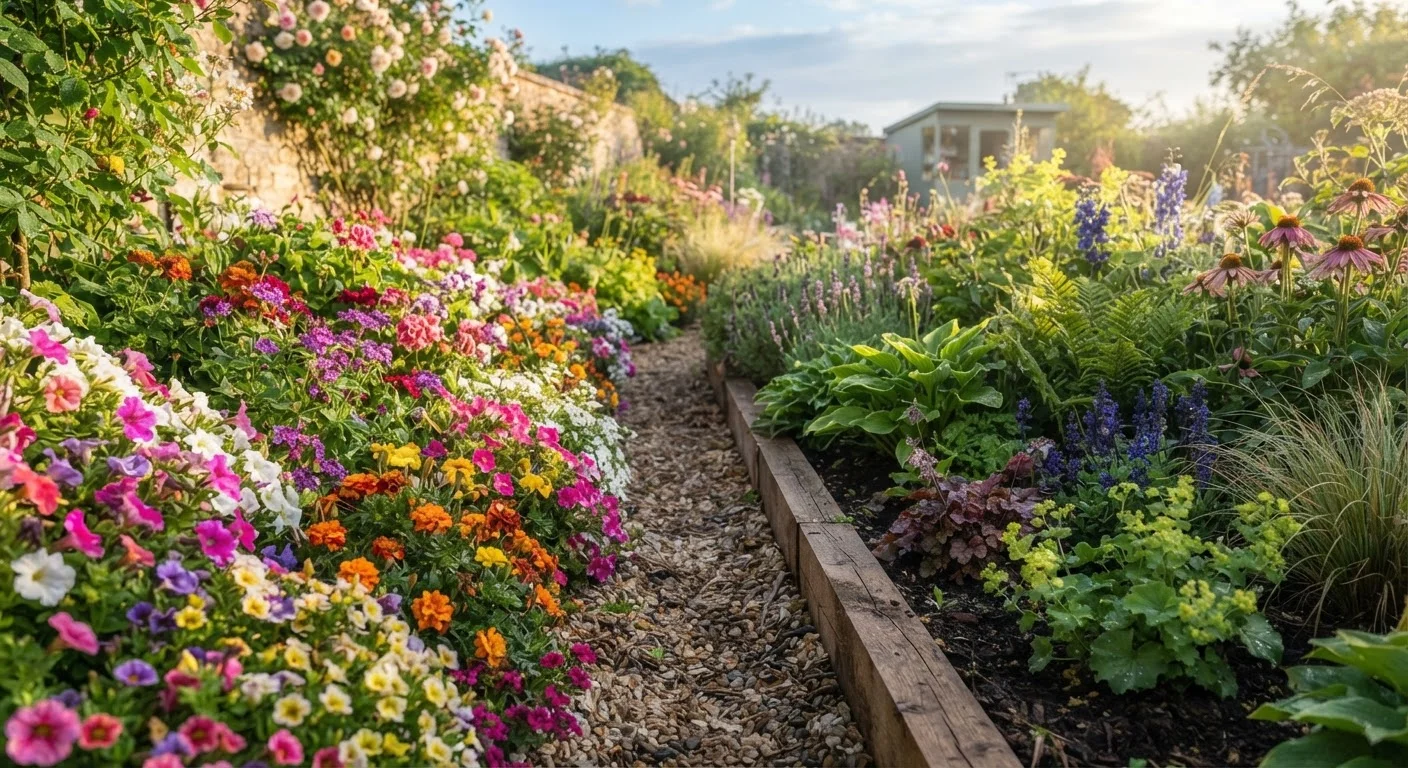
Annuals are hard to beat for sheer color saturation. Because their survival goal is producing as many seeds as possible, many bloom non-stop from planting through first frost. This makes them excellent for window boxes, containers, and spots where you want reliable visual impact. If you're exploring pots and patios, see our guide on container gardening for how annuals perform in confined spaces.
Perennials, by contrast, usually bloom for a defined window - some for two weeks, others for six to eight weeks - then return to foliage. The design challenge (and reward) is layering plants so something is always in bloom. When done well, a perennial border evolves beautifully across the season and deepens each year as plants mature. Many gardeners integrate annuals to fill the gaps between perennial bloom times, getting the best of both approaches.
Perennials also tend to be better candidates for supporting local ecosystems. Native perennials in particular develop deep root systems that stabilize soil and feed pollinators consistently. Our overview of native plants for American home gardens highlights species that marry low maintenance with ecological value.
How to Use Both Together Strategically
Most experienced gardeners don't choose sides - they plant both. A practical approach is to establish a perennial backbone in your beds first: plants that will anchor the space, return reliably, and grow more impressive each year. Then use annuals to add color in the gaps, experiment with new palettes, or fill in while young perennials are still establishing themselves.
Soil preparation benefits both categories equally. Well-amended, well-draining soil supports annuals through their fast-growth season and gives perennial roots the environment they need to overwinter successfully. If you're deciding how to configure those beds, the trade-offs explored in raised beds vs. in-ground planting apply directly to both plant types. And regardless of what you grow, feeding your plants thoughtfully matters - our guide to organic vs. synthetic fertilizers can help you choose an approach that suits your soil and goals.
The right balance depends on your budget, how much time you want to spend planting each spring, and what kind of visual experience you're after. Neither annuals nor perennials are universally superior - they're tools, and the best gardens use both with intention.