The Two Systems Every Home Has
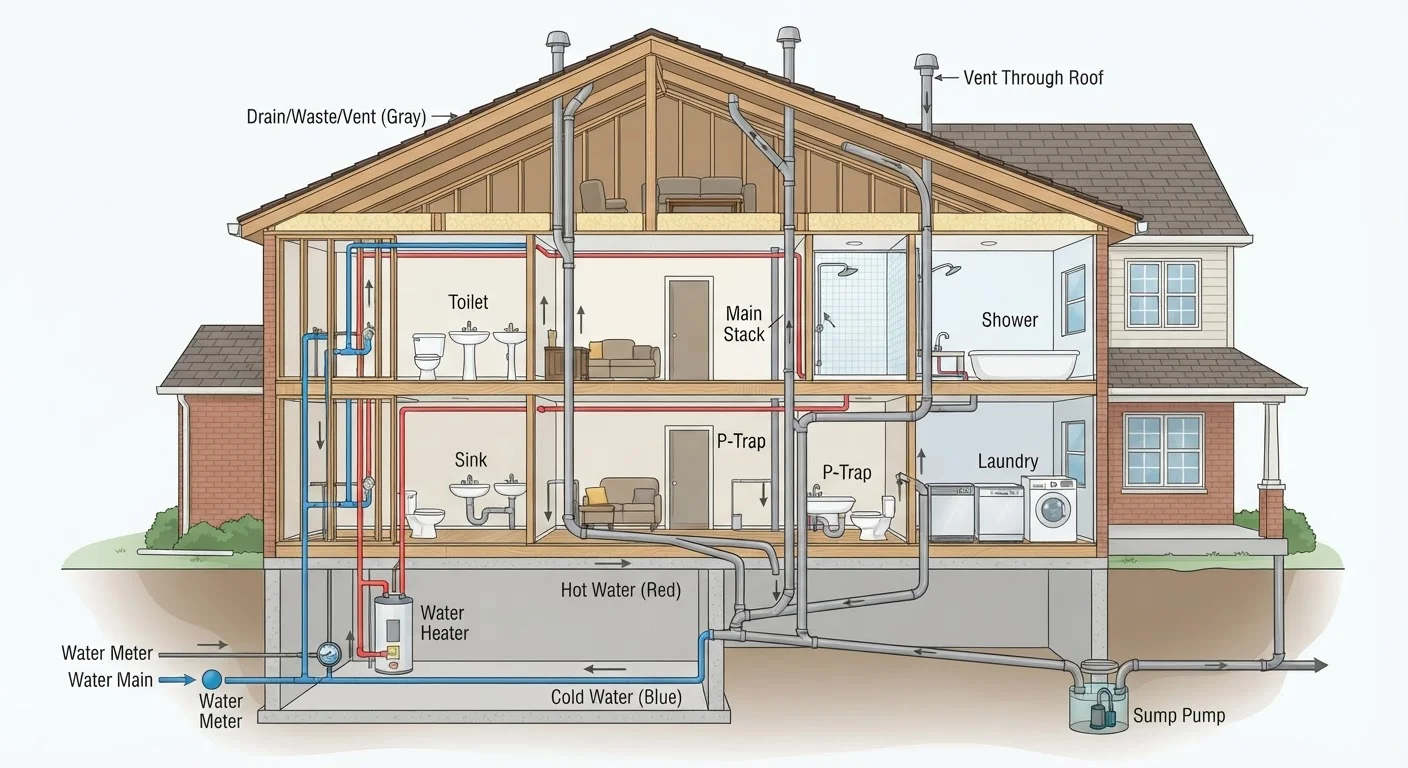
No matter how old or new your home is, its plumbing is built around two distinct systems that work independently of each other. The first brings clean, pressurized water into your home and distributes it to every fixture. The second carries used water and waste out, relying on gravity and airflow rather than pressure.
Understanding that these two systems exist - and that they operate on completely different principles - is the foundation of plumbing literacy. Once that mental model clicks, everything else becomes easier to diagnose and manage. Think of it the same way you'd approach understanding any complex household system, much like learning what lives under the hood of a car (see our plain-English guide for first-time car owners for a similar orientation to automotive basics).
Supply line
A pressurized pipe that delivers fresh water from the municipal main or well into your home and to individual fixtures.
Drain-waste-vent (DWV)
The gravity-fed network of pipes that carries used water and waste out of your home, with vent pipes allowing air in to keep flow smooth.
Trap
A U-shaped curve of pipe beneath every drain that holds a small amount of water, creating a seal that blocks sewer gases from entering the home.
Shut-off valve
A valve that stops water flow either to the entire house (main shut-off) or to a single fixture (stop valve), used for repairs or emergencies.
Water pressure (psi)
The force pushing water through your supply pipes, measured in pounds per square inch; most homes operate between 40 and 80 psi.
Vent pipe
A pipe that runs from the drain system up through the roof, allowing air to enter so water can flow freely without creating a vacuum.
Supply Lines: Getting Water In
Water enters your home through a single main supply line connected to either a municipal water main or a private well. From there, it splits into two branches: one cold-water line that runs directly to fixtures, and one that feeds your water heater to produce hot water. Both branches then travel through the walls and floors of your home to every sink, toilet, shower, and appliance that needs water.
Supply pipes in American homes are commonly made from copper, PEX, or CPVC. Each material has different installation requirements, but all supply pipes share one characteristic: they are under constant pressure, even when no fixture is running. This is why even a small supply line failure can release a significant volume of water quickly.
Water pressure in most homes falls between 40 and 80 psi (pounds per square inch). If your pressure feels unusually high or low, a licensed plumber can install or adjust a pressure-reducing valve at the main line entry point.
Drain-Waste-Vent: Getting Water Out
The drain-waste-vent (DWV) system is gravity-fed. Every drain pipe in your home slopes slightly downward - typically about ¼ inch per foot - directing water and waste toward the main sewer line or septic tank. Larger-diameter pipes (typically 3 to 4 inches for main lines) handle the volume without clogging under normal use.
The "vent" portion of the system is what many first-timers overlook. Vent pipes extend upward through your roof, allowing air to enter the drain system behind flowing water. Without this airflow, water rushing through pipes would create a vacuum, pulling water out of the U-shaped trap seals beneath every drain. Those traps hold a small pool of water that blocks sewer gases from entering your home - which is why maintaining them matters.
The physics behind water pressure and flow in your plumbing system are the same principles at work throughout your home environment - our article on everyday physics principles offers an accessible look at how these forces work in daily life.
Shut-Off Valves: Your Emergency Controls
Knowing where your shut-off valves are - before an emergency - is one of the most practical things you can do as a new homeowner. There are two levels to understand:
- Main shut-off valve: Stops all water flow into the house. Usually located where the supply line enters the foundation, in the basement, crawl space, or utility room. In some regions, there is also a curb-side shut-off controlled by the utility company.
- Fixture shut-off valves (stop valves): Located on the supply lines directly beneath toilets and sinks, or behind washing machines. These let you isolate a single fixture without cutting water to the whole house.
Walk through your home today and locate each shut-off valve. Turn them gently to confirm they operate freely - valves that haven't been turned in years can seize up. If a valve is stuck, don't force it; a plumber can replace it during a routine visit.
Label Your Valves Now
After locating each shut-off valve, attach a small adhesive label or tie a tag indicating what it controls (e.g., "Kitchen sink," "Hall bath toilet," "Main"). This takes minutes and can save significant stress during a leak. Share the locations with everyone in your household.
Building this kind of working knowledge of your home's systems makes seasonal upkeep much more manageable. Our seasonal home maintenance checklist pairs well with this orientation as a practical next step.
What You Can DIY vs. When to Call a Pro
Many routine plumbing tasks are within reach of a careful, patient homeowner. A good rule of thumb: if the work involves a fixture (something you can see and reach), and it doesn't require cutting into supply lines or altering drain connections, it's often DIY territory.
Generally DIY-friendly:
- Replacing a toilet flapper or fill valve
- Cleaning or replacing a faucet aerator
- Swapping a showerhead
- Clearing a simple clog with a plunger or hand-cranked drain snake
- Replacing a toilet seat
Call a licensed plumber:
- Any work on the main supply or sewer line
- Water heater installation or gas line work (gas work requires a licensed professional and often a permit)
- Adding or relocating pipes inside walls
- Persistent leaks at pipe joints or behind walls
- Any job that requires a permit in your municipality
When in doubt, consult a licensed plumber for an evaluation. Many offer free or low-cost assessments, and catching a problem early is nearly always less expensive than addressing water damage after the fact. Building a relationship with a trustworthy plumber - before you urgently need one - is a smart move for any homeowner.