Choosing the Right Site
Location is the single decision that shapes everything else in your garden. Before you buy a single seed, spend a few days observing your yard. Most vegetables and flowering plants need a minimum of six uninterrupted hours of direct sun. Walk your property in the morning, midday, and late afternoon and note which areas stay bright and which fall into shade from trees, fences, or the house itself.
Access to water matters just as much. A spot that requires a 100-foot hose run or a steep slope to reach will quickly become a chore you skip. Choose a site close enough to a water source that watering stays convenient. Also consider drainage - low-lying areas that puddle after rain can suffocate roots and invite disease.
Mark Your Sun Patterns Before You Dig
Take photos of your yard at 8 a.m., noon, and 4 p.m. on a clear day and compare them side by side. This simple exercise makes sun and shade patterns obvious and takes only minutes. It can save you from planting in a spot that looks open but is actually shaded for much of the afternoon.
Understanding Your Soil
Soil is not just dirt - it's a living system that feeds your plants. Before amending anything, pick up an inexpensive soil test kit or send a sample to your local cooperative extension service. The results will tell you your soil's pH (the acidity-to-alkalinity scale, where 6.0-7.0 suits most vegetables) and whether you're short on major nutrients.
Heavy clay soil compacts easily and drains slowly. Sandy soil drains too fast and holds few nutrients. The goal for most gardens is loamy soil - a balanced mix that retains moisture while still draining well. Adding organic matter such as compost is the most reliable way to move toward that balance regardless of your starting point. For a rewarding long-term habit, consider composting kitchen and yard waste at home to supply a steady source of free soil amendment.
pH
A scale from 0 to 14 that measures how acidic or alkaline your soil is. Most vegetables grow best in a slightly acidic to neutral range of about 6.0 to 7.0.
Loamy soil
A balanced soil type that contains roughly equal parts sand, silt, and clay. It drains well, holds moisture, and is generally considered ideal for most garden plants.
USDA Hardiness Zone
A geographic classification system that tells gardeners the average minimum winter temperature in their area. It helps predict which plants can survive the winter locally.
Organic matter
Decomposed plant or animal material - such as compost or aged manure - added to soil to improve its structure, nutrient content, and water-holding capacity.
Direct-sow
Planting seeds directly into garden soil outdoors rather than starting them in containers indoors first. Some crops establish better this way and don't like being transplanted.
Mulch
A layer of material - such as wood chips, straw, or shredded leaves - spread over garden soil to retain moisture, regulate temperature, and limit weed growth.
Deciding What to Grow
New gardeners often overplant and then feel overwhelmed. A more productive approach is to start with two or three goals - perhaps some salad greens, a few tomatoes, and one herb - and expand once you've developed a feel for the rhythm of garden care.
Match every plant to your USDA Plant Hardiness Zone, which indicates the average minimum winter temperature in your area and guides which plants can realistically survive there. Seed packets and plant tags use this information to indicate suitability. Beyond hardiness, think about what you'll actually eat or use. A garden full of crops you don't enjoy is a garden you'll stop tending.
If you're weighing flowers alongside edibles, understanding the difference between annuals and perennials will help you balance short-term color with long-term structure.
Planning Your Garden Layout
A simple sketch on paper prevents a lot of wasted effort. Note the dimensions of your bed, mark which direction gets the most sun, and plan tall plants - like staked tomatoes or corn - at the north end so they don't shade shorter neighbors. Leave enough path between rows or beds that you can kneel, reach across, and turn with a wheelbarrow.
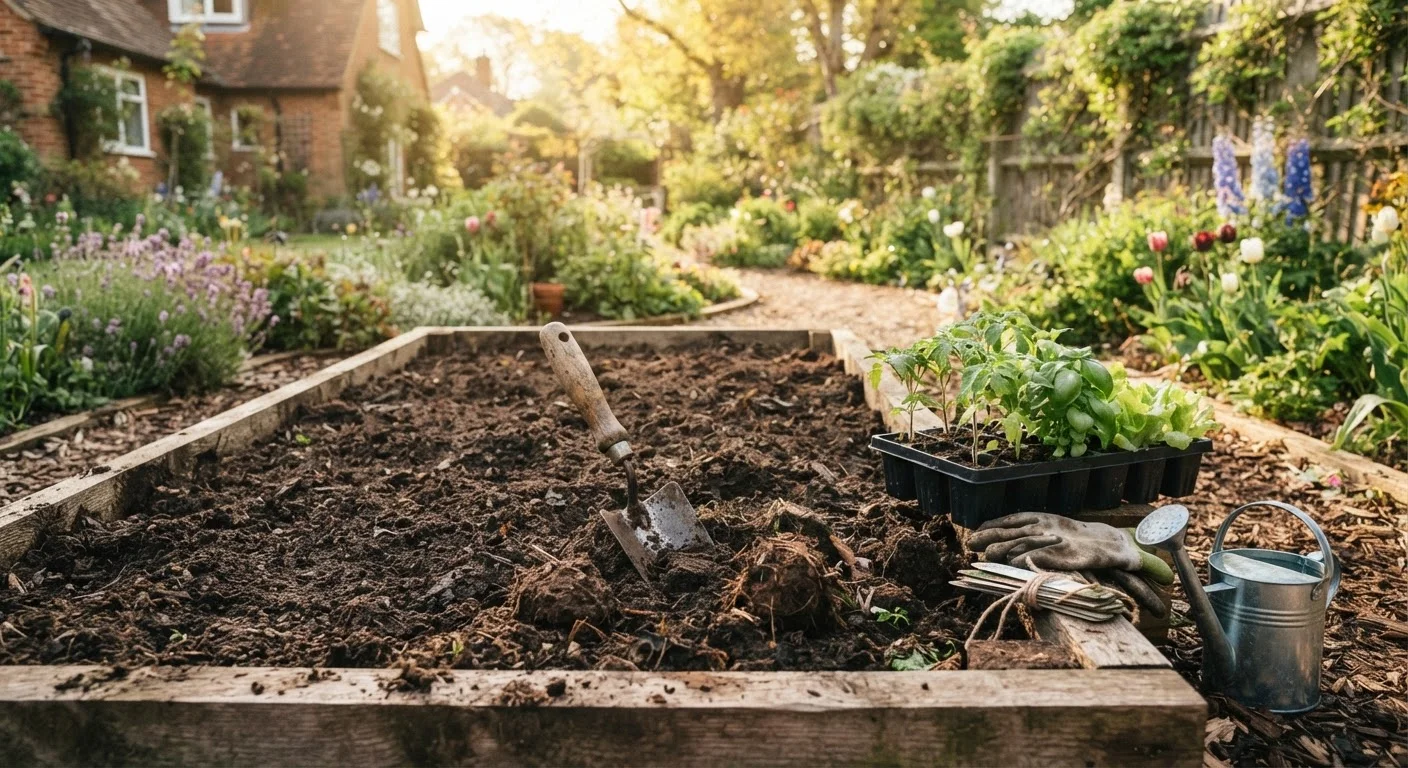
First-time gardeners should also decide early between raised beds and in-ground planting, since the choice affects soil prep, drainage management, and startup cost. Our guide to raised beds vs. in-ground planting lays out the practical trade-offs clearly. As your confidence grows, exploring companion planting strategies can help you use space more efficiently and naturally deter some pests.
Planting and Early Care
Timing is everything. Planting too early - before soil has warmed or frost risk has passed - sets seedlings back and often kills them outright. Check your area's average last frost date and count backward from there using the days-to-maturity figure on your seed packet. The American Gardening Calendar is a useful season-by-season reference for knowing when to start seeds indoors, transplant, and direct-sow by region.
Once plants are in the ground, the first two weeks are the most critical. Water consistently to help roots establish, and pull weeds early - they compete aggressively with young plants for nutrients and moisture. A two-inch layer of mulch applied around (not against) plant stems conserves moisture, moderates soil temperature, and suppresses weed germination.
Gardening rewards steady attention over heroic effort. A few minutes of observation each day - checking soil moisture, spotting early pest damage, removing yellowing leaves - keeps small problems from becoming large ones and builds the intuition that experienced gardeners rely on through every season.