What Container Gardening Actually Is
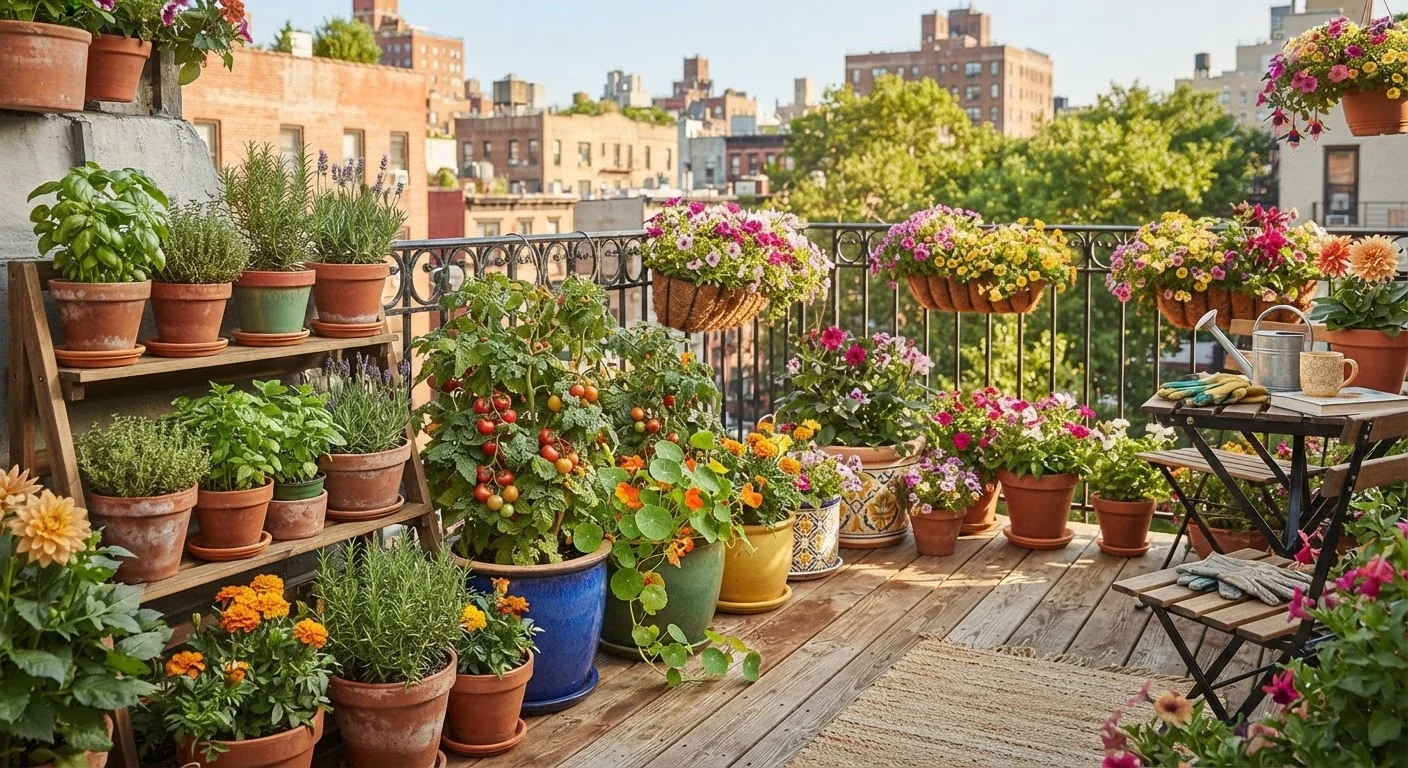
Container gardening means growing plants in portable vessels - pots, planters, window boxes, grow bags, or any suitable container - rather than directly in the ground. It's a practical solution for apartment dwellers, renters, and homeowners with patchy or compacted soil. If you're new to gardening altogether, the beginner's guide to starting a garden covers the broader fundamentals that apply here too.
Containers range from inexpensive plastic nursery pots to decorative ceramic planters, fabric grow bags, and repurposed crates. The vessel you choose directly affects drainage, root temperature, and how often you'll need to water - so it matters more than it might seem.
The Real Advantages of Growing in Pots
Container gardening solves problems that stop many people from gardening at all. No yard? A balcony or stoop works. Poor native soil? You fill the pot yourself. The benefits go beyond convenience.
Accessible on any surface, including concrete and balconies
Containers remove the need for in-ground soil entirely, making gardening viable on patios, rooftops, and hard-surface yards where traditional planting isn't possible.
Full control over soil quality from the start
You choose and blend the growing medium, so rocky, compacted, or contaminated native soil becomes irrelevant. This is especially useful in urban areas with poor or unknown soil history.
Plants can be moved to optimize light or protect from frost
Portability lets you respond to changing weather and seasons, extending growing periods and protecting tender plants without permanent infrastructure.
Fewer weeds and reduced soil-borne pest pressure
Fresh potting mix starts largely free of weed seeds, and containers naturally limit access for many soil-dwelling insects and slugs.
Easier to manage for people with limited mobility
Raised containers and window boxes reduce bending and kneeling, making gardening more physically accessible for a broader range of people.
Mobility is one underappreciated strength. You can move tender plants indoors before a frost, reposition sun-lovers as seasons shift, and rearrange your space without committing to a permanent layout. This flexibility is difficult to replicate in raised beds or in-ground gardens.
Pest and weed pressure is also meaningfully reduced. Containers filled with fresh potting mix start largely free of weed seeds and soil-borne pests. Slugs and ground-dwelling insects have fewer entry points, and many gardeners find container plots require less reactive intervention overall.
Where Containers Fall Short
The trade-offs are real and worth understanding before you invest time and money. The most fundamental limitation is volume: a finite amount of soil means finite water and nutrient reserves.
Frequent watering is non-negotiable
Containers dry out significantly faster than in-ground soil, often requiring daily watering during hot weather. Missed watering can stress or kill plants quickly.
Limited root space restricts plant size and yield
Small soil volume limits how large plants can grow and how much they can produce, making containers unsuitable for many full-sized vegetable crops.
Nutrients deplete rapidly and must be replenished
Every watering flushes nutrients from the pot, so container plants need regular fertilizing throughout the growing season - an ongoing time and cost commitment.
Containers can overheat in direct summer sun
Dark-colored or metal pots on reflective surfaces can reach temperatures that damage roots. Insulating materials or strategic placement help, but it's a real risk to manage.
Ongoing cost of potting mix and containers adds up
Quality potting mix needs replacing or refreshing annually, and containers themselves represent an upfront investment that can be significant at scale.
Large fruiting crops - indeterminate tomatoes, winter squash, sweet corn - are genuinely difficult to grow well in containers. Root restriction stunts growth, and yields often disappoint. For context on why container-grown vegetable gardens underperform, the article on common vegetable garden underperformance is worth reading alongside this one.
Soil, Water, and Feeding: The Maintenance Reality
Container plants live in an isolated environment. Unlike in-ground plants that can draw moisture from surrounding soil and benefit from soil organisms over a wide area, potted plants depend entirely on what you give them.
Potting Mix vs. Garden Soil: An Important Distinction
Standard garden soil is not suitable for containers - it compacts under the confined conditions of a pot, cutting off oxygen to roots and impeding drainage. Purpose-made potting mix uses peat moss, perlite, or bark components to stay loose and drain freely. Some mixes include slow-release fertilizer, which can reduce how often you need to feed during the first few weeks after planting.
A quality potting mix - not garden soil, which compacts poorly in pots - is the foundation. Amending containers with compost improves moisture retention and feeds soil biology over time. See the guide to home composting for how to produce your own amendment reliably.
Watering frequency increases significantly in summer. Small pots on sunny concrete can dry out within a day. Feeding is equally non-negotiable: nutrients leach out with every watering, so supplemental fertilizing - typically every two to four weeks during the growing season - is standard practice for productive container gardens.
Choosing What to Grow
Success in containers comes largely from plant selection. Herbs such as basil, chives, parsley, and mint thrive in pots. Leafy greens - lettuce, spinach, kale - produce reliably in shallow containers. Bush-type beans, compact pepper varieties, radishes, and dwarf cucumber cultivars are practical choices for edible gardens.
For ornamentals, containers are excellent for annuals that deliver continuous seasonal color. Understanding the differences between annuals and perennials helps you plan for how often you'll be replanting versus maintaining.
You can also apply companion planting principles to containers - pairing basil with compact tomato varieties, for instance, is a well-established combination that works well even in a single large pot.