Why Low Yields Are Usually Fixable
A disappointing harvest rarely comes down to bad luck. In most cases, one or two correctable conditions are limiting what your garden can do. Understanding those conditions - and addressing them systematically - is far more effective than switching varieties or buying new products. If you're just getting started, a grounded introduction to setting up a productive garden covers the fundamentals worth knowing before diagnosing problems.
The mistakes below are the most common culprits behind underperforming vegetable gardens. Most are fixable mid-season; all are preventable next year.
Planting in a location that receives less than six hours of direct sunlight per day.
Why it happens: Gardeners often choose convenient or visually appealing spots without tracking sun exposure across the day or through the season as neighboring trees leaf out.
Watering inconsistently, alternating between drought stress and overwatering.
Why it happens: Many gardeners water when they remember to rather than on a consistent schedule, and they often misjudge need by surface appearance rather than checking soil moisture an inch or two down.
Overcrowding plants by ignoring or underestimating recommended spacing.
Why it happens: Seedlings look small, so it's tempting to plant them closer together to fill space. Gardeners also hope for more yield from a smaller footprint.
Skipping soil preparation and planting directly into depleted or compacted ground.
Why it happens: New gardeners may assume that adding fertilizer on top of existing soil is sufficient, not realizing that compaction prevents roots from penetrating and that nutrients must be in a form and pH range plants can actually absorb.
Failing to support pollination, leading to flowers that drop without setting fruit.
Why it happens: Gardeners often assume pollination happens automatically and don't realize that insecticide use, extreme heat, or lack of pollinator habitat can disrupt the process.
Compounding Factors: When Multiple Problems Interact
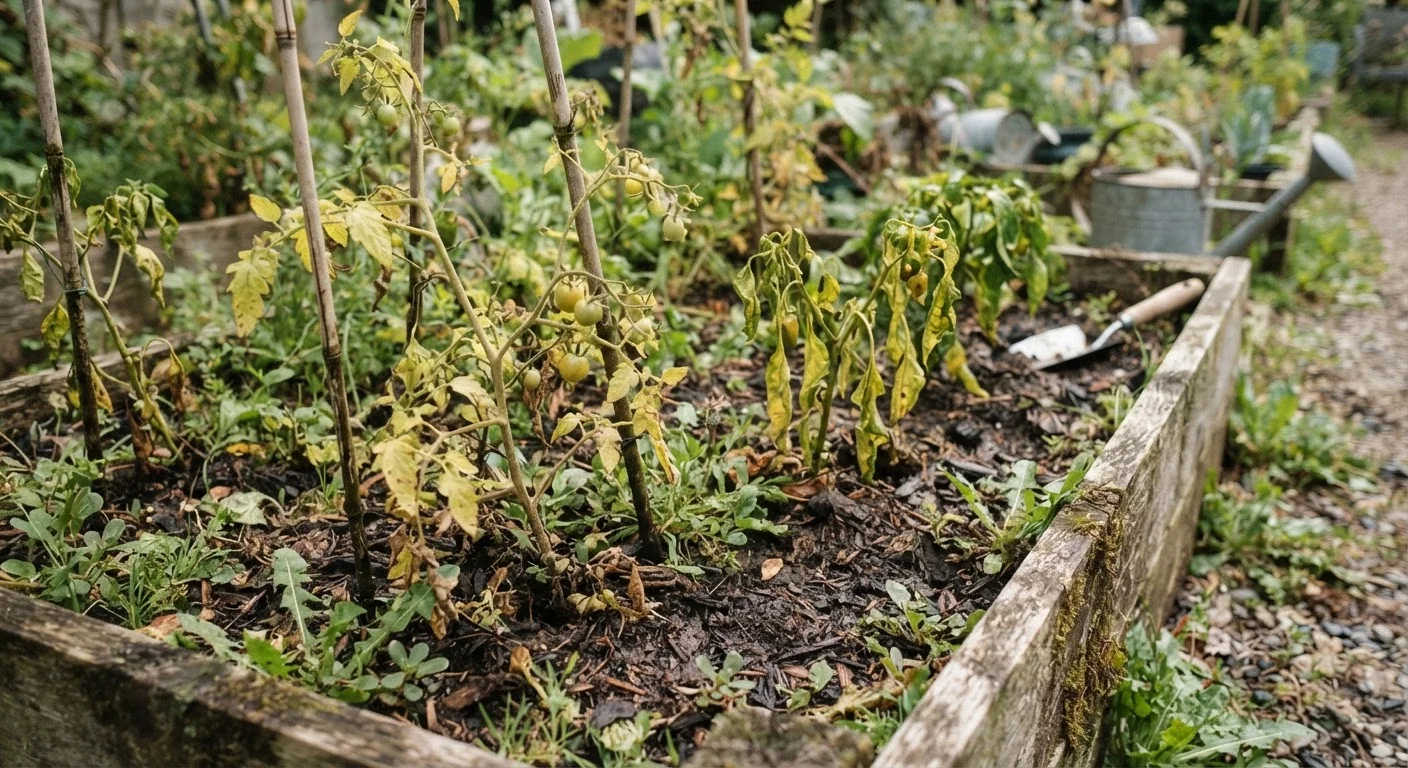
Vegetable gardens rarely struggle from a single cause in isolation. Compacted soil makes watering less effective. Poor sunlight slows growth and leaves plants more vulnerable to disease. Overcrowding amplifies moisture stress and fungal pressure simultaneously. Recognizing the way these factors interact matters as much as identifying each one individually.
Soil Health Underlies Everything
No amount of watering, fertilizing, or sunlight exposure will compensate for poor soil structure. Before adding amendments, consider a basic soil test through your local cooperative extension service. It will tell you actual pH and nutrient levels - not just what you assume is missing - so you can correct rather than guess.
Strategic plant pairing is another lever many gardeners overlook. Some plants genuinely support each other when grown nearby, improving pest resistance and ground coverage. Learn more in our guide on companion planting combinations that can benefit your garden. If space is genuinely limited, container gardening offers real possibilities alongside its trade-offs and may sidestep some in-ground soil challenges entirely.
6-8 hrs
Minimum daily sun for fruiting vegetables
University extension guidelines broadly agree that fruiting crops like tomatoes and peppers require at least six to eight hours of direct sunlight for productive yields.
~35%
Of food crops dependent on pollinators
According to the USDA, approximately one-third of the food Americans eat depends on pollination, underscoring why disrupting pollinators affects home garden yields.
Addressing even two of the five mistakes covered here in a single season can produce a noticeably stronger harvest. Start with sunlight and soil - they underpin everything else.
Pesticide Timing Can Harm Pollinators
Applying broad-spectrum insecticides during flowering hours can kill or deter bees and other pollinators, resulting in flower drop and no fruit set. If pest control is necessary, apply in early morning or evening when pollinators are least active, and consider targeted, lower-impact options. Always read and follow label directions.