The Core Idea: Why Plant Neighbors Matter
Plants don't exist in isolation in nature - they grow alongside other species and develop complex relationships over time. Companion planting draws on this reality, asking gardeners to be intentional about which plants share space rather than arranging a bed based on aesthetics or convenience alone.
At its simplest, the goal is to create combinations where at least one plant benefits without the other being harmed. These benefits fall into a few broad categories: pest deterrence, nutrient contribution, pollinator attraction, and physical support or shade. If you're just starting a garden, understanding how plants interact with each other is a natural next step after choosing your site and crops.
How Plants Help Each Other: The Main Mechanisms
Understanding why certain pairings work helps you make better decisions in your own yard rather than simply copying a list from a gardening chart.
Pest Deterrence
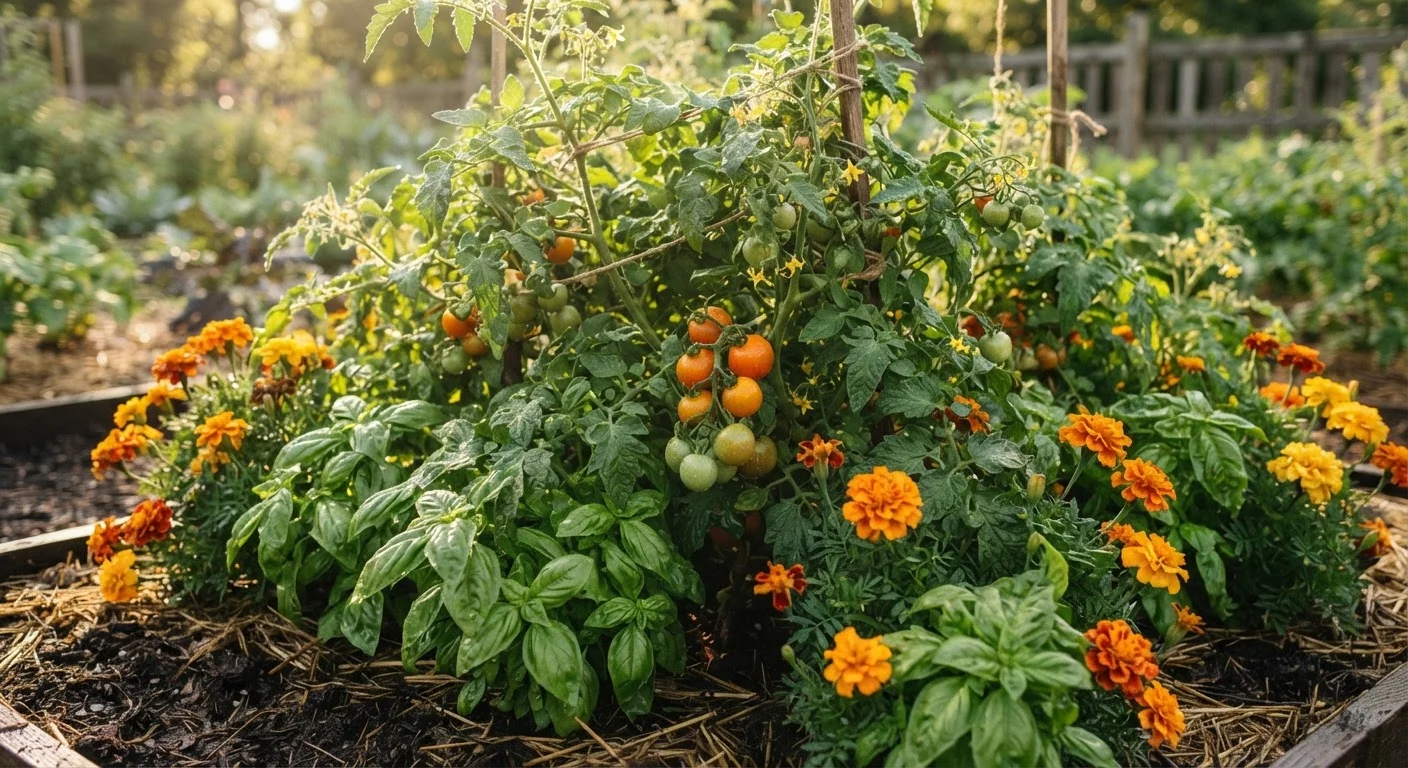
Some plants produce compounds - through their roots, leaves, or flowers - that repel or confuse insect pests. Marigolds, for instance, are commonly interplanted with vegetables. Research suggests certain marigold varieties can deter nematodes in the soil over time, though results vary by species and nematode type. Strong-scented herbs like basil and dill may also disrupt the host-finding behavior of some pests.
Nitrogen Fixation
Legumes - beans, peas, clover - host bacteria in their root nodules that convert atmospheric nitrogen into a form plants can use. When legumes grow alongside or before heavier-feeding crops like corn or leafy greens, they can contribute measurable nitrogen to the surrounding soil. This is one of the best-supported mechanisms in companion planting research.
Attracting Beneficial Insects
Flowers like dill, fennel, and yarrow draw parasitic wasps, hoverflies, and other insects that prey on common garden pests. Adding flowering plants throughout a vegetable garden can help maintain a population of these natural predators. This also supports pollination for fruiting crops.
Let Some Herbs Flower on Purpose
Many gardeners cut herb flowers to keep plants producing leaves, but allowing a few plants to flower fully - especially dill, cilantro, and fennel - creates valuable habitat for beneficial insects. Position these flowering herbs at the edges of vegetable beds where they can do double duty as pest controllers and pollinator magnets.
Physical Benefits
Taller plants can provide shade that helps moisture-sensitive neighbors during hot weather. Sprawling crops like squash suppress weed growth by covering bare soil, which benefits nearby plants by reducing competition. These structural benefits are straightforward and reliable.
Classic Pairings Worth Understanding
A few combinations are referenced so frequently because they illustrate the mechanisms above clearly - and because many gardeners across generations have reported consistent results.
- The Three Sisters (corn, beans, squash): A system developed by Indigenous peoples of North America. Corn provides a trellis for climbing beans; beans fix nitrogen; squash shades the ground, conserving moisture and suppressing weeds. All three crops support each other's growth in distinct ways.
- Tomatoes and basil: One of the most popular pairings, though evidence for pest-repellent effects is largely anecdotal. What's consistent is that both thrive in similar conditions - full sun, warm temperatures, consistent watering - making them practical neighbors regardless.
- Carrots and onions: Traditionally said to deter each other's pests (carrot fly and onion fly), though research results are inconclusive. Many gardeners still report success with this pairing.
- Brassicas and dill: Dill attracts beneficial insects that prey on aphids and cabbage worms that commonly affect brassica crops like kale, broccoli, and cabbage.
If you're weighing how to lay out these pairings, your choice of garden format matters too. See our look at raised beds vs. in-ground planting to think through spacing and soil management.
~30%
Potential aphid reduction with floral companion strips
Some research trials have found that intercropping with insectary flowers can reduce aphid colonization on nearby crops, though results vary by crop type and region.
100+ lbs/acre
Nitrogen fixed annually by legume cover crops
University extension resources note that well-managed legume cover crops can fix substantial amounts of nitrogen, reducing the need for supplemental fertilizer in following crops.
10,000+ years
Estimated history of polyculture farming
Archaeological and anthropological evidence suggests that growing multiple crop species together is among the oldest known agricultural practices in human history.
Plants That Don't Play Well Together
Companion planting isn't only about beneficial relationships. Some plants actively inhibit their neighbors through a process called allelopathy - releasing chemicals from roots or decomposing leaves that suppress nearby plant growth.
The most well-documented example in home gardens is the black walnut tree, which releases a compound called juglone. Tomatoes, peppers, and many other vegetables are highly sensitive to juglone and will struggle or fail when planted within range. Fennel is another commonly noted example - it tends to suppress the growth of most vegetables and should generally be planted in its own separate area.
Competition for light, water, and nutrients is also a real concern. Pairing two heavy-feeding or deep-rooted crops without adequate space between them can reduce the performance of both. Observe how your specific plants perform together and adjust in future seasons. You can also explore how common garden problems affect yield when conditions aren't optimized.
Putting Companion Planting Into Practice
The most effective approach is to treat companion planting as one element of a broader garden strategy rather than a standalone system. Here are practical starting points:
- Start with well-supported pairings. Choose combinations with clear, documented mechanisms - especially legumes near heavy feeders, or flowering herbs near pest-prone vegetables.
- Observe and record. Keep simple notes on which pairings seemed to perform well and which didn't. Individual gardens vary too much for any universal chart to apply perfectly.
- Avoid overcrowding. Even beneficial companions need adequate space to thrive. Crowded plants compete for light and airflow, increasing disease risk regardless of the pairing.
- Pair with other good practices. Companion planting works best alongside healthy soil management. Composting at home is a natural complement - well-fed soil supports the root systems and microbial activity that make plant-to-plant relationships possible.
If you're gardening in containers or a smaller space, many of these pairings can still apply. Our overview of container gardening possibilities and limitations covers what to expect when growing in confined spaces.