How Each Type Delivers Nutrients
Both organic and synthetic fertilizers supply the three core macronutrients plants need - nitrogen (N), phosphorus (P), and potassium (K) - but they get there through fundamentally different mechanisms.
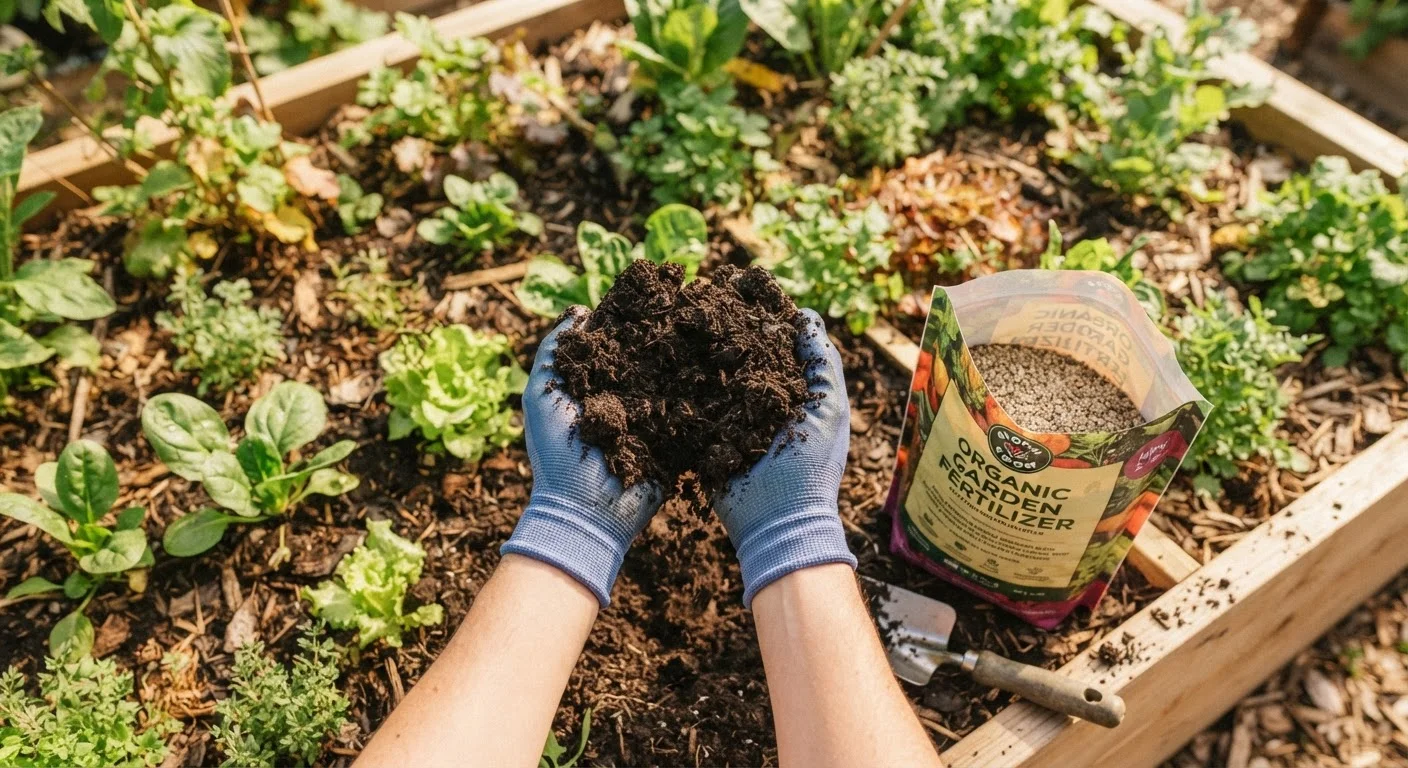
Organic fertilizers come from natural materials: composted manure, bone meal, blood meal, kelp, and similar sources. They don't deliver nutrients directly to plant roots. Instead, soil microorganisms - bacteria, fungi, and other organisms - break down the organic matter over time, releasing nutrients gradually as part of the natural decomposition cycle. This process is temperature- and moisture-dependent, which means it slows in cold or dry conditions.
Synthetic fertilizers are manufactured compounds (often derived from mined minerals or industrial processes) formulated so that nutrients are immediately water-soluble and plant-available. Roots can take them up within days of application. The nutrient ratios on the label - for example, 10-10-10 - are precise and predictable.
Understanding this difference in delivery speed is essential, because it shapes every practical trade-off between the two approaches. For a broader look at how soil quality affects plant performance, see our guide to raised beds vs. in-ground planting.
Effects on Soil Health Over Time
One of the most important distinctions between these fertilizer types isn't visible on the plant - it's what's happening underground.
Organic matter feeds soil microbes, and a robust microbial community improves soil structure, water retention, and nutrient cycling. Repeated organic fertilizer applications tend to increase organic matter content in the soil, which can make the soil more hospitable to plant roots and more resilient in drought conditions.
Synthetic fertilizers, by contrast, provide no organic matter. Heavy, repeated use can gradually reduce microbial diversity, compact soil over time, and - if over-applied - cause salt buildup that actually inhibits root function. This doesn't mean synthetic fertilizers are inherently harmful when used appropriately, but it does mean soil health requires separate attention if they're your primary nutrition source.
| Organic Fertilizers | Synthetic Fertilizers | |
|---|---|---|
| Nutrient release speed | Slow, weeks to months | Fast, days |
| Soil biology impact | Feeds and supports microbes | Neutral to negative over time |
| Nutrient precision | Variable by source material | Exact, labeled ratios |
| Burn risk | Low | Higher if misapplied |
| Cost | Often higher per bag | Generally lower per application |
| Long-term soil organic matter | Increases over time | No contribution |
| Environmental runoff risk | Lower with proper use | Higher if over-applied |
A soil test, available through many cooperative extension services, tells you your soil's current nutrient levels and pH - so you're not guessing about what you actually need to add. This matters with both fertilizer types, since over-application of either can cause runoff into waterways.
Practical Trade-Offs: Cost, Application, and Timing
For most home gardeners, the day-to-day practical differences come down to a few key factors:
- Speed of results: Synthetic fertilizers work within days; organic fertilizers may take several weeks to show visible plant response. If you're dealing with yellowing leaves mid-season, a synthetic formula typically addresses it faster.
- Application precision: Synthetics allow you to target specific nutrient ratios. Organic products vary in their N-P-K content depending on the source material, making exact dosing harder to control.
- Cost and availability: Organic fertilizers - particularly bagged compost or specialty blends - often cost more per application. However, making your own compost can reduce or eliminate that cost over time.
- Risk of overapplication: Synthetic fertilizers, because of their fast availability, carry a higher risk of burning plant roots or foliage if misapplied. Organic types are generally more forgiving at higher application rates, though runoff remains a concern with any fertilizer.
If your gardening extends to lawn care, these principles translate directly. Our lawn care fundamentals overview covers how timing and soil basics interact with fertilization choices for turf.
When a Combined Approach Makes Sense
Treating this as an either/or decision isn't always necessary. Many experienced gardeners use organic matter - compost, aged manure - as a baseline amendment to improve soil structure season after season, while selectively using synthetic fertilizers to address specific, acute deficiencies detected through soil testing.
For example, a vegetable gardener might top-dress beds with compost each spring for long-term soil building, then apply a targeted synthetic phosphorus source to support root development in transplants - only if a soil test confirms low phosphorus levels.
Start With a Soil Test Before You Buy
Before purchasing any fertilizer - organic or synthetic - invest in a basic soil test. Many university extension programs offer them for a modest fee, and the results tell you exactly which nutrients are deficient and what your soil's pH is doing. Fertilizing without this information risks wasting money and inadvertently creating nutrient imbalances that stress plants rather than support them.
The choice of fertilizer type should also reflect what you're growing. Edible gardens where children or pets have access may call for more caution around synthetic inputs, though certified organic fertilizers carry their own handling considerations (e.g., raw manure and food safety). For plant selection decisions that interact with your fertilizing strategy, our annuals vs. perennials guide offers useful context on planning a garden that works with your maintenance approach.