The Depreciation Gap: Where the Real Money Moves
Depreciation is the single largest cost of car ownership, yet it rarely appears in the monthly payment conversation. A new vehicle can lose between 15% and 25% of its value within the first year, and roughly 50% over five years - though the exact rate varies by make, model, and market conditions. For a detailed breakdown of how this works, see our guide to how depreciation works.
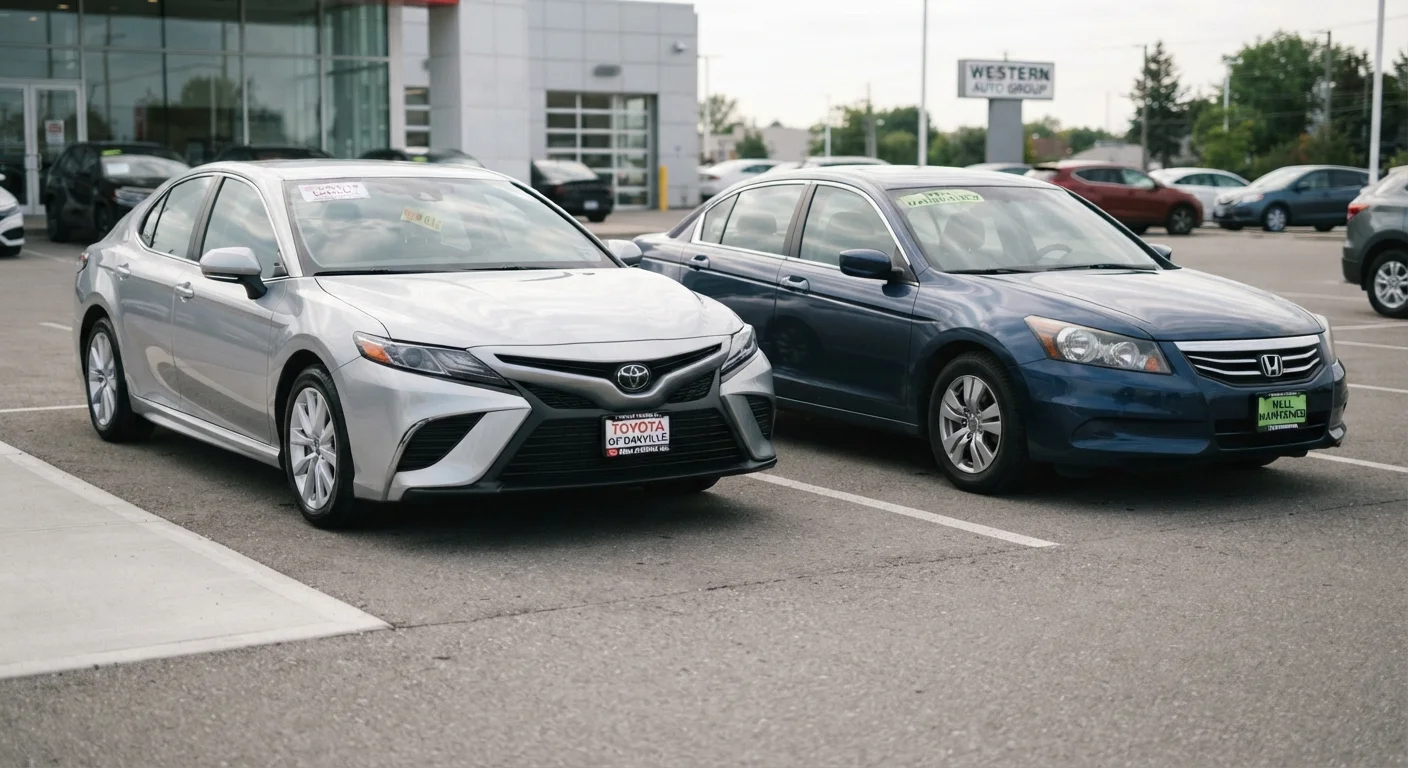
When you buy used, someone else has already absorbed that initial drop. A vehicle that is two to three years old has passed through the steepest portion of its depreciation curve, which is why used buyers often describe it as getting "the same car for less." That framing is broadly accurate - but it comes with conditions attached.
| Criterion | New Car | Used Car |
|---|---|---|
| Purchase Price | Higher upfront cost | Lower upfront cost |
| Depreciation Exposure | Highest in year one | Steepest drop already absorbed |
| Financing Rate | Typically lower rates | Typically higher rates |
| Warranty Coverage | Full manufacturer warranty | Varies; may be expired |
| Insurance Cost | Generally higher premiums | Generally lower premiums |
| Technology & Safety Features | Latest available | Depends on model year |
| Maintenance Predictability | High - new components | Variable - unknown wear history |
| Due Diligence Required | Minimal before purchase | History report and inspection advised |
Financing, Insurance, and the Hidden Cost Layers
Purchase price is only one part of the equation. Lenders typically charge higher interest rates on used-vehicle loans than on new ones, reflecting the greater collateral risk. Depending on the spread between rates and the loan term, this can meaningfully reduce - or even eliminate - the initial price advantage of a used car.
Insurance also shifts the math. New vehicles cost more to replace, so comprehensive and collision premiums are generally higher. A used car with a lower market value may carry lower premiums, particularly once it depreciates below a threshold where full coverage becomes optional rather than required by a lender.
For a full accounting of the costs that follow every vehicle purchase, our breakdown of the full cost of car ownership walks through insurance, fuel, maintenance, registration, and fees in detail.
~20%
Average first-year depreciation on new vehicles
Industry data consistently shows new cars shed roughly 15-25% of their value in year one, with the exact rate varying by segment and model.
1-3%
Typical rate premium on used-car loans vs. new
Federal Reserve consumer credit data indicates used-vehicle loan rates have historically run higher than new-vehicle rates from the same lenders.
~50%
Value remaining after five years of average use
Automotive valuation analysts broadly estimate mainstream vehicles retain around half their original value after five years, subject to mileage and condition.
Warranty Coverage and Reliability: Reading the Risk
New cars come with a manufacturer's warranty - typically a three-year/36,000-mile bumper-to-bumper and a five-year/60,000-mile powertrain warranty, though terms vary by automaker. That coverage provides a buffer against unexpected repair costs during early ownership.
Used cars present a more variable picture. A vehicle sold as-is carries no remaining coverage unless it still falls within the original warranty window. Certified Pre-Owned (CPO) programs extend manufacturer-backed coverage to qualifying used vehicles, but the terms differ considerably between brands. Our overview of what CPO programs actually include explains what to look for in the inspection checklist and extended warranty terms.
Reliability data from sources such as J.D. Power and Consumer Reports consistently shows that modern vehicles - across most mainstream segments - are significantly more durable than those from previous decades. A well-maintained three- or four-year-old vehicle from a reliable model line carries substantially lower mechanical risk than older used inventory. The key is doing the homework: vehicle history reports reveal important information, but they have real limitations that independent inspections help address.
CPO Vehicles Sit Between New and Standard Used
Certified Pre-Owned programs offer a middle path: used pricing with manufacturer-backed inspection standards and extended warranty coverage. However, CPO is not a uniform standard - each automaker defines eligibility, inspection criteria, and warranty terms differently. Confirm the specifics of any CPO program in writing before making a purchase decision.
Making the Call: Framing the Decision for Your Situation
Neither option is universally better. The right answer depends on three variables: how long you plan to keep the vehicle, how many miles you drive annually, and how much financial flexibility you have to absorb an unexpected repair.
Long-term, high-mileage owners often find that new cars spread their depreciation cost more efficiently. Short-term or budget-constrained buyers typically benefit from letting someone else absorb year-one depreciation. And for anyone still weighing whether to buy at all versus leasing, our framework for comparing buying and leasing offers a structured way to think through that separate but related decision.
Whatever path you choose, the numbers work best when you account for the complete picture - not just the sticker price or monthly payment, but depreciation exposure, financing costs, insurance, and maintenance over the realistic life of the vehicle.