How These Three Components Work Together
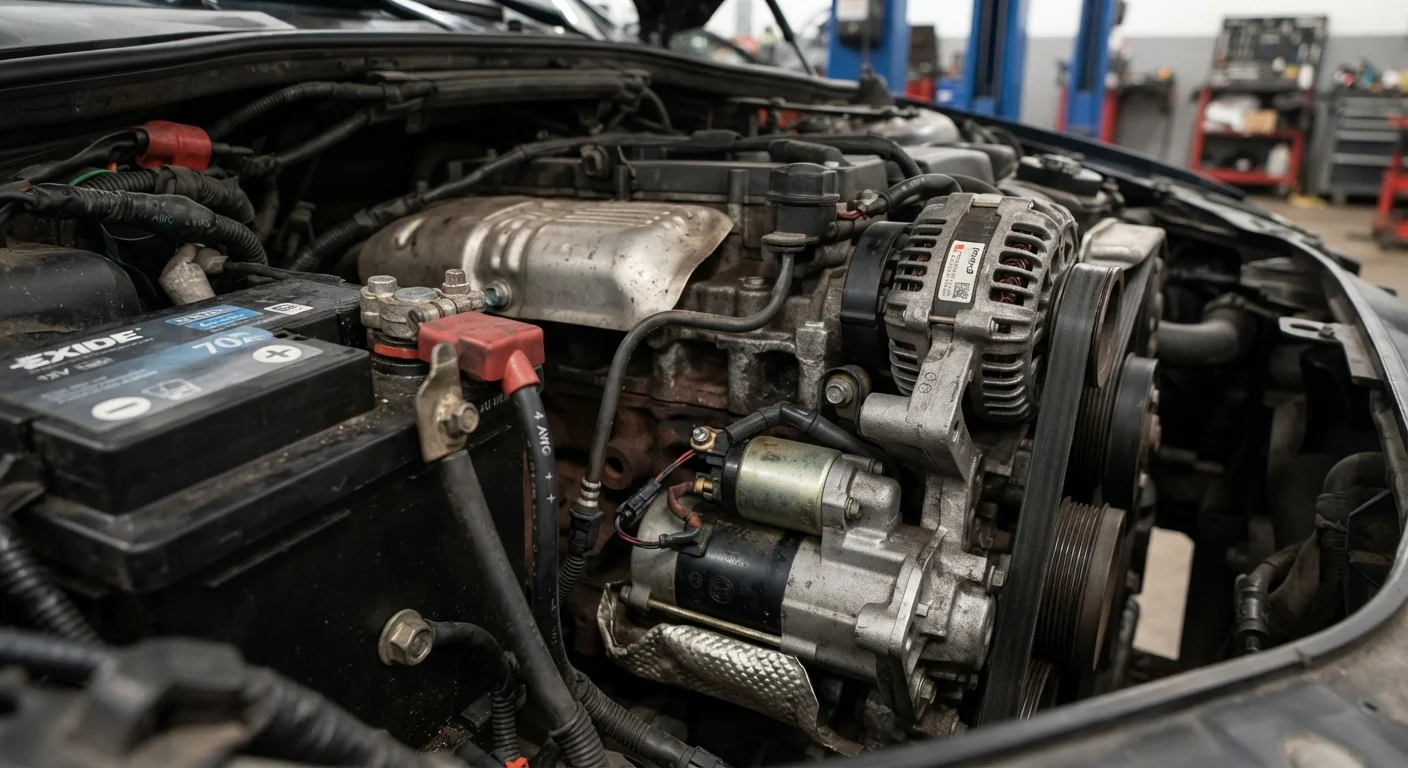
Think of the battery, alternator, and starter as a relay team. The battery stores electrical energy and delivers the initial burst needed to start the car. The starter motor uses that energy to physically crank the engine. Once the engine is running, the alternator takes over, generating electricity to power your car's systems and continuously recharge the battery.
Because they're so interdependent, a failure in one can look identical to a failure in another. A dead battery might be dead on its own - or it could be dead because the alternator stopped charging it. That's exactly why misdiagnosis is common, and why mechanics sometimes replace parts that weren't the actual problem. Understanding the chain of events helps you ask better questions before any money changes hands.
If you've noticed unusual warning lights alongside starting trouble, dashboard warning light meanings can help you interpret what your car is signaling at the same time.
Reading the Symptoms: What Each Failure Actually Looks Like
Battery failure is the most common of the three. Classic signs include: the engine cranks slowly or not at all, interior lights are dim or completely off, and the car may have sat unused for days or in cold weather. Batteries typically last three to five years, and age alone is a meaningful clue. A voltmeter reading below 12.4 volts with the engine off suggests a weak battery; below 11.8 volts usually means it's failing.
Alternator failure tends to show up while the engine is already running. Watch for a battery-shaped warning light on the dashboard, dimming headlights at idle, flickering interior lights, or a whining noise from under the hood. A functioning alternator should produce roughly 13.7 to 14.7 volts with the engine running - a reading below that range points to the alternator as the problem.
Starter failure has a distinctive sound: a single loud click, or a rapid series of clicks, when you turn the key or press the start button - but the engine doesn't crank. If lights and electronics work normally but nothing mechanical happens, the starter is a strong suspect. Starters can also fail intermittently, working fine one day and refusing the next.
| Battery | Alternator | Starter | |
|---|---|---|---|
| When failure is most noticeable | When trying to start the car | While the engine is running | When turning the key or pressing start |
| Most common symptom | Slow crank or no power | Dimming lights, battery warning light | Click with no engine crank |
| Lights and electronics affected? | Yes - dim or dead | Yes - dims while driving | Usually not initially |
| Typical lifespan | 3-5 years | 7-10 years | 80,000-150,000 miles |
| Home diagnostic method | Voltmeter at rest (~12.6V healthy) | Voltmeter running (13.7-14.7V healthy) | Listen for click, check electronics separately |
| DIY replacement difficulty | Moderate - manageable with care | Difficult - requires mechanical experience | Difficult - access and current risks |
Simple Diagnostic Steps You Can Do at Home
A basic digital multimeter (voltmeter) is the most useful tool here and costs relatively little. Here's a reliable sequence:
- Check battery voltage at rest. With the engine off and the car sitting for at least an hour, measure voltage across the battery terminals. A healthy, fully charged battery reads around 12.6 volts.
- Check voltage while cranking. Have someone turn the key while you watch the meter. If voltage drops below 10 volts during cranking, the battery is likely weak or the starter is drawing too much current.
- Check alternator output. Start the engine and re-measure battery voltage. It should read between 13.7 and 14.7 volts. If it reads close to battery resting voltage, the alternator isn't charging properly.
These tests won't cover every scenario, and they don't replace a full load test that many auto parts stores offer for free. For a broader look at what you can safely handle yourself versus what warrants professional help, see DIY car maintenance guidance.
When to Take It to a Mechanic
Battery replacement is one of the more straightforward tasks many drivers handle themselves - provided they follow proper safety steps and are comfortable working around vehicle electrical systems. Disconnecting the wrong terminal first, or allowing metal tools to bridge the terminals, can cause sparks or damage sensitive electronics. When in doubt, have a professional handle it.
Alternator and starter replacement involve more complexity. Alternators are typically belt-driven and may require removing other components for access. Starters are often tucked in tight locations in the engine bay. Both jobs involve working near high-current circuits. Unless you have solid mechanical experience, these are tasks where a qualified mechanic's expertise is worthwhile - not just for convenience, but for safety.
One underappreciated risk: jump-starting a car with a failed alternator may get you moving temporarily, but you'll likely stall within miles once the battery depletes again. Driving in that condition can leave you stranded in an unsafe location. If you suspect the alternator, have the car towed or diagnosed before driving far. You might also want to cross-check whether any common car maintenance myths are influencing how you're thinking about the problem.