What Is Xeriscaping?
Xeriscaping - from the Greek xeros, meaning dry - is a landscaping philosophy centered on reducing or eliminating the need for supplemental irrigation. Originally developed in water-stressed regions of the American West, the approach has spread nationwide as homeowners recognize that conventional lawns and thirsty ornamental plantings demand enormous water inputs, often for modest aesthetic returns.
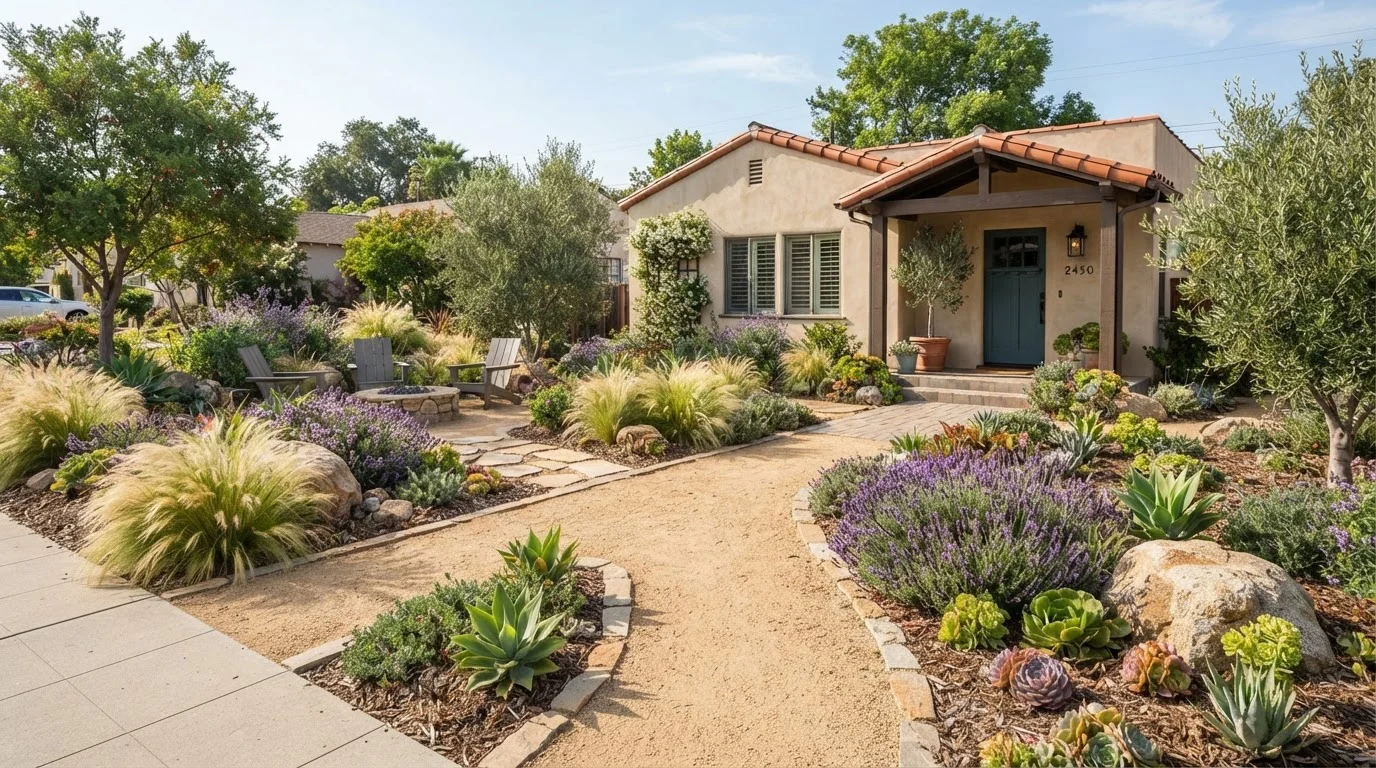
A xeriscaped yard doesn't mean a barren gravel lot. Done well, it can include flowering perennials, shady shrubs, ground covers, and even small ornamental trees - all chosen and arranged to thrive on natural rainfall with minimal human intervention. The seven principles most commonly associated with xeriscaping are planning and design, soil improvement, efficient irrigation, appropriate plant selection, mulching, turf reduction, and ongoing maintenance.
If you've ever wrestled with keeping a conventional lawn green through a dry summer, you'll find that shifting even part of your yard toward water-wise principles makes a noticeable difference. For a contrast in perspective, see what conventional lawn care actually involves before deciding how much turf to retain.
Choosing the Right Plants
Plant selection is the cornerstone of drought-tolerant landscaping. The goal is to match plants to your local climate, soil type, and rainfall patterns rather than fighting nature with extra water. Native plants are often the strongest candidates: they evolved alongside your regional weather cycles and tend to establish faster and require less long-term maintenance.
For American home gardeners, that might mean ornamental grasses like blue grama or little bluestem in the Midwest, agave and desert willow in the Southwest, or rosemary and salvia throughout warmer coastal regions. Our guide to native plants for American home gardens offers a solid starting point for species suited to different regions.
Beyond natives, look for plants labeled as drought-tolerant, low-water, or xeric. Key traits to seek out include:
- Silver or gray foliage - reflects sunlight and reduces water loss
- Small, waxy, or hairy leaves - surface adaptations that slow evaporation
- Deep taproots - reach moisture well below the surface once established
- Succulent stems or leaves - store water internally for dry periods
Give newly planted specimens adequate water during their first growing season. Most drought-tolerant plants need regular irrigation to establish healthy root systems - patience in year one pays off in resilience for years after.
When shopping for drought-tolerant plants, ask your local cooperative extension office for a regionally specific plant list rather than relying on general recommendations. A plant labeled 'drought-tolerant' in the Pacific Northwest may struggle in the Texas Hill Country.
Drought tolerance is highly regional; plants that perform well in one climate can fail entirely in another due to differences in heat, humidity, and soil type.
Water newly planted drought-tolerant specimens deeply and infrequently from the start - rather than giving them shallow daily drinks - to encourage roots to grow downward in search of moisture.
Deep, infrequent watering trains root systems to reach lower soil layers where moisture is more stable, which is exactly the growth habit that makes plants resilient during dry periods.
Soil Preparation and Amendment
Even the most drought-adapted plant will struggle in compacted, nutrient-depleted soil that sheds water rather than absorbing it. Before planting, take time to understand your soil's texture and drainage. A simple percolation test - digging a small hole, filling it with water, and timing how long it takes to drain - can reveal whether you're working with clay (slow drainage) or sandy (fast drainage) soil.
For clay-heavy soils, incorporating organic matter such as aged compost improves structure and allows water to penetrate and be retained more evenly. For sandy soils, compost similarly helps by increasing water-holding capacity. Aim to work amendments into the top 6-8 inches of soil before planting.
Avoid the temptation to add excessive fertilizer. High-nitrogen fertilizers encourage lush, fast-growing foliage that actually requires more water. A light application of balanced, slow-release fertilizer at planting is usually sufficient for most drought-tolerant plants.
Mulching: The Unsung Water Saver
If there's one practice that delivers outsized benefits in a water-wise garden, it's mulching. A 2-4 inch layer of organic mulch - wood chips, shredded bark, or straw - spread over planting beds creates an insulating barrier that slows evaporation, moderates soil temperature, and gradually improves soil structure as it breaks down.
Research from cooperative extension programs consistently shows that mulched soil can retain moisture significantly longer than bare soil, reducing watering frequency substantially. Mulch also suppresses weeds, which compete with your plants for water and nutrients.
Keep mulch pulled a few inches away from plant stems and tree trunks to prevent rot and discourage pests. Refresh organic mulch once or twice a year as it decomposes. Inorganic options like decomposed granite or river rock are lower maintenance but don't improve soil health over time.
Understanding what your plants actually need is equally important - many watering habits homeowners rely on are counterproductive. Our article on common garden watering myths explains several widely held misconceptions about irrigation timing and frequency.
Irrigation Strategies That Make Sense
Even a drought-tolerant landscape benefits from occasional irrigation, especially during extended dry spells or when establishing new plantings. The goal isn't eliminating water use entirely - it's making every drop count.
Drip irrigation systems deliver water slowly and directly to the root zone, dramatically reducing evaporation and runoff compared to overhead sprinklers. A basic drip setup with emitters and a timer is within reach of most DIYers and represents one of the most effective upgrades you can make to an existing irrigation setup.
Overhead sprinklers, by contrast, can lose a substantial portion of their output to evaporation before water ever reaches plant roots - particularly when running midday in warm climates. If you do use sprinklers, run them early in the morning when temperatures are lower and wind is calmer.
Rainwater collection - harvesting runoff from rooftops into barrels or cisterns - is another practical supplement. Regulations vary by state, so verify local rules before installing a collection system. Even modest collection can offset irrigation needs during dry stretches.
Design Principles for a Water-Wise Yard
Thoughtful layout ties all other elements together. One of the most practical design concepts is hydrozoning: grouping plants with similar water needs together so you're not over-watering drought-tolerant specimens to keep thirstier plants happy. A simple approach is to place any plants requiring regular moisture nearest to your home (where hose access is easiest) and transition outward to progressively drier-adapted plants.
Reducing turfgrass area is another high-impact decision. Lawns are among the most water-intensive landscape elements; replacing even a portion with groundcover, gravel paths, or planted beds can reduce your outdoor water use measurably. Groundcovers like creeping thyme, sedum, or buffalo grass provide a lush, low-maintenance alternative in many climates.
Hardscaping elements - permeable pavers, flagstone paths, and dry creek beds - reduce the planted area that needs watering while channeling rainwater into the landscape rather than letting it run off into storm drains. For gardeners weighing different growing configurations, our overview of raised beds vs. in-ground planting is worth reading if you're incorporating food production into a water-wise design.
Finally, revisit your design each season. Drought-tolerant landscaping rewards observation: note which plants thrive, which struggle, and how water moves across your yard after rain. Small adjustments - adding a swale, relocating a plant, extending a mulched area - compound over time into a yard that genuinely works with your climate rather than against it.