
How Dashboard Warning Lights Work
Modern vehicles use an onboard diagnostics system - commonly called OBD-II - to continuously monitor dozens of sensors throughout the engine, transmission, brakes, and other major systems. When a sensor detects a reading outside its normal range, the system triggers a warning light on your instrument cluster.
Warning lights typically follow a color-coded priority system:
- Red - Requires immediate attention. Continuing to drive could cause serious damage or create a safety hazard.
- Amber/Yellow - An advisory. The issue warrants attention soon but isn't usually an emergency.
- Green or Blue - Informational. These confirm a system is active, such as high beams or cruise control.
Lights may stay solid or flash. A flashing light almost always signals a more urgent problem than the same light held steady. See our plain-English guide for first-time car owners if you'd like broader context on what's happening under the hood.
| Number of OBD-II fault codes | Thousands (generic + manufacturer-specific) (SAE International OBD-II standard) |
| OBD-II required on U.S. vehicles since | 1996 (gasoline); 2008 (diesel) (U.S. EPA regulations) |
| Recommended tire pressure location | Driver's door jamb sticker |
| TPMS alert threshold (typical) | 25% below recommended PSI (NHTSA TPMS rule) |
| Red light response | Stop driving as soon as safely possible |
| Flashing check engine urgency | Higher - seek service promptly |
The Most Common Warning Lights Explained
Below are the warning lights drivers encounter most often, along with what they're signaling and how urgently you should respond.
OBD-II
On-Board Diagnostics, second generation. A standardized system used in most vehicles built after 1996 that monitors engine and emissions systems and stores fault codes when a problem is detected.
Fault Code (DTC)
A Diagnostic Trouble Code logged by the OBD-II system when a sensor reading falls outside its normal range. A technician or OBD reader retrieves these codes to identify which system triggered a warning light.
TPMS
Tire Pressure Monitoring System. A sensor-based system that alerts the driver when one or more tires fall significantly below the recommended inflation pressure.
Catalytic Converter
An emissions control device in the exhaust system that converts harmful combustion byproducts into less harmful gases. It can be damaged by prolonged engine misfires, which is why a flashing check engine light is treated as urgent.
Oil Pressure
The force at which engine oil is circulated through the engine. Adequate pressure ensures all moving metal parts receive lubrication; a sudden drop can cause catastrophic engine damage within minutes.
Alternator
A generator driven by the engine that recharges the battery and powers the vehicle's electrical systems while the engine is running. A failing alternator causes the battery warning light to illuminate.
Check Engine Light
This is arguably the most misunderstood light on any dashboard. It can represent anything from a loose gas cap to a misfiring cylinder. A steady amber check engine light means the system has logged a fault code - get it scanned at a shop or with a personal OBD-II reader. A flashing check engine light typically indicates an active misfire that can damage the catalytic converter; reduce speed and seek service promptly.
Oil Pressure Warning
A red oil can symbol means your engine's oil pressure has dropped dangerously low - not necessarily that you're low on oil, though that's a common cause. Pull over safely and shut off the engine as soon as it's safe to do so. Driving on with low oil pressure can destroy an engine in minutes. Check the oil level first; if it's full, the issue may be a failing oil pump or sensor. Our guide to fluid checks covers how to read your dipstick correctly.
Battery / Charging System Warning
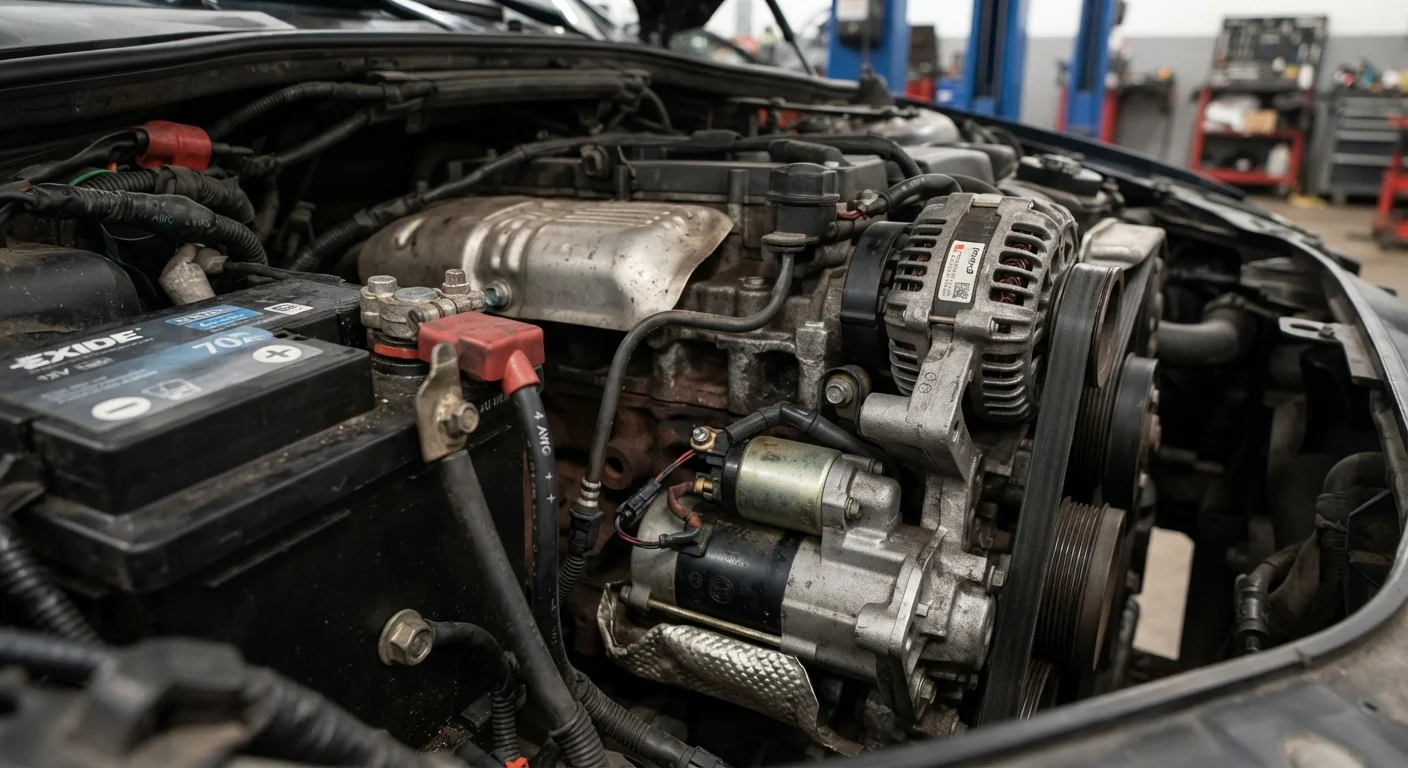
A red battery icon that stays lit while driving usually signals that your alternator isn't charging the battery, not that the battery itself has failed. Electrical systems will start shutting down as charge depletes. Turn off non-essential loads (AC, heated seats) and head toward a service station. For help distinguishing between battery, alternator, and starter issues, see our breakdown of these three components.
Tire Pressure Monitoring System (TPMS)
An amber horseshoe-shaped icon with an exclamation point means one or more tires have dropped significantly below the recommended PSI (pounds per square inch). Check pressures when tires are cold. Correct inflation is printed on a sticker inside your driver's door jamb - not on the tire sidewall, which shows maximum pressure.
Temperature Warning
A red thermometer icon indicates the engine is overheating. Turn off the AC, turn on the heater (it draws heat away from the engine), and pull over safely as soon as possible. Do not open the radiator cap when the engine is hot. This situation can cause permanent engine damage if ignored.
Brake System Warning
A red circle with an exclamation mark or the word BRAKE can mean your parking brake is engaged, brake fluid is low, or - more seriously - there's a fault in the braking system. If the parking brake is off and the light remains, check brake fluid and schedule an inspection promptly. Brake system faults are a safety concern; don't delay. This connects directly to broader safe driving practices every driver should maintain.
When to Act Immediately vs. When You Have Time
Not every warning light demands you pull off the highway at the next exit. Here's a practical framework:
- Stop driving now: Oil pressure (red), temperature (red), brake system fault (red, parking brake off)
- Drive carefully to a shop today: Flashing check engine, battery/charging warning
- Schedule service within a week: Steady check engine (amber), TPMS alert
- Note and monitor: Service due reminders, low fuel, green/blue informational indicators
Ignoring amber lights consistently can allow minor problems to escalate into major repairs. If you're unsure whether a light is urgent, consulting your owner's manual is the fastest first step - every vehicle has one, and most are now available as PDFs on the manufacturer's website.
For a broader look at what's reasonable to address yourself versus when to call a mechanic, see our article on DIY car maintenance. And for a full-system view of vehicle health, explore everything that goes into keeping a car roadworthy.