Where the Divide Comes From
Walk into any bookstore and the shelving tells a story before you've read a single page. "Literary Fiction" occupies one section, usually near the front. Mystery, Science Fiction, Romance, and Thriller claim their own aisles further back. The physical arrangement implies a hierarchy - and that implication has shaped how readers, critics, and even writers think about books for decades.
The split is largely a twentieth-century publishing phenomenon. As the commercial book market expanded, publishers developed genre categories as practical tools: labels helped booksellers stock shelves, helped readers find what they wanted, and helped marketing teams target audiences efficiently. "Literary fiction" emerged as a loose umbrella for books that resisted easy genre placement and were aimed at readers seeking a particular kind of artistic seriousness. As our full breakdown of genre labels explains, these categories serve real functions - but they were never meant to be judgments of worth.
The trouble is that readers internalized the hierarchy. Genre fiction came to be seen as entertainment - fast, formulaic, disposable. Literary fiction was treated as art - slow, difficult, important. Neither portrait is accurate, and the myth-fact pairs below walk through why.
Myths That Keep Readers in the Wrong Aisle
Most of the assumptions people carry about literary versus genre fiction dissolve under even light scrutiny. The myths tend to cluster around quality, difficulty, and purpose - and each one, when corrected, opens up a wider reading life.
Myth
Genre fiction is written quickly and formulaically, while literary fiction requires real craft.
Fact
Both traditions demand craft; they apply it toward different goals.
The idea that genre fiction is dashed off while literary fiction is painstakingly constructed doesn't hold up to scrutiny. Writers working in mystery, science fiction, and romance often spend years on a single novel, and the structural demands of genre - building a watertight plot, sustaining tension, honoring reader expectations while still surprising - are genuinely difficult. What differs is where craft is most visibly applied. Genre fiction tends to foreground plot architecture and pacing; literary fiction tends to foreground sentence-level prose and psychological depth. Neither is easier. They're differently difficult.
Myth
Literary fiction is for serious readers; genre fiction is just entertainment.
Fact
All fiction entertains - the question is what else it also does.
The word "just" does a lot of quiet damage in conversations about reading. Framing entertainment as a lesser purpose misunderstands how fiction works on readers. A thriller that keeps you awake past midnight is engaging your nervous system, your empathy, and your pattern-recognition. A science fiction novel exploring artificial consciousness is raising philosophical questions through entertainment. And literary fiction that bores rather than engages has failed too, regardless of its intentions. The most useful question isn't whether a book entertains, but what kind of experience it offers alongside that.
Myth
A book can't win serious literary awards if it uses genre conventions.
Fact
Award-winning literary fiction regularly incorporates genre elements, and always has.
The Pulitzer Prize, the Booker Prize, and the National Book Award have all recognized novels that drew heavily on genre traditions - gothic horror, speculative worldbuilding, crime, and romance among them. Cormac McCarthy's The Road is post-apocalyptic fiction. Colson Whitehead's The Underground Railroad uses speculative premise. Kazuo Ishiguro's Never Let Me Go is science fiction by any structural definition. What these books share isn't an absence of genre - it's a use of genre conventions in service of deeper thematic ambitions. The awards followed the ambition, not the label.
Myth
If you enjoy genre fiction, literary fiction probably isn't for you.
Fact
Reading preferences exist on a spectrum, and most committed readers enjoy both at different times.
Taste is not fixed, and genre preference is not identity. Readers who devour detective fiction often find they're drawn to psychological literary novels that share the same interest in interiority and moral complexity - just expressed through different structures. The reverse is equally true. Framing the choice as either/or discourages readers from exploring the full range of what fiction can do. Understanding both traditions and what each prioritizes is simply more useful than picking a team. Our guide to reading across genres offers a practical starting point for readers ready to explore.
Myth
Genre labels describe the quality of a book, not just its content.
Fact
Genre labels are organizational tools, not quality ratings.
Publishers, booksellers, and libraries use genre labels to help readers find what they're looking for - the same way a grocery store organizes by food type rather than by nutritional value. A book shelved in "Science Fiction" tells you something about its content and conventions; it tells you nothing about whether it's well-written, emotionally resonant, or worth your time. Conflating shelf placement with merit is a category error that leads readers to dismiss entire swaths of fiction before reading a single page. As our article on genre labels makes clear, the labels were never meant to rank - only to organize.
For readers curious about how these distinctions play out at the level of specific categories, our map of the major literary genres is a useful companion. And if you've ever wondered how science fiction and fantasy navigate similar boundary questions, the differences between those two genres follow their own fascinating logic.
What Each Tradition Actually Values
Rather than ranking the two, it helps to understand what each tradition tends to prioritize - because those priorities are genuinely different, even if the divide is overstated.
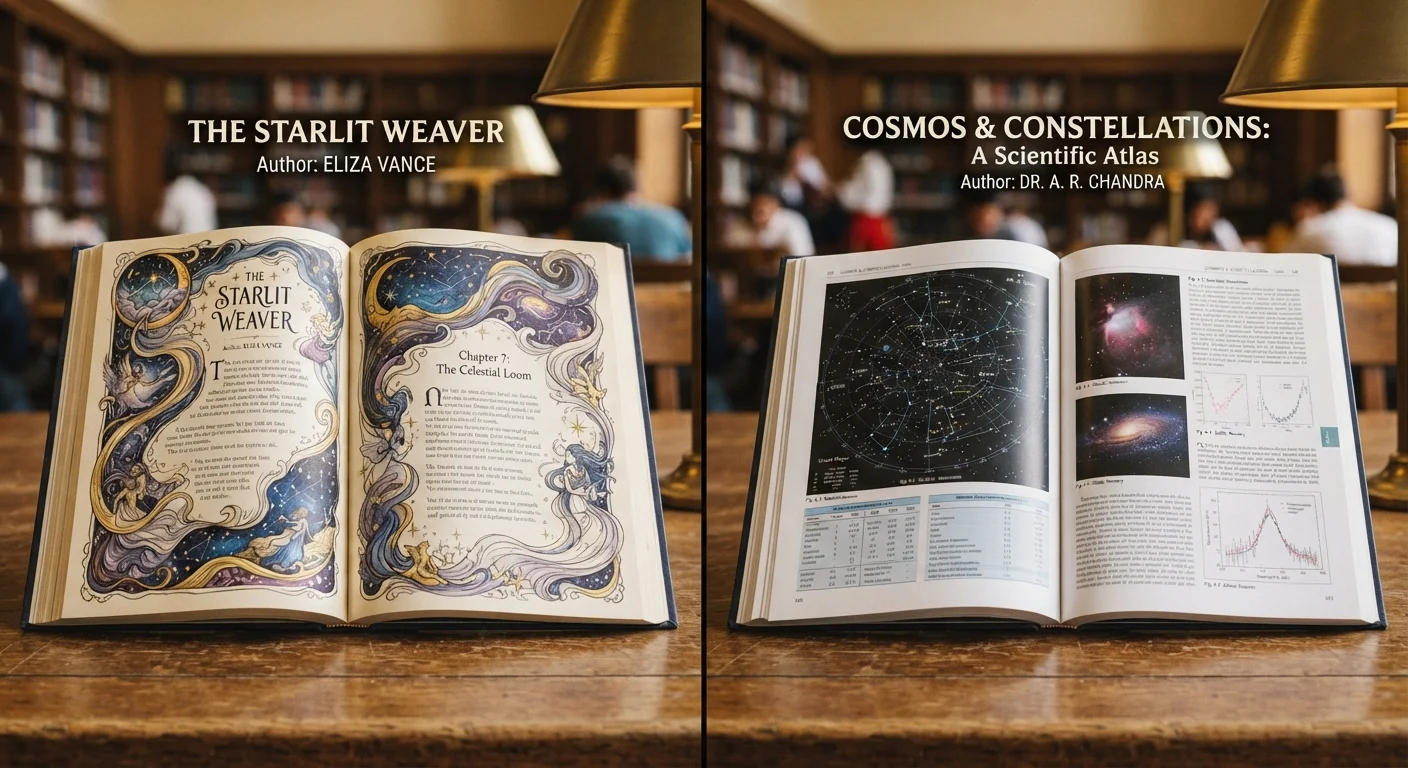
Genre fiction typically makes a contract with the reader upfront. A thriller promises escalating danger and a resolution. A romance promises an emotionally satisfying arc. A mystery promises that the puzzle will be solved. Readers pick up genre books partly because of those expectations, and skilled genre writers fulfill them while still surprising their audience. That's harder than it sounds.
Literary fiction, by contrast, tends to resist the contract model. It often withholds resolution, prioritizes interiority over plot momentum, and asks readers to sit with ambiguity. The goal is frequently less about what happens and more about how and why - the texture of consciousness, the weight of language, the meaning layered beneath events.
Neither approach is superior. They're different tools for different reading experiences. The most interesting books - the ones that end up taught in universities and sold in airport terminals - tend to use both toolkits at once. Reading across genres is one of the fastest ways to see how much the traditions borrow from each other.
Finding What Actually Fits Your Reading Life
Knowing where you fall on the literary-to-genre spectrum is genuinely useful for building a reading life you'll sustain. If you find yourself impatient when a novel lingers for pages on a character's inner monologue without advancing the plot, leaning into genre fiction isn't a compromise - it's honest self-knowledge. If you close a thriller feeling vaguely unsatisfied because the emotional complexity felt thin, literary fiction or genre-blending novels may be closer to what you're after.
Most readers aren't purists. They move across the spectrum depending on mood, season, or what a trusted friend pressed into their hands. That flexibility is worth protecting. Treating the literary-genre divide as fixed and meaningful robs readers of half the library.
Historical fiction is one genre where the overlap is especially vivid - it demands the world-building rigor of genre fiction and the psychological depth usually associated with literary work. Our look at what historical fiction demands of readers and writers explores how that tension plays out in practice. Similarly, speculative fiction as a category scrambles the divide almost entirely, encompassing works that have won both genre awards and prizes traditionally reserved for literary fiction.
The shelf label is a starting point. What's between the covers is something else entirely.