The Core Distinction - and Why It Matters
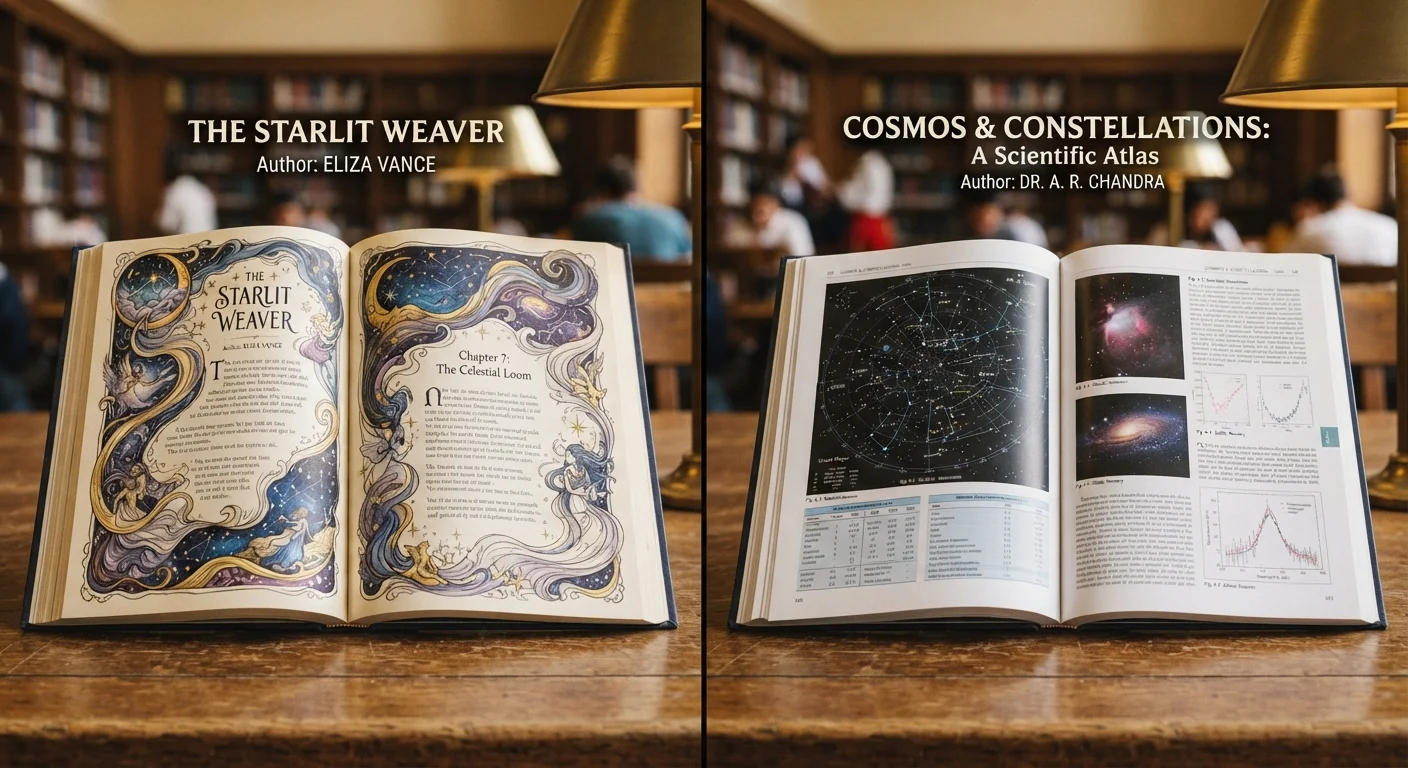
At its simplest, the fiction/nonfiction divide is about one thing: whether the events and people in a book are invented or real. Fiction constructs characters, plots, and worlds from imagination, even when it borrows heavily from reality. Nonfiction reports on actual people, events, and ideas, even when it shapes them into a compelling narrative arc.
That distinction shapes the contract a book makes with its reader. When you pick up a memoir, you expect the author to be telling you something true. When you pick up a novel, you agree to suspend disbelief and enter a made world. Knowing which side of the line you're on lets you calibrate your expectations - and your trust.
It also helps you find what you're actually looking for. Genre labels serve real functions for readers, and the fiction/nonfiction split is the most foundational label of all. Libraries, bookstores, and publishers use it to organize everything else.
What Each Category Actually Includes
Fiction spans an enormous range: literary novels, mysteries, science fiction, fantasy, romance, horror, short story collections, and more. The unifying thread is that the author invented the central material - even if a novel is set in a real city, features a real war as backdrop, or draws from the author's own life. Literary and genre fiction differ in emphasis, but both are fiction.
Nonfiction is equally broad. It includes biography, autobiography, memoir, history, science writing, travel writing, essays, journalism, self-help, and true crime. What these share is a commitment - however artfully shaped - to documented reality. Memoirs, biographies, and autobiographies each handle that commitment differently, but all three belong on the nonfiction shelf.
| Criterion | Fiction | Nonfiction |
|---|---|---|
| Core material | Invented characters and events | Real people and documented events |
| Reader contract | Suspend disbelief; enter a made world | Trust that facts are accurate and sourced |
| Narrative freedom | Unlimited - author controls everything | Constrained by what actually happened |
| Examples | Novels, short stories, novellas | Memoir, biography, history, journalism |
| Gray zones | Historical fiction, autofiction | Creative nonfiction, narrative journalism |
| Primary reader goal | Experience, emotion, imagination | Knowledge, understanding, documentation |
Where the Line Gets Blurry
The tidiness of the split starts to fray around the edges - and that's where things get genuinely interesting.
Historical fiction is one of the clearest examples. These novels are set in real eras, often include real figures, and hinge on documented events - but they also invent dialogue, inner lives, and sometimes entire characters. Historical fiction makes specific demands on writers and readers alike: you need to know what's documented and what's imagined.
Creative nonfiction moves in the opposite direction, using literary techniques - scene-setting, character development, narrative tension - to tell true stories. Works in this mode read like novels but are held to a factual standard. Narrative journalism and literary memoir both live here.
Autofiction - a growing and sometimes contested category - blends autobiographical detail with invented or altered events, deliberately blurring the boundary. Authors like Karl Ove Knausgård have built entire careers in this space.
When 'Based on a True Story' Complicates Things
Books and films labeled 'based on a true story' are still fiction - they've fictionalized real events, which places them squarely in the invented category. Readers should treat these works as fiction unless a publisher explicitly categorizes them otherwise. If you want the factual account, look for the nonfiction source material the story drew from.
The blurriness isn't a flaw in the system. It reflects how human experience actually works: memory is imperfect, storytelling shapes facts, and imagination can illuminate truth. Understanding where a book sits on the spectrum helps you read it more honestly.
Choosing What's Right for You
Most committed readers don't live exclusively in one category. Reading habits shift with mood, season, and what a person is working through. A reader deep in grief might alternate between a novel that mirrors their feelings and a memoir that shows how someone else survived. A curious reader on vacation might pack both a history and a thriller set in the same place.
If you're trying to figure out where to start, pay attention to what you're actually after. Do you want to be transported - to feel something alongside a character? Fiction is probably your door in. Do you want to understand something - a historical period, a scientific concept, a real person's journey? Nonfiction will serve you more directly.
And if genre labels within fiction still feel overwhelming, it helps to know that many of those labels exist for practical, navigational reasons rather than to box books in. Science fiction and fantasy share roots but operate on different logic - understanding that helps readers self-sort quickly. The same principle applies across the whole spectrum.
The fiction/nonfiction divide is your first navigation tool. Everything else - genre, subgenre, age category - flows from there.