A Genre That Lives Between Two Worlds
Historical fiction occupies a peculiar and fascinating position on the literary map. It is neither journalism nor pure fantasy - it is a conversation between documented fact and the writer's imagination, conducted across centuries. To understand why this genre appeals to so many readers, it helps to understand exactly what it asks of everyone involved: the novelist who writes it and the reader who picks it up.
At its core, the genre insists that the past is not just backdrop. When a novel is set during the American Civil War or the court of Henry VIII or the streets of 1920s Harlem, that setting must do real work. It shapes how characters speak, what they fear, what they can and cannot do. The history isn't decoration - it's load-bearing. That's what separates a genuinely historical novel from a contemporary story that happens to wear a corset.
For readers curious about how this genre fits among others, the major literary genres, mapped offers a useful orientation before diving in.
What the Genre Demands of Writers
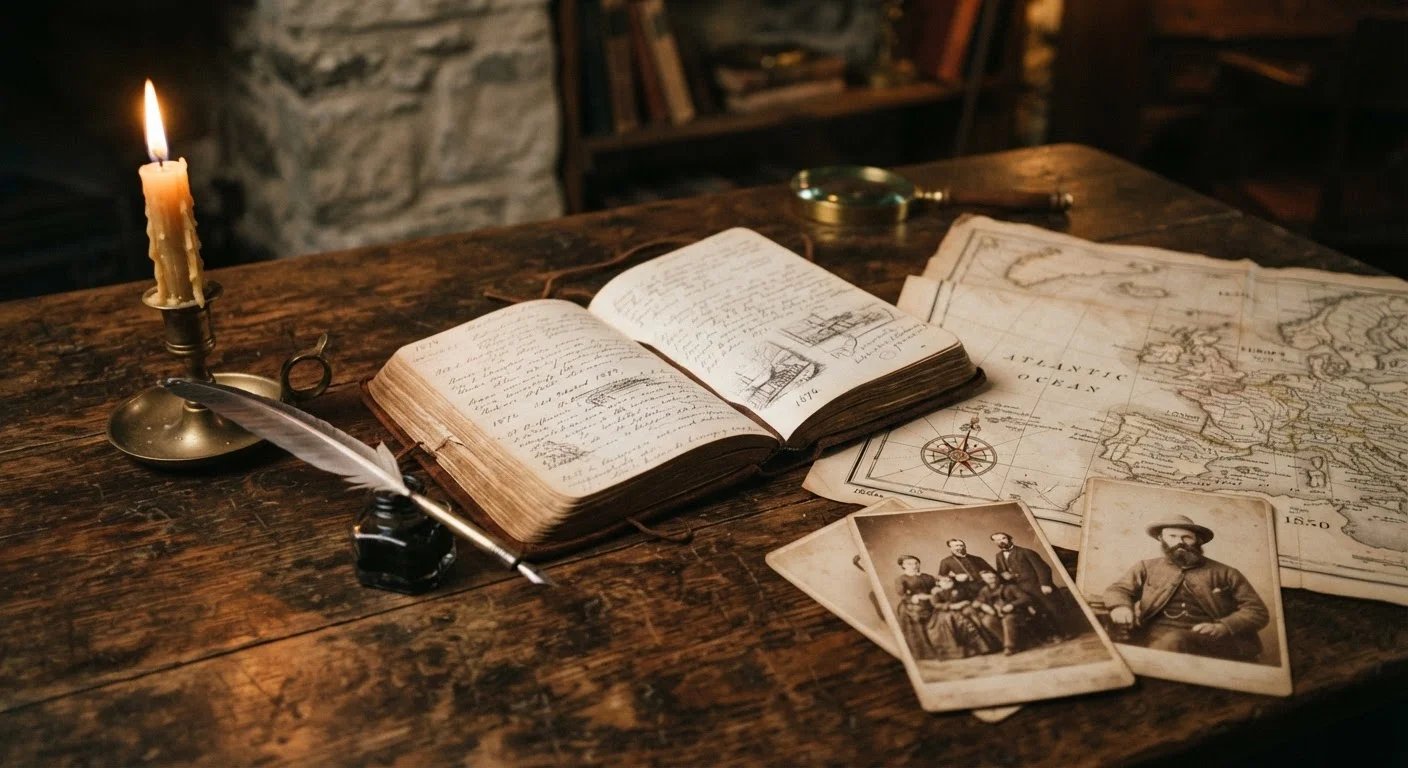
Writing historical fiction is, in some ways, a double obligation. The novelist must master the craft of storytelling - character, tension, pacing, voice - while simultaneously becoming a kind of lay historian. Research is not optional; it is the foundation on which everything else rests.
The challenge is knowing what to do with that research once you have it. Readers pick up novels, not textbooks. The best historical writers absorb their research so thoroughly that it surfaces naturally - in the way a character moves through a market, or the specific weight of a grief shaped by her era's beliefs about death - without the prose turning into a lecture. When writers dump historical detail for its own sake, readers feel it immediately. The story stalls.
“The historical novelist's task is not to reproduce the past but to make it inhabitable - to give readers a place to stand inside a time they never lived through.”
— Hilary Mantel, Booker Prize-winning author of the Thomas Cromwell trilogy
Writers also navigate a harder ethical question: what to invent. Real historical figures appear in many celebrated novels. Real events are reimagined. When a novelist puts words in the mouth of a documented person, or imagines what happened behind closed doors of a famous moment, they are taking a creative liberty that carries responsibility. The genre's most thoughtful practitioners signal these choices clearly - often in an author's note - rather than leaving readers to guess where imagination took over from record.
The balance between fact and invention also intersects with questions about whose history gets told. For decades, historical fiction leaned heavily on the perspectives of the powerful. Contemporary writers are increasingly centering enslaved people, colonized communities, and women in historical periods when those voices were deliberately silenced - a creative and political act in itself.
What the Genre Asks of Readers
Reading historical fiction is not a passive experience. It invites a particular kind of double awareness: you are following a story while also, at some level, evaluating a version of the past. That evaluation does not require a history degree, but it does reward curiosity.
Savvy readers learn to look for author's notes, which many historical novelists include to explain their research, their liberties, and their sources. These notes often reveal the most interesting tensions in the work - where documented history ended and imagination had to take over. Treating them as an afterthought means missing some of the genre's richest material.
Top 5
Historical fiction's consistent bestseller list ranking
Historical fiction has ranked among the top-selling adult fiction categories in U.S. publishing for over a decade, according to industry tracking by Publishers Weekly.
50 years
Common minimum setting threshold for the genre
Many publishers and librarians use a 50-year rule - a novel set at least 50 years before publication - as a working definition of historical fiction, though no universal standard exists.
Readers also benefit from holding the genre's pleasures and limitations simultaneously. A beautifully rendered portrait of plantation life in the antebellum South can illuminate emotional truths about that world while still reflecting the blind spots or interpretive choices of a 21st-century author. Historical fiction is not the same as history. Understanding that distinction - which is explored in depth when you consider where the fiction and nonfiction line actually falls - makes the reading experience richer rather than more skeptical.
The genre also sits in interesting tension with literary fiction, a relationship worth unpacking. Genre fiction and literary fiction aren't as different as you think, and historical fiction is often where those two traditions converge most visibly - a novel can be meticulously plotted and emotionally literary at once.
How to Know If the Genre Matches Your Reading Style
Historical fiction rewards readers who enjoy immersion. If you like the feeling of a world closing around you - learning how people thought, what they ate, how they navigated social hierarchies utterly unlike your own - this genre delivers that in ways few others can. It's also an entry point into history for readers who find straight nonfiction too demanding or too dry.
That said, the genre requires a tolerance for uncertainty. You will not always know, while reading, which details are documented and which are invented. If that ambiguity frustrates rather than intrigues you, you may prefer the more verifiable pleasures of narrative nonfiction or memoir. If, on the other hand, you're drawn to the idea that imagination can illuminate what documents cannot - the felt experience of a life, the texture of a moment - historical fiction may be exactly the genre you've been looking for.
And because the genre overlaps so readily with others - historical romance, historical mystery, historical literary fiction - you can often find an entry point that plays to your existing tastes. Genre labels don't exist to limit books, and in historical fiction, those labels are often delightfully stacked.