Why Right-of-Way Confusion Is So Dangerous
Right-of-way rules exist to create predictable, orderly traffic flow. When drivers misunderstand or ignore those rules, the result isn't just awkward - it can be fatal. According to the National Highway Traffic Safety Administration (NHTSA), failure to yield right-of-way is consistently ranked among the top contributing factors in intersection crashes across the United States.
The core problem isn't malice - it's ambiguity. Many drivers learned the rules years ago, retained only a partial understanding, and never revisited them. Others apply a social logic ("whoever got there first" or "whoever is bigger goes first") that doesn't match traffic law. And on unfamiliar road configurations, even experienced drivers can hesitate or guess wrong at the worst possible moment.
Understanding where these mistakes originate - and how to correct them - is one of the most practical things a driver can do for their own safety and that of everyone around them. For a complementary look at situational driving challenges, see our guide to scenarios new drivers find hardest.
Treating the on-ramp as a guaranteed entry point onto the highway.
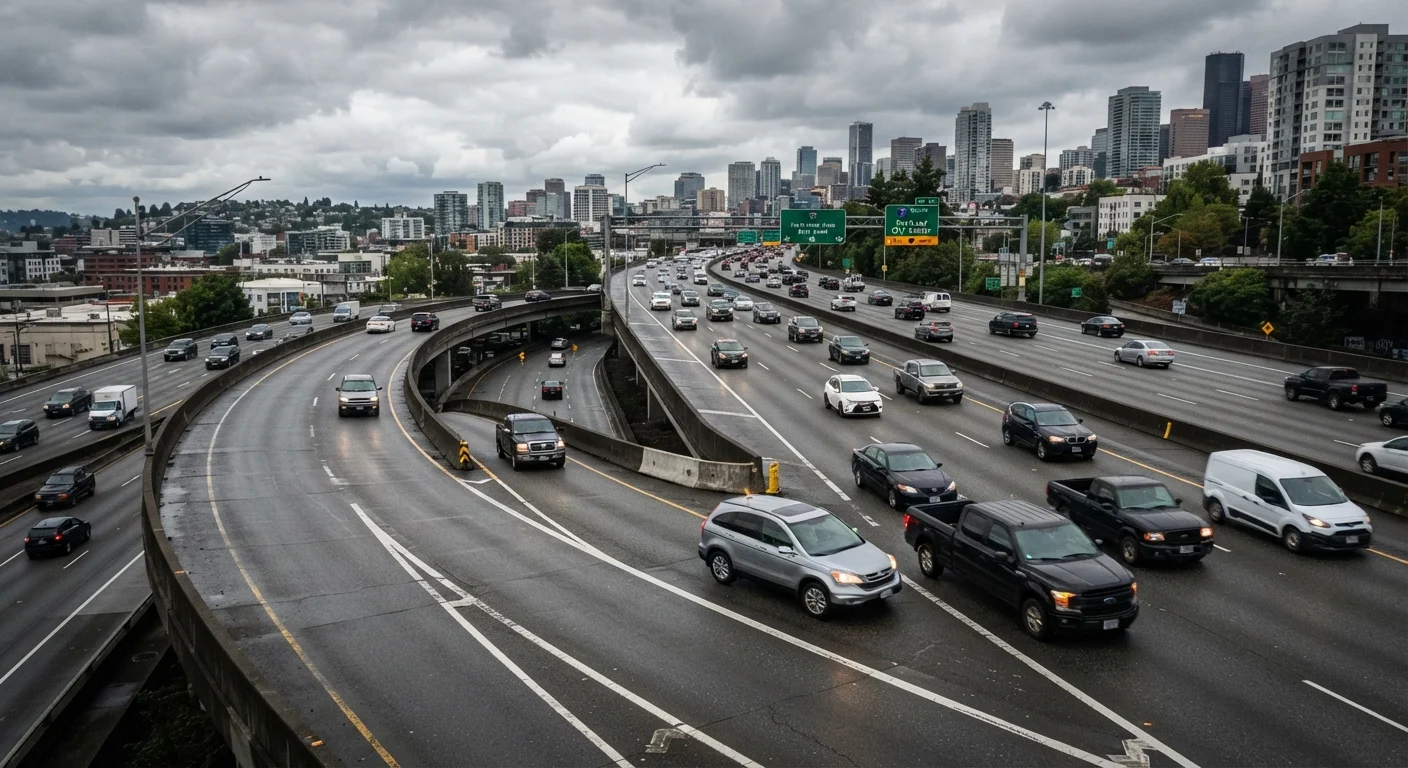
Why it happens: Drivers often believe that merging traffic automatically has right-of-way because they're moving fast and already committed to the lane change. In most U.S. states, the opposite is true - merging vehicles must yield to traffic already on the highway.
Misapplying four-way stop rules when vehicles arrive simultaneously.
Why it happens: Most drivers know to yield to the vehicle that arrived first, but simultaneous arrivals create genuine confusion. The common misconception is to simply hesitate and wave someone through - which creates unpredictability rather than resolving it.
Assuming right-of-way when pulling out of a parking lot or private driveway.
Why it happens: Drivers exiting a parking lot or driveway often inch forward aggressively, expecting traffic to slow. Legally, they must yield to all traffic on the public roadway - including pedestrians and cyclists - before entering.
Failing to yield to pedestrians in crosswalks - marked or unmarked.
Why it happens: Many drivers recognize marked crosswalks but don't realize that unmarked crosswalks exist at most intersections by default under traffic law. The assumption that a crosswalk must be painted to be legally binding is widespread and incorrect.
Cutting back into a lane too early after passing a slow vehicle.
Why it happens: Drivers focused on completing the pass quickly tend to merge back in as soon as they clear the front bumper of the slower vehicle, misjudging the available space.
Applying the Rules More Consistently
Knowing the rules in theory isn't enough - drivers need to apply them under pressure, in unfamiliar intersections, and alongside other road users who may themselves be confused. A few consistent habits make a measurable difference.
First, slow down approaching intersections and merge points even when you believe you have right-of-way. Having the legal right-of-way does not protect you from a collision caused by another driver's error - it only determines fault afterward. As our editorial team covers in why your following distance is probably too short, creating space and time to react is always the safest buffer.
Second, make your intentions legible to others. Signal early, make eye contact when it's safe to do so, and avoid hesitating in a way that causes the driver behind you to close in unprepared. Drivers who are confident in the rules move deliberately and predictably - and that predictability protects everyone.
Finally, recognize that right-of-way rules extend beyond intersections. Cyclists in a designated lane, pedestrians in a crosswalk, and emergency vehicles with active lights all carry established legal priority. Our guide to sharing the road with cyclists and pedestrians covers those obligations in detail.
The "Wave-Through" Creates New Hazards
Gesturing another driver to go when the rules say you have right-of-way seems polite, but it introduces confusion - the waved driver may not see a third vehicle, cyclist, or pedestrian who wasn't part of your calculation. Traffic law assigns right-of-way for a reason: to make behavior predictable. Follow the rules; don't improvise social exceptions in live traffic.