
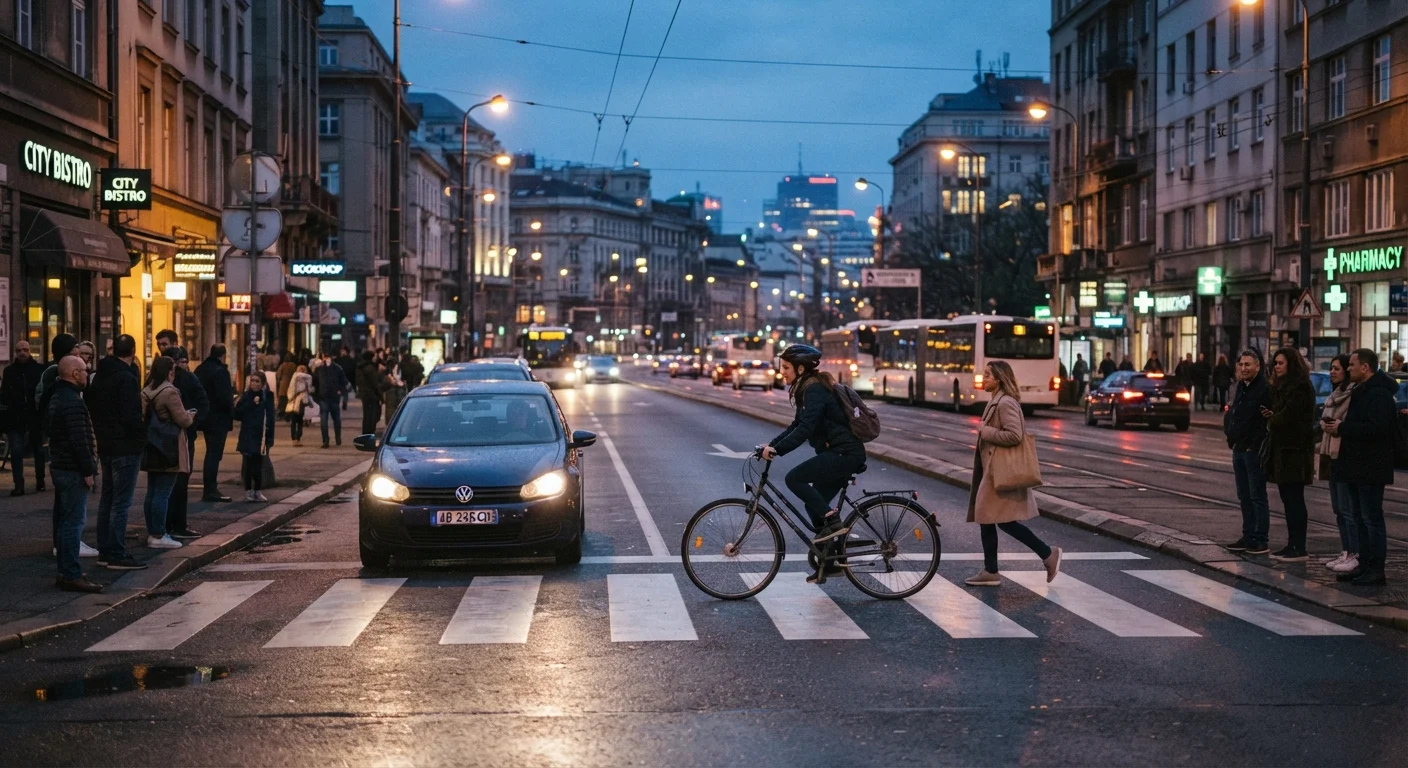
Why Vulnerable Road Users Deserve Extra Attention
Cyclists and pedestrians are classified as vulnerable road users - people who, in any collision with a motor vehicle, face a dramatically higher risk of serious injury or death. Unlike drivers protected by a steel frame, airbags, and crumple zones, a person on foot or a bicycle has almost no buffer between themselves and a 3,000-pound vehicle.
This isn't about blame. Most drivers don't intend to cause harm - but gaps in awareness, misunderstood rules, and split-second misjudgments cause thousands of preventable crashes every year. For a broader look at how inattention contributes to these moments, see common distracted driving misconceptions that many drivers still hold.
Knowing your legal obligations - and the practical habits that go beyond them - is the foundation of responsible driving in shared spaces.
Best Practices for Sharing the Road
The following practices reflect both general traffic law principles and the kind of defensive, considerate driving that keeps everyone moving safely. Rules vary by state, so always verify specific requirements where you drive.
Give cyclists a full three-foot buffer - more when conditions allow
Most states legally require drivers to maintain at least three feet of clearance when passing a cyclist. In practice, more space is almost always safer. Cyclists can be pushed by wind gusts, need to swerve around road debris, or wobble when navigating rough pavement - none of which is predictable from behind.
Stop completely before the crosswalk line, not on it
A car stopped on the crosswalk line forces pedestrians to walk around the front of the vehicle - into moving traffic. It also obscures visibility for both the pedestrian and drivers in adjacent lanes. Stopping behind the line keeps the walking path clear and improves everyone's sightlines.
Check for cyclists before opening your car door
"Dooring" - a car door swinging open into a cyclist's path - is a leading cause of serious cycling injuries in urban areas. Cyclists often have no time to react, and the impact can throw them into traffic. The Dutch Reach (opening the door with your far hand, which naturally turns your body to check behind) is a simple technique that dramatically reduces this risk.
Yield to pedestrians in crosswalks - even unmarked ones
Pedestrians have the right of way in marked crosswalks in virtually every U.S. state. Less well-known: intersections without painted markings still legally constitute crosswalks in many jurisdictions. A pedestrian stepping off a curb at a corner deserves the same yield as one using a painted crossing.
Scan well ahead in areas with high pedestrian or cyclist activity
Reacting to a pedestrian or cyclist who appears suddenly in your path is already a failure of anticipation. In school zones, near parks, on bike-lane corridors, and in residential neighborhoods, scanning further ahead gives you the time and space to adjust speed or lane position before a situation becomes urgent.
Never assume a cyclist will move out of your way
Cyclists are legally permitted on most roads and are not obligated to yield to vehicles simply because they're slower. Honking, tailgating, or accelerating to pressure a cyclist off the road is both dangerous and, in many states, illegal. Patience is not optional - it's the law.
Quick Actions You Can Take Starting Today
Safe habits around vulnerable road users don't require a complete overhaul of how you drive - most improvements come from small, consistent adjustments. These high-impact actions are worth putting into practice on your very next trip.
For an in-depth look at where right-of-way rules often go wrong - including at crosswalks and intersections - this breakdown of common yielding mistakes is worth reviewing. And if you're building broader road skills, the complete safe driving overview for U.S. drivers covers the full landscape of hazard awareness and traffic law.