Three Services, Three Distinct Jobs
Many drivers assume tire rotation, balancing, and alignment are variations of the same service. They aren't. Each one addresses a completely different mechanical reality - and confusing them can lead to ignored warning signs, unnecessary spending, or skipped maintenance that shortens tire life and affects safety.
Understanding what each service does makes it far easier to recognize when your car needs attention and to have an informed conversation with a technician. For a broader view of what your vehicle needs over time, see our maintenance schedule guide.
5,000-7,500 mi
Typical tire rotation interval
Most vehicle manufacturers recommend this range; always confirm with your owner's manual.
~10%
Estimated fuel economy loss from misalignment
The U.S. Department of Energy has noted that misaligned tires increase rolling resistance, which can reduce fuel efficiency.
1-2 years
Recommended alignment check frequency
Under normal driving conditions, most automotive authorities suggest an alignment inspection at least once every one to two years.
Tire Rotation: Evening Out the Wear
Your tires don't all wear at the same rate. Front tires carry the weight of the engine, handle most braking force on front-wheel-drive vehicles, and do all the steering. That adds up to significantly faster wear on the front axle compared to the rear.
Rotation moves each tire to a different wheel position - typically front to back, sometimes in an X-pattern - so wear is distributed more evenly across all four tires. The result is that all four tires tend to wear out around the same time rather than the fronts needing replacement long before the rears.
The general recommendation is every 5,000 to 7,500 miles, though your owner's manual is the authoritative source. Many drivers combine rotation with oil changes to keep both on the same schedule. It's one of the simplest and least expensive ways to extend tire lifespan.
Wheel Balancing: Fixing Vibration at the Source
Every tire and wheel assembly has minor variations in weight distribution - no manufactured product is perfectly uniform. When those imperfections are significant enough, they create a vibration that becomes noticeable at certain speeds, usually between 50 and 70 mph.
Balancing involves placing the wheel-tire assembly on a specialized machine that spins it and identifies where the heavy spots are. Small counterweights are then attached to the rim to compensate. The fix is straightforward, but ignoring the problem accelerates tire wear and can stress suspension components over time.
Balancing isn't on a rigid schedule the way rotation is. Tires are typically balanced when new, and again if vibration develops. It's also worth requesting a balance check if you notice uneven wear patterns that don't seem explained by alignment or inflation issues.
Wheel Alignment: Keeping Your Vehicle Pointed Straight
Alignment refers to the angles at which your wheels contact the road. Over time - and especially after impacts like potholes or curbs - those angles drift out of specification. A misaligned vehicle may pull to one side, cause the steering wheel to sit off-center, or wear tires heavily on one edge while the center remains fine.
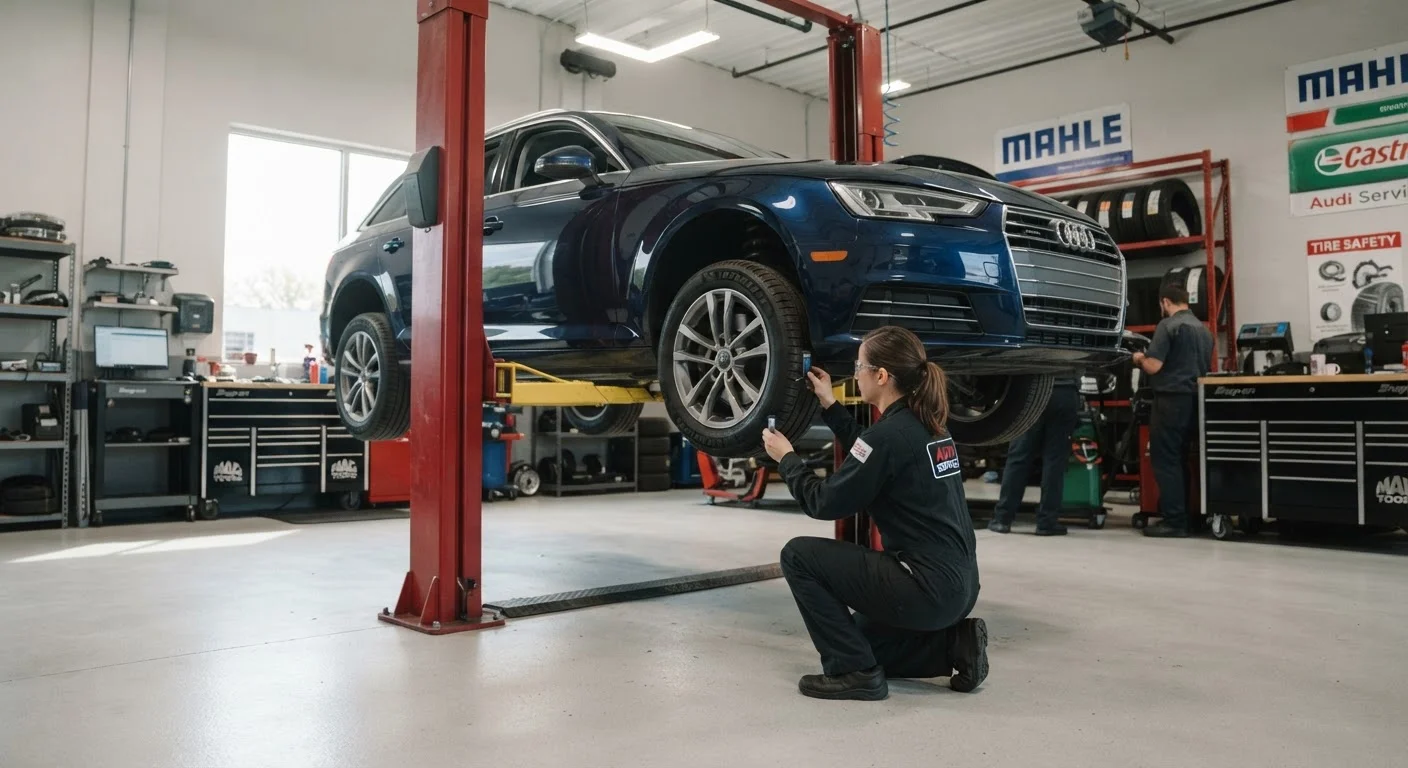
An alignment service adjusts the suspension geometry, not the tires themselves, using precise measurements of camber (the inward or outward tilt of the wheel), toe (whether wheels point inward or outward), and caster (the steering axis angle). It requires specialized equipment and a trained technician.
Alignment is generally checked every one to two years under normal driving conditions, or immediately after a significant road impact. New tires are also a good trigger - proper alignment protects that investment from day one. Skipping alignment checks is one of the hidden costs detailed in our look at what neglected maintenance actually costs.
Alignment Isn't a Set-and-Forget Service
Even if you drive carefully, normal road use gradually shifts alignment angles over time. Speed bumps, minor curb clips, and the general settling of suspension components all contribute. Vehicles that see rough roads or high annual mileage may need more frequent checks than the general one-to-two-year guideline suggests.
What the Warning Signs Look Like
Recognizing when something's off can save you from unnecessary repairs or catching a problem late. Here's a quick reference:
- Rotation overdue: Visibly uneven tread depth between front and rear tires; no other obvious cause.
- Balancing needed: Steering wheel or seat vibrates at highway speeds; the sensation often appears at a specific speed range and may ease at higher speeds.
- Alignment off: Vehicle drifts or pulls to one side on a straight, level road; steering wheel isn't centered when driving straight; tires wearing unevenly on one edge.
These symptoms can sometimes overlap with other issues - worn suspension parts or low tire pressure, for instance, can mimic alignment and balancing problems. If you're unsure, a professional inspection is the right call. Our guide to what's reasonable to handle yourself can help you decide when to act on your own and when to bring in a technician.