
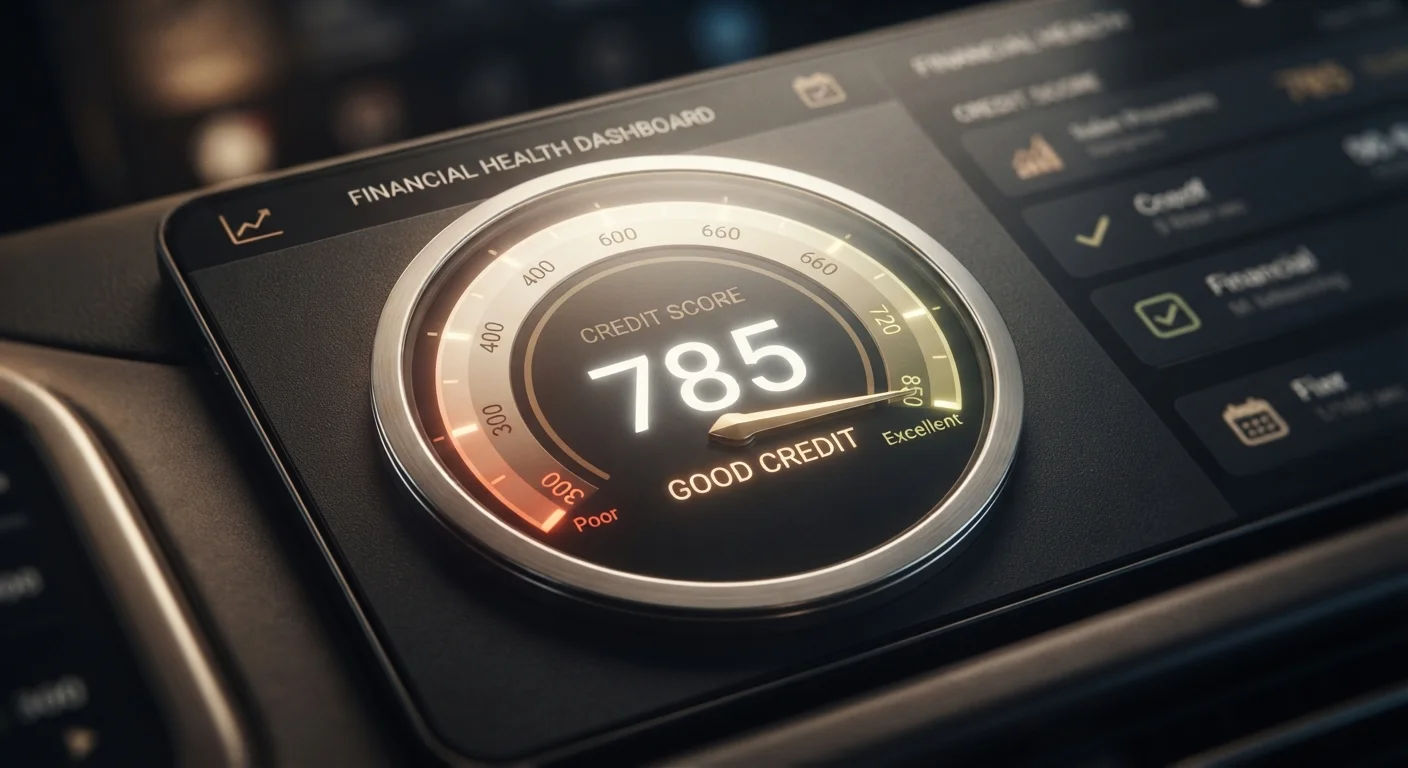
How Lenders Actually Use Your Score
When you apply for an auto loan, the lender pulls your credit report and score to answer one core question: how likely is this borrower to repay on time? Your score doesn't exist in isolation - lenders also consider your income, existing debt obligations, and the loan-to-value ratio of the vehicle. But the credit score typically acts as the initial filter that places you into a rate tier before any of those other factors are weighed.
Lenders group applicants into broad risk categories. A borrower with a 780 score is statistically less likely to default than one with a 580, and the lender prices that difference directly into the APR they offer. That rate gap, spread across a 60- or 72-month loan, can translate into thousands of dollars in total interest. To understand how interest and loan terms interact, see our explainer on how auto loans work.
Specialized Auto Credit Scores Exist
Beyond the standard FICO score, lenders may pull FICO Auto Scores - versions specifically calibrated to predict auto loan default risk. These models place extra weight on how you've handled past vehicle loans. If you've managed a prior auto loan responsibly, your FICO Auto Score may actually be higher than your general FICO score, which could work in your favor.
Understanding Credit Score Tiers
While every lender sets its own thresholds, the industry generally clusters borrowers into four broad tiers:
- Excellent (720-850): Borrowers in this range typically qualify for lenders' most competitive rates. Down payment requirements may be more flexible as well.
- Good (660-719): Solid financing terms are still accessible here, though rates run modestly higher than the top tier. Most conventional lenders welcome this range.
- Fair (580-659): Approval is generally still achievable, but interest rates climb noticeably. A larger down payment can help offset the rate impact.
- Subprime (below 580): Lenders who serve this segment charge significantly higher rates to compensate for elevated default risk. Monthly payments can become substantial relative to the vehicle's value.
These ranges are general guidelines, not guarantees. Individual lenders define their own cutoffs, and some consider additional factors that can shift an offer meaningfully in either direction.
~65%
New vehicle loans going to prime or super-prime borrowers
Experian's State of the Automotive Finance Market reports consistently show that borrowers with scores above 660 account for the large majority of new vehicle financing volume.
300-850
Standard FICO score range used by auto lenders
FICO is the dominant scoring model in auto lending; most lenders also offer rate tiers tied to specific score bands within this range.
14-45 days
Rate-shopping window for grouped credit inquiries
FICO scoring models typically treat multiple auto loan inquiries within this window as a single inquiry to encourage consumers to compare lender offers.
What You Can Do Before You Finance
Checking your credit report before visiting a dealership or applying online gives you a realistic picture of what to expect. You're entitled to free reports from each of the three major bureaus - Equifax, Experian, and TransUnion - through AnnualCreditReport.com. Review them for errors, such as incorrectly reported late payments or accounts that don't belong to you, and dispute any inaccuracies directly with the bureau.
If your score has room to grow, two of the most effective short-term strategies are paying down revolving credit card balances (which affects your credit utilization ratio) and ensuring every bill is paid on time going forward. Even moving from the lower end of one tier to the upper end of the same tier can produce a noticeable rate improvement with some lenders.
When you're ready to apply, do your rate shopping within a condensed timeframe. Credit scoring models recognize when consumers are comparison shopping for a loan and typically group multiple auto inquiries in a short window as a single hard pull, limiting the impact on your score.
Financing costs are just one piece of what a vehicle actually costs to own. For a fuller picture, our article on the full cost of car ownership covers the fees, insurance, depreciation, and maintenance that add up over time. And if you're weighing whether to buy new or used, note that financing rates often differ between new and used vehicles, which factors into the true cost comparison.