What Makes Shoulder Season Different
Most travelers operate on a binary: either they're booking in the thick of high season - Santorini in July, Paris in June, the Grand Canyon over a long weekend - or they're holding out for deep-discount off-peak travel when some attractions scale back or the weather turns genuinely difficult. Shoulder season sits between these two poles, and it's often the better choice that gets quietly ignored.
During shoulder season, the infrastructure of a destination is essentially intact - hotels are staffed, museums are open, local restaurants are running their full menus - but the visitor volume has stepped back meaningfully. That shift changes the feel of a place in ways that are hard to quantify but easy to notice once you've experienced it. You spend less time waiting in lines and more time actually experiencing things.
For a deeper look at how timing and destination type interact, our breakdown of traveling major European cities in August captures exactly what you're trading away when you go at the wrong time.
The Real Trade-Offs to Understand
Shoulder season isn't without its complications, and it would be dishonest to frame it as a straightforward upgrade. The main variable is weather. Fall travel in the American Southwest can be glorious; fall in the Pacific Northwest means rain is a real factor. Spring in Southeast Asia may overlap with the tail end of humid rainy seasons in some areas. The appeal of shoulder season isn't guaranteed sunshine - it's a different balance of trade-offs.
Seasonally operated businesses are another consideration. Beach resort towns may begin winding down in September; ski destinations might not have much to offer in early November before snow arrives. The trick is matching shoulder-season timing to the specific rhythms of your destination rather than applying a universal rule.
Check Local Event Calendars First
Before assuming shoulder season means lower crowds, look up festivals, public holidays, and major sporting events at your destination. A regional harvest festival or national holiday can completely fill hotels and attractions for a week, even well outside peak season. A quick check of the local tourism board's calendar takes minutes and saves real frustration.
For travelers choosing between destination types, understanding how mountain and beach destinations compare on crowd levels and weather can help narrow down when shoulder season works best for each.
Why Experienced Travelers Swear By It
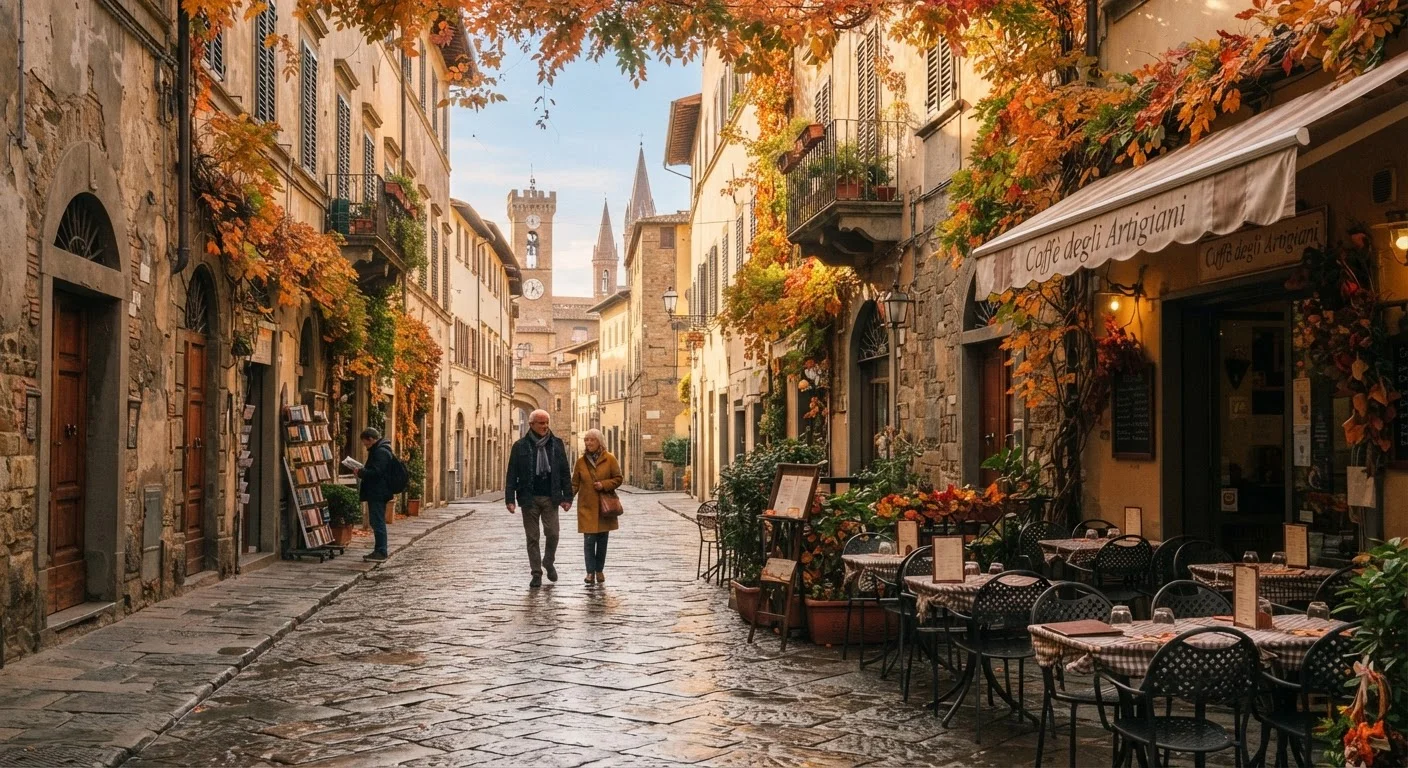
Talk to frequent travelers about their favorite trips and a pattern emerges: many of their standout memories happened outside peak season. The Amalfi Coast in late October. New England in early May before the summer crowds land. Kyoto in March before cherry blossom peak - close enough to feel the anticipation, far enough to still walk freely through temple gardens.
What shoulder season delivers isn't necessarily the most photogenic version of a destination, but often the most livable one. Local rhythms reassert themselves when tourist density drops. Cafés fill with residents. Streets feel proportionate to their architecture again. That texture is genuinely hard to access at peak times.
A traveler visits Rome in late October instead of July, arriving after the summer heat and the densest crowds have subsided.
A family visits a popular national park in the western US during mid-September, after the Labor Day rush but while campgrounds and visitor centers remain open.
A couple plans a trip to Portugal's Algarve coast in early May, before the peak summer season fully sets in.
If your trip planning process still has open questions - how you're getting there, who you're going with - our guide to road trips versus flying and the solo versus group travel breakdown are solid starting points.
How to Plan a Shoulder Season Trip Well
Research is the core skill. Start by identifying your destination's specific high season - then step back four to six weeks on either side. Cross-reference that window against local event calendars, since festivals or national holidays can compress shoulder season benefits quickly. Debunking common travel myths is also worth a read before locking anything in, since some assumptions about when to go are simply wrong.
Build flexibility into your itinerary. Shoulder season weather is more variable, so the ability to swap an outdoor afternoon for an indoor one without derailing everything makes the trip more resilient. Over-scheduling is one of the most common planning errors, and it's especially costly when conditions shift unexpectedly.
Finally, verify entry requirements, hours, and operational status directly with sources rather than relying on information that may be outdated. Official tourism boards and government travel resources are your most reliable check before departure.
30-50%
Typical visitor volume drop in shoulder vs. peak months
Destination management organizations frequently report significant drops in visitor counts during shoulder periods compared to peak summer or holiday windows, though figures vary widely by location.
2-3 weeks
Average shoulder season window on either side of peak
Travel researchers generally describe shoulder season as the four to six weeks flanking a destination's recognized high season, though exact boundaries depend on local climate and tourism patterns.
Explore more practical strategies in our trip planning hub, where you'll find guidance on everything from budgeting your time to navigating unfamiliar transit systems.