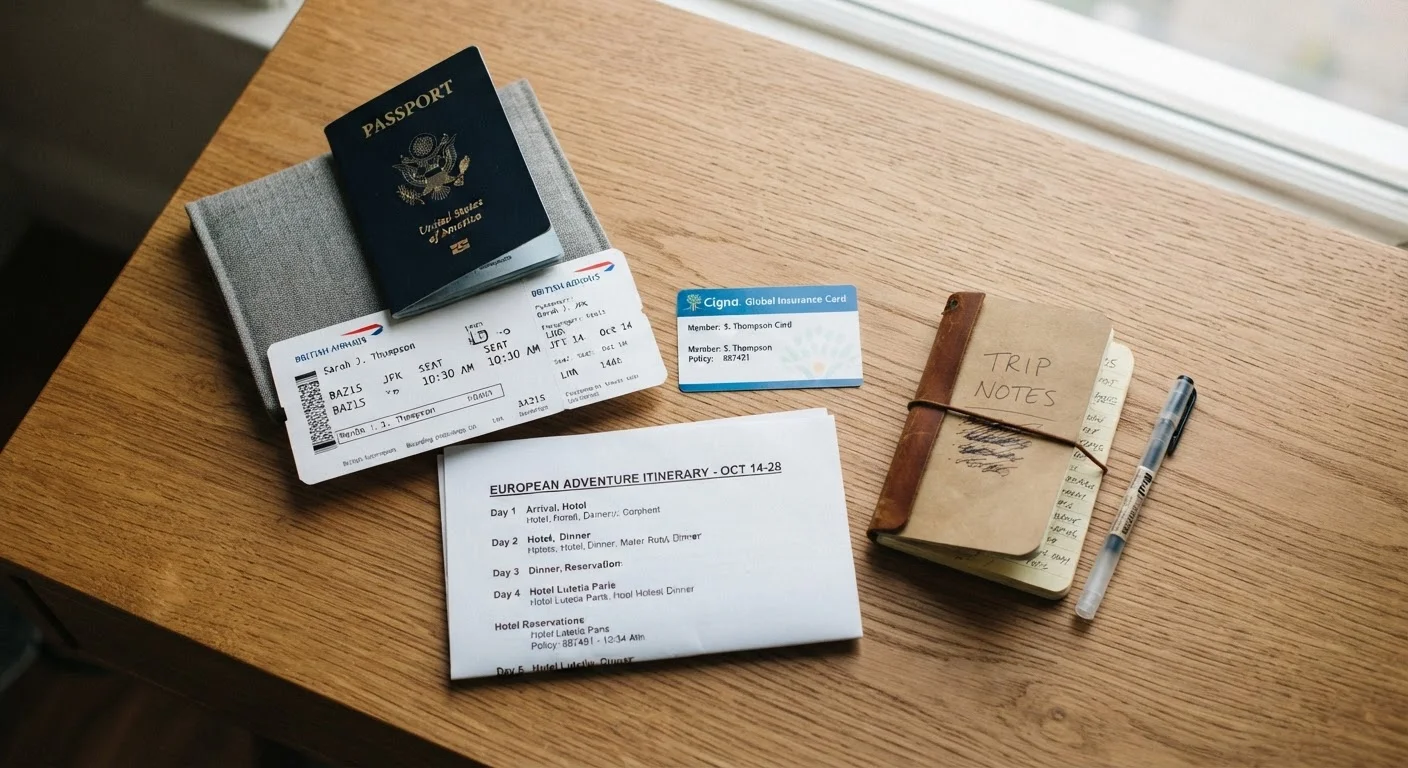

The Core Difference: Complexity Compounds Fast Abroad
At its most basic, every trip involves the same four tasks: decide where to go, figure out how to get there, arrange a place to sleep, and set a budget. For domestic travel, those four steps are often all you need. For international travel, each of those steps spawns sub-tasks - and some of those sub-tasks have hard government deadlines attached to them.
A weekend trip to another state requires a driver's license and a debit card. A two-week trip to Southeast Asia requires a valid passport (often with at least six months of remaining validity), a potential visa application, travel health insurance review, and possibly destination-specific vaccinations. The destination research that feels optional for a domestic trip becomes essential when you're navigating a different legal system, currency, and language.
Understanding exactly where the process diverges is the fastest way to avoid being blindsided. See our ground-up international planning guide if you're heading abroad for the first time.
| Planning Element | Domestic Travel | International Travel | |
|---|---|---|---|
| Primary ID required | Government-issued ID or REAL ID | Valid passport (often 6+ months validity) | |
| Entry permits | None required | Visa may be required; varies by country | |
| Recommended lead time | 2-6 weeks typical | 3-6 months or more advisable | |
| Health prep | Generally minimal | Vaccinations, travel medicine consult often needed | |
| Currency logistics | USD used throughout | Exchange rates, foreign fees, local cash needs | |
| Health insurance coverage | Typically covered domestically | Often limited or no coverage; review policy | |
| Entry requirement verification | Not applicable | Must check official government sources before travel |
Documents and Entry Requirements: The Biggest Planning Variable
Domestic travel in the U.S. requires government-issued ID - and that's essentially the entire documentation burden. International travel starts with a valid passport, but that's just the entry point. Many countries require visas, which range from simple e-visas processed online in minutes to embassy appointments, supporting documents, and processing windows that can stretch six to twelve weeks.
Entry requirements also shift based on your citizenship, your travel history, and the specific political relationship between the U.S. and your destination country at any given time. Some nations require proof of onward travel, proof of accommodation, or evidence of sufficient funds. Others have health-related entry requirements - vaccination certificates, for instance - that vary by destination and can change with little notice.
Always verify current entry requirements through official sources: the U.S. Department of State's travel website and the destination country's official embassy or consulate. Information from travel blogs or booking sites may be outdated, and the consequences of relying on incorrect entry requirements can mean being denied boarding or turned away at the border.
Lead Time: Why Timing Matters More When You Cross a Border
For most domestic trips, booking two to four weeks out is perfectly reasonable - sometimes even a week out works fine. International travel rewards a longer runway, and in many cases requires one.
Passport applications, renewals, and expedited processing all take time that can't be rushed beyond certain limits. Visa applications for countries like China, India, Russia, or Brazil often require advance scheduling and processing time that makes last-minute planning impractical. Popular international accommodations and flights - especially during peak seasons or major local holidays - book out months earlier than equivalent domestic options.
There's also health prep to account for. Some travel vaccines require multiple doses spaced weeks apart, meaning you may need to see a travel medicine clinic two to three months before departure. Consult a qualified healthcare provider about any recommended vaccinations for your destination well in advance. Our article on realistic trip planning timelines breaks down the decision by trip type and destination.
Check Your Passport's Expiration Date First
Many countries require your passport to be valid for at least six months beyond your travel dates - not just valid when you depart. If your passport expires within the next year, check renewal timelines before you do anything else. Processing times fluctuate, and waiting until the last minute can put your entire trip at risk. The U.S. State Department's website publishes current processing estimates.
Budget, Insurance, and Money Logistics
Domestic budgeting is relatively straightforward: prices are in dollars, your bank card works everywhere, and your existing health insurance likely covers you. International travel introduces currency exchange, foreign transaction fees, and the very real possibility that your standard health insurance provides no coverage abroad - leaving you financially exposed in a medical emergency.
Travel insurance becomes a more serious consideration internationally. A policy that covers emergency medical evacuation, trip cancellation, and lost documents provides a meaningful safety net that domestic travel rarely demands. Evaluate what your existing credit card and health insurance policies actually cover before deciding whether additional coverage makes sense for your trip.
Building a realistic international budget also means accounting for airport taxes, departure fees, and local costs that don't show up in your initial flight and hotel search. Avoid the planning traps that quietly derail even well-prepared travelers - our piece on common trip planning mistakes covers the errors that hit hardest once you're already on the ground.
Before you leave, work through a pre-trip checklist that covers documents, finances, and health prep in one organized sweep - it's worth doing for any international trip, no matter how experienced you are.