
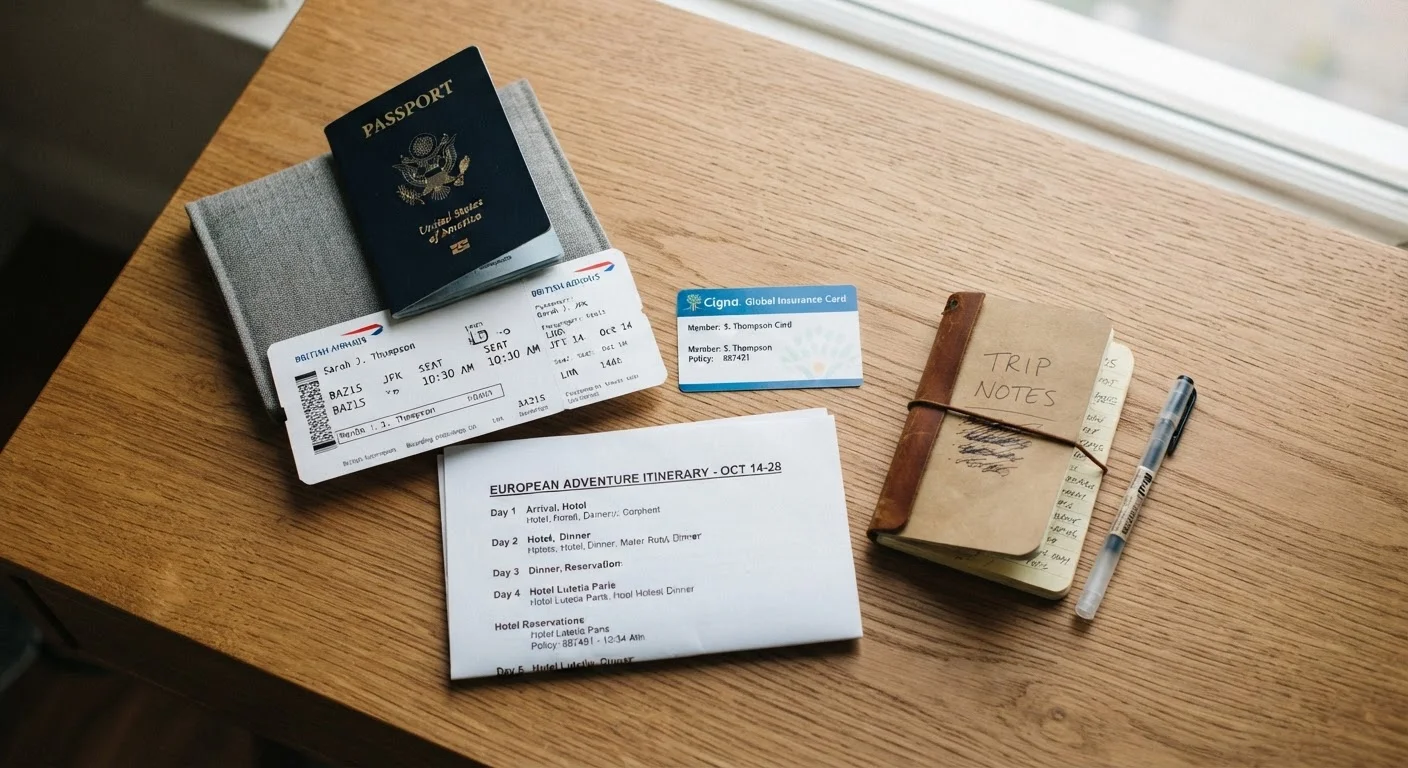
The Documents That Can Make or Break Your Trip
You remembered the sunscreen, the adapters, and even the snacks for the flight. But did you double-check your document folder? Missing or expired paperwork is one of the most common - and most preventable - reasons travelers get turned away at borders, denied boarding, or stranded without healthcare coverage. The good news: a little upfront attention makes all the difference.
Whether you're heading abroad for the first time or you're a seasoned road-tripper, this quick-reference guide covers the documents most travelers need and the ones that often get overlooked until it's too late. For a broader planning framework, see the pre-trip checklist every traveler should run through.
| Passport validity required | 6 months beyond travel dates (many countries) (Varies by destination; verify with destination's official immigration authority) |
| REAL ID enforcement | Required for U.S. domestic TSA checkpoints (U.S. Department of Homeland Security) |
| International Driving Permit | Required for car rentals in many countries alongside U.S. license (Issued in the U.S. through authorized organizations before travel) |
| Travel insurance contact | Should include 24/7 emergency hotline number (Check your insurer's policy documentation) |
| Digital document backup | Secure cloud storage or emailed copies recommended (Standard practice endorsed by travel safety organizations) |
| Customs receipts | Helpful for proving prior ownership of high-value items (U.S. Customs and Border Protection guidance) |
The Core Documents Every Traveler Needs
These are the non-negotiables - the items border agents, airline staff, and car rental desks will ask for without hesitation.
- Passport (valid): Many countries require at least six months of validity beyond your travel dates. Check your passport's expiration well before booking - renewal processing times can stretch weeks or longer depending on demand.
- Visa or entry authorization: Some destinations require a visa obtained in advance; others offer visa-on-arrival or electronic travel authorizations (ETAs). Requirements vary by nationality and can change. Always verify directly with the destination country's official immigration authority.
- Government-issued photo ID: Domestic travelers within the U.S. will need a REAL ID-compliant driver's license or state ID for TSA checkpoints, particularly after full federal enforcement takes effect. Check your ID's compliance status before flying.
- Flight, train, or cruise confirmation: A printed or downloadable copy of your itinerary matters when apps fail and data roaming is spotty.
- Hotel or accommodation confirmation: Border officers in many countries ask where you'll be staying. Have confirmation details readily accessible.
REAL ID
A federally compliant form of identification issued by U.S. states that meets minimum security standards set by the REAL ID Act. Required for domestic air travel and access to certain federal facilities.
Electronic Travel Authorization (ETA)
A pre-travel permission system used by several countries - including Canada and Australia - that allows eligible travelers to enter without a traditional visa. Typically obtained online before departure.
International Driving Permit (IDP)
A document that translates your valid driver's license into multiple languages and is recognized in many countries as supplementary identification for operating a vehicle abroad.
Travel Insurance Policy Summary
A condensed overview of your travel insurance coverage, including your policy number, insurer contact details, covered events, and key limits. Essential to carry separately from your original policy documents.
Commonly Overlooked Documents That Can Cause Real Problems
Beyond the obvious, there's a second tier of documents travelers routinely underpack - and sorely miss when something goes wrong.
- Travel insurance policy details: In a medical emergency abroad, knowing your policy number, insurer's emergency hotline, and coverage limits is critical. A card-sized summary kept in your wallet works well. Check what's actually covered - evacuation, hospital stays, trip cancellation - before you go.
- Copies of prescriptions and a medication list: If you carry prescription medication, bring documentation from your prescribing physician. Crossing borders with unmarked pills or controlled substances can create complications. Always carry medications in their original labeled containers where possible.
- International driving permit (IDP): Renting a car in many countries requires an IDP alongside your valid U.S. driver's license. These are issued in the U.S. through authorized motoring organizations - not at the destination.
- Emergency contact and next-of-kin information: Write it down on paper. Phones get lost, stolen, or run out of battery. Protecting your documents and keeping backups should be part of every traveler's pre-departure routine.
- Customs declarations and receipts: Bringing expensive electronics or new items abroad? Receipts and proof of prior ownership can prevent duties on return. Learn more about customs rules and duty-free limits before you pack.
Always verify current entry, visa, and health requirements through official government sources before traveling - conditions can change and no article can substitute for real-time official guidance.
Smart Ways to Store and Back Up Your Documents
Even perfect preparation can hit a snag if your bag is lost or stolen. A layered backup strategy dramatically reduces the damage.
Store physical copies of key documents - passport data page, travel insurance summary, itinerary, accommodation confirmations - in a separate bag from your originals. Keep digital scans in a secure cloud folder you can access from any device. Some travelers also email copies to a trusted contact at home.
Solo travelers especially benefit from this habit. Solo travel safety practices routinely emphasize document redundancy as a foundational precaution, not an optional extra.
For a comprehensive look at everything you need to organize before departure - from finances and home security to health prep - the complete pre-trip planning checklist is a worthwhile read before any international journey.