
The Engine Under the Hood: What Drives a Thriller
Strip a thriller down to its bones and you find one thing at the center: a threat that is happening right now. That present-tense danger is what separates the genre from its closest neighbors. A mystery asks you to look backward - who did it, and how? A thriller grabs you by the collar and says: something terrible is about to happen, and the only person who can stop it is already running out of time.
That sense of forward momentum isn't accidental. Thriller writers engineer it deliberately, using short chapters, cliffhanger scene breaks, and constant information reveals to keep the reader's pulse elevated. The plot doesn't pause to reflect - it accelerates. Even quiet moments in a thriller carry menace, because the reader knows the threat hasn't gone away.
To understand how this differs from related genres, see our breakdown of mystery, thriller, and suspense - three genres that share shelf space but deliver tension in meaningfully different ways.
Stakes, Pressure, and the Ticking Clock
A thriller lives or dies by its stakes. If the reader doesn't believe the protagonist could genuinely lose - their life, their family, their freedom, their country - the tension evaporates. Effective thriller writers establish early what the protagonist stands to lose, and then methodically threaten exactly that.
The ticking clock is the genre's most recognizable tension device. Sometimes it's literal: a bomb, a deadline, a kidnapper's ultimatum. More often it's structural - a net slowly closing around the protagonist while they race to act before the window shuts. Either way, the reader feels time running out with every page.
Top 3
Thriller's consistent rank in U.S. adult fiction sales
Thrillers and suspense fiction have consistently ranked among the top-selling adult fiction categories in annual publishing industry reports from the Association of American Publishers.
2-5 pages
Typical thriller chapter length
Genre analysts and editors widely note that commercial thrillers average significantly shorter chapters than literary fiction, a deliberate structural choice to sustain pace and reader engagement.
Pressure also comes from isolation. Thriller protagonists frequently find themselves cut off from allies, doubted by institutions, or in possession of dangerous knowledge no one else will believe. That social and institutional pressure compounds the physical threat and keeps the protagonist - and the reader - off-balance.
Character in a Genre Built for Plot
It's a common misconception that thrillers sacrifice character depth for plot speed. The strongest entries in the genre do both. What changes is how character is revealed: not through quiet introspection, but through decisions made under extreme pressure. Who someone truly is comes out when they're cornered, and thrillers put their characters in corners constantly.
The protagonist of a thriller is usually competent but fallible - someone with skills the situation demands, but enough human weakness to make failure feel possible. The antagonist, meanwhile, must be genuinely capable of winning. A threat that seems defeatable from page one drains the genre of its essential charge.
Psychological thrillers push character to the foreground, making the inner landscape of the protagonist as dangerous as any external threat. The unreliable narrator - a character whose perception of events the reader can't fully trust - is a staple of the subgenre, and it reframes tension as something happening inside the story as much as around it.
How to Recognize a Thriller Before You Read It
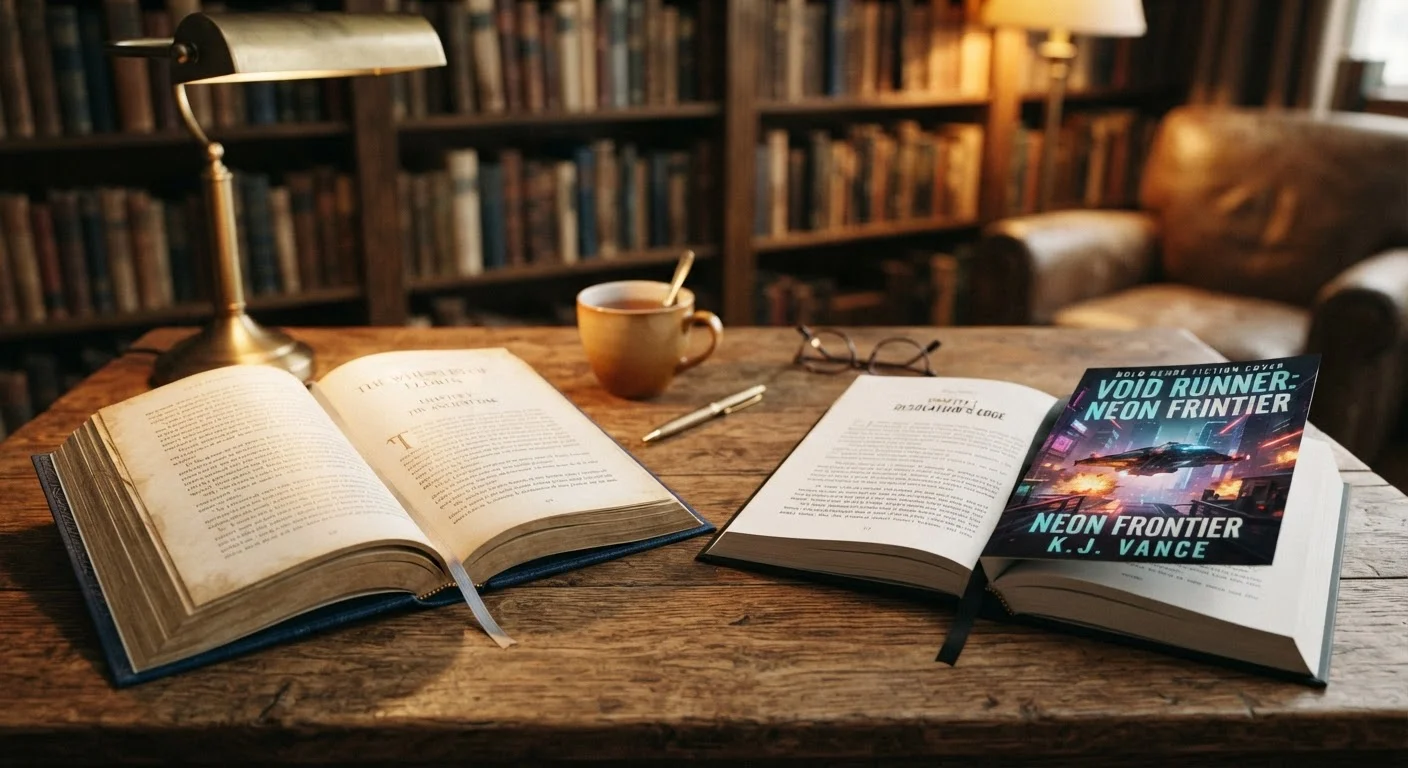
Genre signals start before page one. Thrillers tend to announce themselves through visual and structural cues: cover art heavy on shadow, negative space, and stark typography; back-cover copy that emphasizes danger and urgency over atmosphere; chapter lengths that are noticeably short. These aren't accidents - publishers design covers to meet genre expectations.
Inside the book, thrillers typically open in media res - in the middle of action, or at a moment of disruption - rather than with slow scene-setting. The first chapter often introduces the threat directly or plants a question the reader needs answered urgently. If you find yourself unable to stop at a chapter break, you're likely in thriller territory.
For a broader guide to reading genre signals across fiction, learn how to read cover and structural cues before committing to a book. And if you're exploring how adjacent genres create fear through different means, discover how horror splinters into distinct subgenres - the contrast sharpens what makes a thriller uniquely its own.