Horror Is a Mood - and a Map
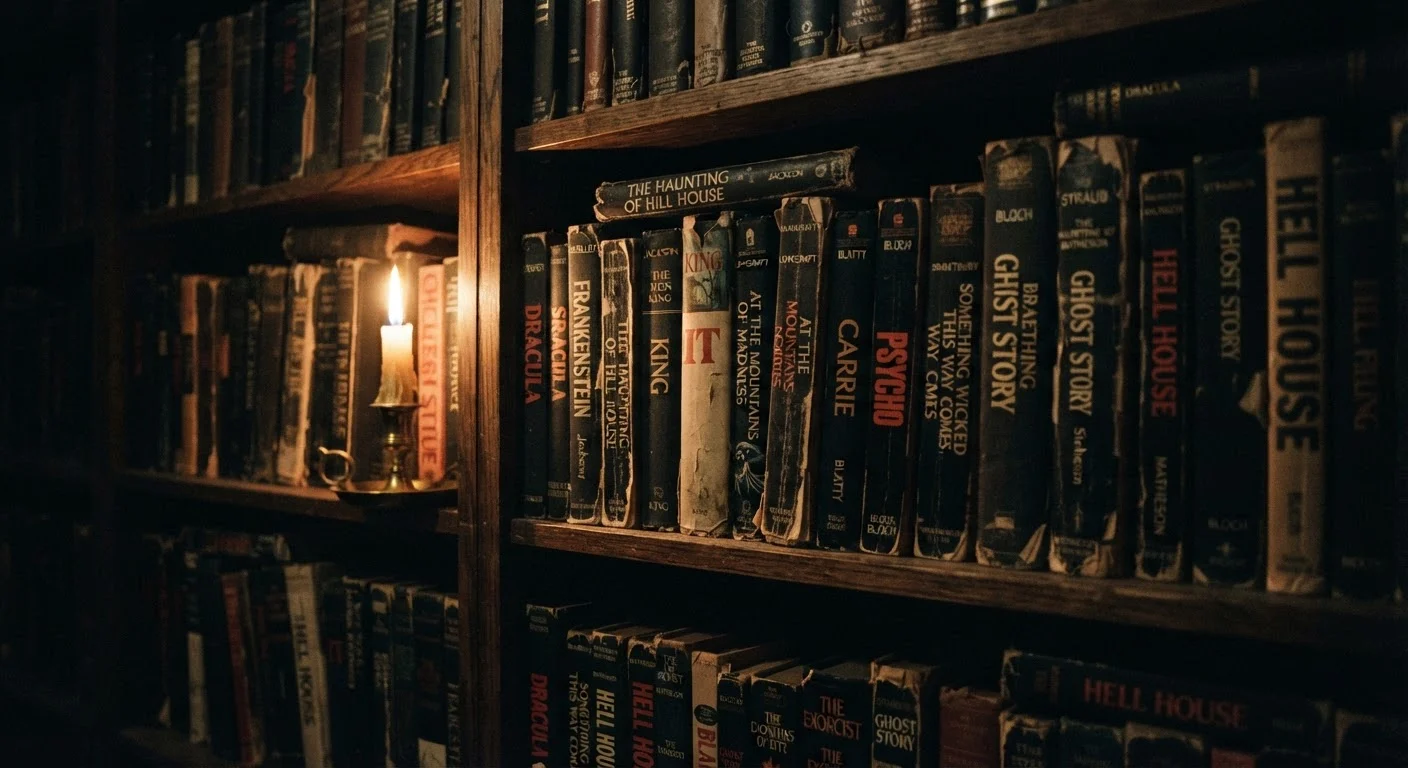
Ask ten readers what horror means to them, and you'll get ten different answers. One thinks of Victorian mansions and cursed bloodlines. Another pictures relentless, masked figures in suburban cul-de-sacs. A third envisions something so vast and indifferent that the human mind simply can't hold it. They're all right - because horror isn't a single tradition. It's a sprawling territory, and the subgenres are the neighborhoods inside it.
Understanding those neighborhoods matters, especially if you've bounced off one horror book and assumed the whole genre wasn't for you. Horror as a broad category sits alongside thriller and suspense in the emotional territory it covers - though, as our breakdown of mystery, thriller, and suspense explores, these categories deliver tension through very different mechanisms. Horror's distinguishing quality is dread: not just danger, but the particular experience of confronting what we most fear. The subgenres below represent the clearest, most distinct expressions of that impulse.
Gothic Horror
Gothic horror is probably the oldest formal strain of the genre, tracing its roots to 18th-century novels set in crumbling European estates and fog-drenched moors. The hallmarks are easy to identify: decaying architecture, generational curses, repressed secrets that refuse to stay buried, and an atmosphere so thick it functions almost as a character itself.
What distinguishes gothic horror isn't the presence of monsters - though they appear - but its obsession with the past. The threat in gothic fiction is almost always something that should have been resolved long ago but wasn't. Think of the way a family home can feel haunted not by ghosts exactly, but by everything that went wrong in it. Gothic horror weaponizes that sensation.
Gothic horror's real monster is always the unburied past.
Psychological Horror
Psychological horror moves the source of terror inward. Rather than an external threat, the horror here is unreliable perception, unraveling identity, or a mind turning against itself. The reader - and often the protagonist - can't be certain what's real, and that uncertainty is the point.
This subgenre tends to attract readers who are less interested in gore and more interested in the unsettling quality of not trusting your own senses. It overlaps with literary fiction more than most horror subgenres do. Stories that leave you questioning the narrator's reliability long after you've closed the book almost certainly have psychological horror at their core.
Psychological horror's power lies in making the reader doubt what they know.
Cosmic Horror
Cosmic horror, deeply associated with early 20th-century American author H.P. Lovecraft and the tradition he inspired, operates from a radical premise: the universe is not indifferent to humanity - it's simply too large, too old, and too alien to notice us at all. The threat isn't a monster you can fight. It's the realization that fighting is meaningless.
Where most horror subgenres give the protagonist some agency, cosmic horror strips it away entirely. Knowledge itself becomes dangerous; understanding what lurks behind reality is what breaks characters. This makes cosmic horror philosophically distinct and, for some readers, far more disturbing than anything a masked slasher could deliver.
Cosmic horror argues the universe is too vast for human survival to matter.
Supernatural Horror
Supernatural horror is probably the broadest of the subgenres, encompassing ghosts, demons, curses, witches, and any force that operates outside the laws of the natural world. What unifies these stories is the transgression of the boundary between the living and the dead, the physical and the spiritual.
Unlike cosmic horror, where the threat is incomprehensible, supernatural horror usually has defined rules - even if the characters don't know them yet. Discovering those rules, and whether they can be used to fight back, drives much of the tension. This subgenre rewards readers who enjoy mythology, folklore, and stories where the past and present collide.
Supernatural horror works because it makes the invisible suddenly visible and threatening.
Slasher and Survival Horror
Slasher fiction strips the genre down to its most primal elements: a threat, a group of potential victims, and the question of who survives. The horror here is visceral and immediate, concerned less with atmosphere or philosophy than with the raw mechanics of danger and escape.
Readers drawn to this subgenre are often more interested in tension and pacing than in dread or ambiguity. That puts slasher fiction in interesting company with thrillers - our exploration of what makes a book a thriller notes how pace and stakes drive that genre, and survival horror shares much of that structural DNA, just with more overt menace.
Slasher fiction reduces horror to its purest form: survival against overwhelming threat.
Body Horror
Body horror targets the discomfort we feel about physical vulnerability - the fragility of flesh, the betrayal of the body, transformation into something unrecognizable. Where psychological horror colonizes the mind, body horror colonizes the skin. The horror is intimate because it's inescapable: you live in a body.
This subgenre often carries real thematic weight around illness, identity, and the fear of losing control over the self. Some of the most critically discussed horror fiction in recent decades belongs here, precisely because it uses the body as a metaphor for broader anxieties around autonomy, contagion, and change.
Body horror succeeds by making readers feel the threat inside their own skin.
Finding Your Fear - and Your Next Book
The smartest way to navigate horror isn't to ask whether you like it, but to ask what kind of fear speaks to you. Do you find the past inescapable? Gothic horror lives there. Do you worry about your own perception of reality? Psychological horror will find you. Are you drawn to the vastness of the unknown? Cosmic horror rewards exactly that curiosity.
Horror also bleeds productively into other genres. For readers curious about where genre lines are drawn more broadly, our map of major literary genres puts horror in context alongside fantasy, science fiction, and beyond. The subgenre that unsettles you most is usually the one that's tapping into something real - and that's precisely what great horror has always done.
Start with What Scares You Most
If you're new to horror fiction, the most reliable entry point is the subgenre that mirrors your deepest real-world fear. Claustrophobic about the mind? Try psychological horror. Haunted by family history? Gothic is your door in. Beginning from a place of personal resonance tends to produce a much more satisfying reading experience than picking up whichever book has the most dramatic cover.