The Page Behind the Page
Every finished book arrives in the reader's hands after a long, mostly invisible journey. Drafts get discarded. Titles change. Passages that once seemed essential disappear in revision. By the time a novel or poem collection reaches print, its author has made hundreds of decisions about what to show the world - and what to keep hidden.
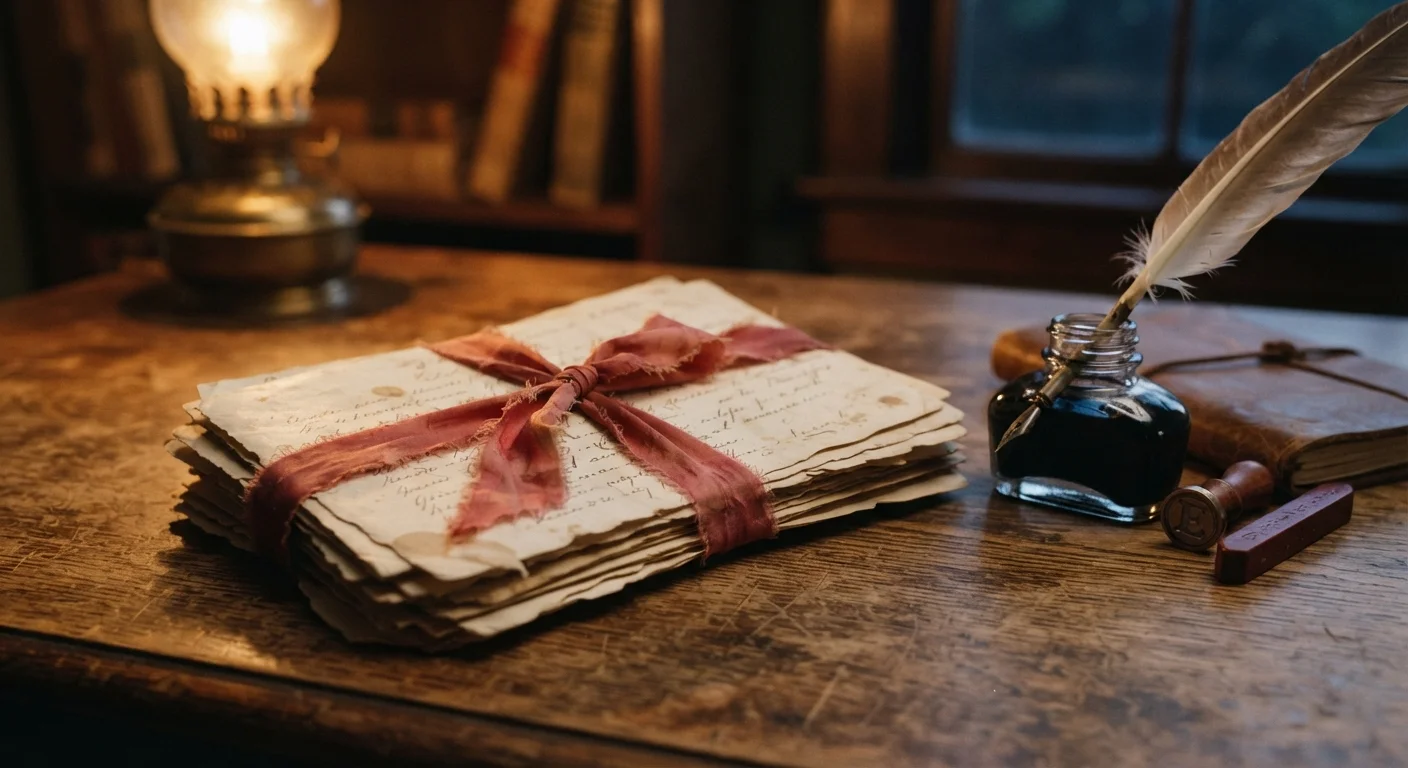
Letters don't work that way. Written in haste, in longing, in frustration, or in joy, they capture a writer mid-thought, before the editorial reflex kicks in. That raw quality is exactly why correspondence has fascinated literary scholars and devoted readers for centuries. It offers something a finished book structurally cannot: the author speaking without a performance.
This is not a minor distinction. Understanding what shapes a writer's work requires more than reading the published page. Letters fill the space that biography sometimes oversimplifies and that fiction deliberately disguises.
What Letters Actually Reveal
Consider John Keats, whose odes are among the most formally perfect poems in the English language. His letters - particularly those written to his brothers and to his close friend Benjamin Bailey - read like a mind working in real time. He coined the term "negative capability" not in a published essay but in a letter, describing the quality of being comfortable with uncertainty and doubt. Scholars have spent generations unpacking what he meant, precisely because it arrived unpolished, in conversation.
Anton Chekhov's letters present a different kind of revelation. His plays and stories are famously restrained, almost coolly observational. His correspondence with friends, editors, and fellow writers is warmer, funnier, and more exasperated than anything his fiction suggests. He wrote about the difficulty of earning a living, about the exhaustion of being famous, about his ambivalence toward his own talent - feelings that his disciplined prose kept carefully offstage.
Flannery O'Connor's letters, collected in The Habit of Being, have become a landmark of American literary correspondence. She wrote prolifically from her Georgia farm, often while managing the chronic illness that would define and shorten her life. Her letters are sharp, irreverent, theologically serious, and laugh-out-loud funny. Readers who approach her fiction - full of violent grace and grotesque imagery - through her letters often find that the strangeness becomes not just comprehensible but inevitable.
“A letter always feels to me like Immortality, for is it not the Mind alone without corporeal friend?”
— Emily Dickinson, American poet, in personal correspondence
The letters of these writers illuminate something that even good biography can miss. They show the full texture of a writer's life before, during, and after the work that made them famous.
The Persona vs. the Person
One of the most striking things about author correspondence is how often it disrupts the image a writer carefully cultivated in public. Some writers who projected serene artistic confidence were, in private, plagued by self-doubt. Others whose published voices seemed cold or remote were tender and playful with the people they trusted.
This gap matters because readers often project a unified identity onto an author - treating the voice in the novels and the person who wrote them as one and the same. Letters complicate that habit in productive ways. They reveal the performance involved in publishing, in the same way that publishing anonymously once allowed writers to separate their real selves from their literary identity entirely.
Letters also capture what writers thought of each other - sometimes generously, sometimes not. The literary world visible in private correspondence is messier, more competitive, and more emotionally tangled than official literary histories tend to acknowledge.
Why This Matters for How You Read
Reading an author's letters before or after engaging with their fiction is one of the most rewarding detours a reader can take. It doesn't explain away the mystery of great writing - if anything, it deepens it. When you know that a novelist was writing through grief, or that a story you admire was drafted during a period of financial crisis, you return to the text with different eyes.
Some books carry outsize cultural weight - as explored in discussions about how a single work can reshape literary history. Letters can illuminate why a particular book arrived when it did, shaped the way it was. They place the work back in the conditions of its making.
There are also smaller, more personal revelations to find. A writer's dedication page might carry a meaning visible only to the recipient; the histories behind famous dedications often only become clear when you read the correspondence alongside them.
The letters authors wrote were never meant to be masterpieces. That's precisely what makes them matter.