What You're Required to Declare
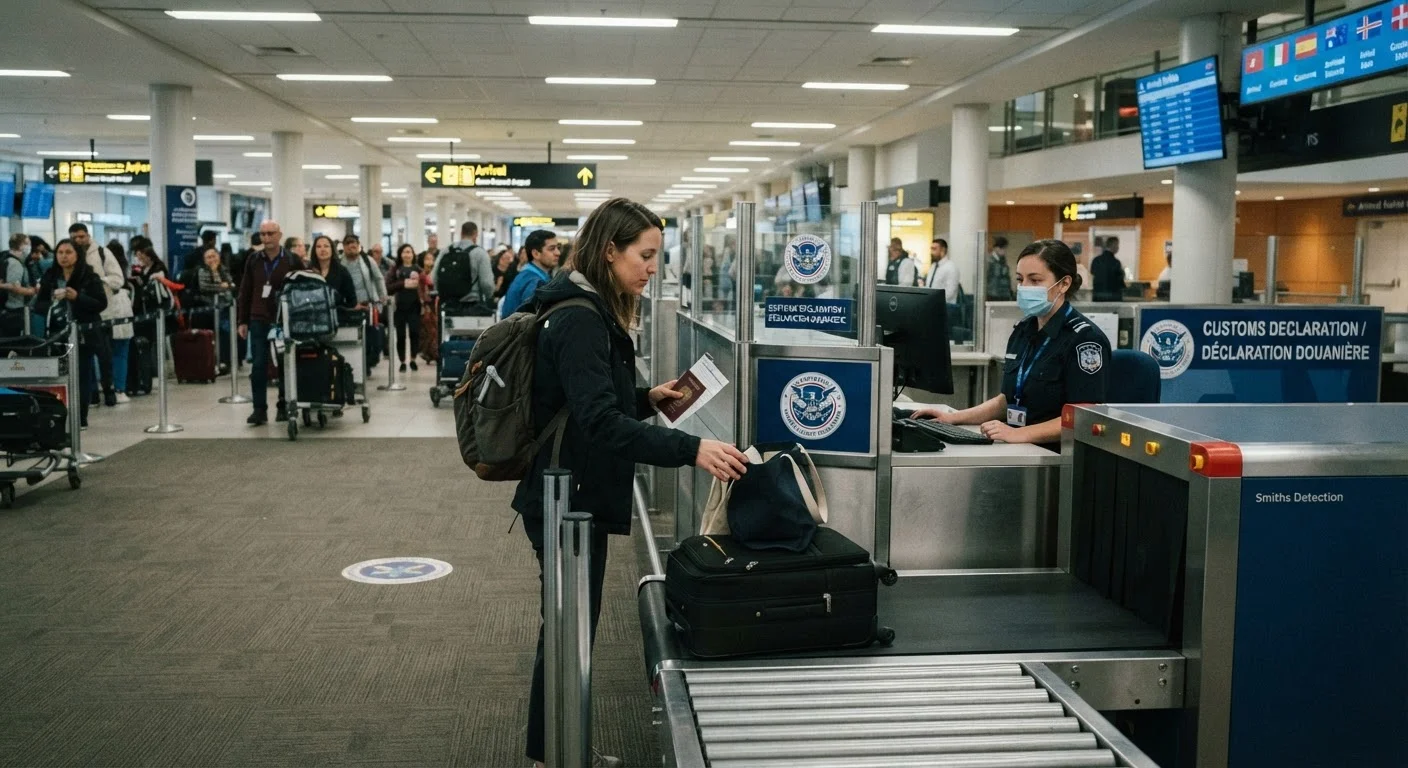
Every person entering the United States from abroad - citizen or visitor - must complete a customs declaration. The standard form (CBP Form 6059B, or its electronic equivalent through the CBP One app or APC kiosks) asks about the items you're bringing in and what you spent abroad.
You are required to declare:
- All food, plant material, and animal products - even packaged or commercially sealed goods
- Merchandise or gifts purchased or received abroad
- Currency or monetary instruments totaling $10,000 USD or more (including cash, traveler's checks, and some negotiable instruments)
- Items you intend to sell or leave in the U.S.
- Alcohol and tobacco beyond the duty-free limit
A common misconception is that you only declare items you're worried about. In reality, the declaration is comprehensive - you list everything and let the officer determine what's dutiable or restricted. If you're unsure whether something needs to be declared, declare it. That's always the right call.
For a broader pre-departure review, see the pre-trip checklist every traveler should run through - it covers documentation and border prep in one place.
| Standard duty-free exemption | $800 per person (U.S. CBP, current general rule) |
| Minimum time abroad for $800 exemption | 48 hours (U.S. CBP) |
| Duty-free alcohol allowance | 1 liter (must be 21+) (U.S. CBP) |
| Currency reporting threshold | $10,000 USD or equivalent (U.S. CBP / FinCEN requirement) |
| Duty-free cigarette limit | 200 cigarettes (1 carton) (U.S. CBP) |
| Flat duty rate on next $1,000 over exemption | Typically 3% (U.S. CBP general schedule) |
Duty-Free Thresholds: How Much Can You Bring Back?
"Duty-free" refers to goods you can bring into the U.S. without paying import duties. The amount you're allowed depends on where you're returning from and how long you've been abroad.
Standard Exemption (most international travel)
If you've been outside the U.S. for at least 48 hours and haven't used your exemption in the past 30 days, you're generally entitled to bring back $800 worth of goods duty-free. Goods beyond that threshold are typically taxed at a flat rate for the next $1,000, then at standard duty rates above that.
Alcohol and Tobacco
- Alcohol: One liter duty-free (you must be 21 or older, and state law still applies once you land)
- Tobacco: Up to 200 cigarettes (one carton) and 100 cigars duty-free
Special Exemptions
Travelers returning from certain countries - including U.S. territories like the U.S. Virgin Islands, Guam, and American Samoa - may qualify for higher exemptions ($1,600 or $800 depending on the territory). Always check CBP's official website before your return trip, as thresholds and rules can change.
Gifts mailed to friends and family from abroad have a separate exemption - typically $100 per recipient - but this is distinct from what you personally carry through customs.
What Happens When You Get It Wrong
Customs violations range from honest mistakes to deliberate smuggling, and the consequences scale accordingly.
Unintentional Failures to Declare
If you forgot to declare an item and an officer finds it, you may face a warning, the item may be confiscated, or you may be assessed a penalty. CBP has discretion depending on the item's value and whether there's any indication of intent. First-time mistakes with low-value items are often handled with a penalty fine rather than criminal charges - but that fine can be several times the item's value.
Agricultural Items
Undeclared food and plant materials are taken seriously because of biosecurity risks. Even a forgotten apple in your bag can result in a fine. Items found that weren't declared - even innocently - are seized on the spot and may trigger a penalty.
Deliberate Smuggling
Intentionally concealing goods, misrepresenting values, or bringing in prohibited items (certain firearms, counterfeit goods, endangered species products) can result in criminal prosecution, seizure of the goods, and significant fines. This is an area where travelers sometimes rely on myths - see our piece on travel myths that lead to bad planning decisions for more on misunderstandings that cause real trouble.
If Your Items Are Flagged
Being directed to secondary inspection doesn't mean you're in trouble - it's a routine part of customs operations. Stay calm, answer questions honestly, and provide any receipts you have. Keeping receipts for items purchased abroad is genuinely useful here. The documents you should never leave home without includes good guidance on what paperwork to carry.
This article provides general informational guidance only. Customs rules, exemption amounts, and enforcement practices are subject to change. Always verify current regulations with U.S. Customs and Border Protection (cbp.gov) and relevant official sources before traveling.