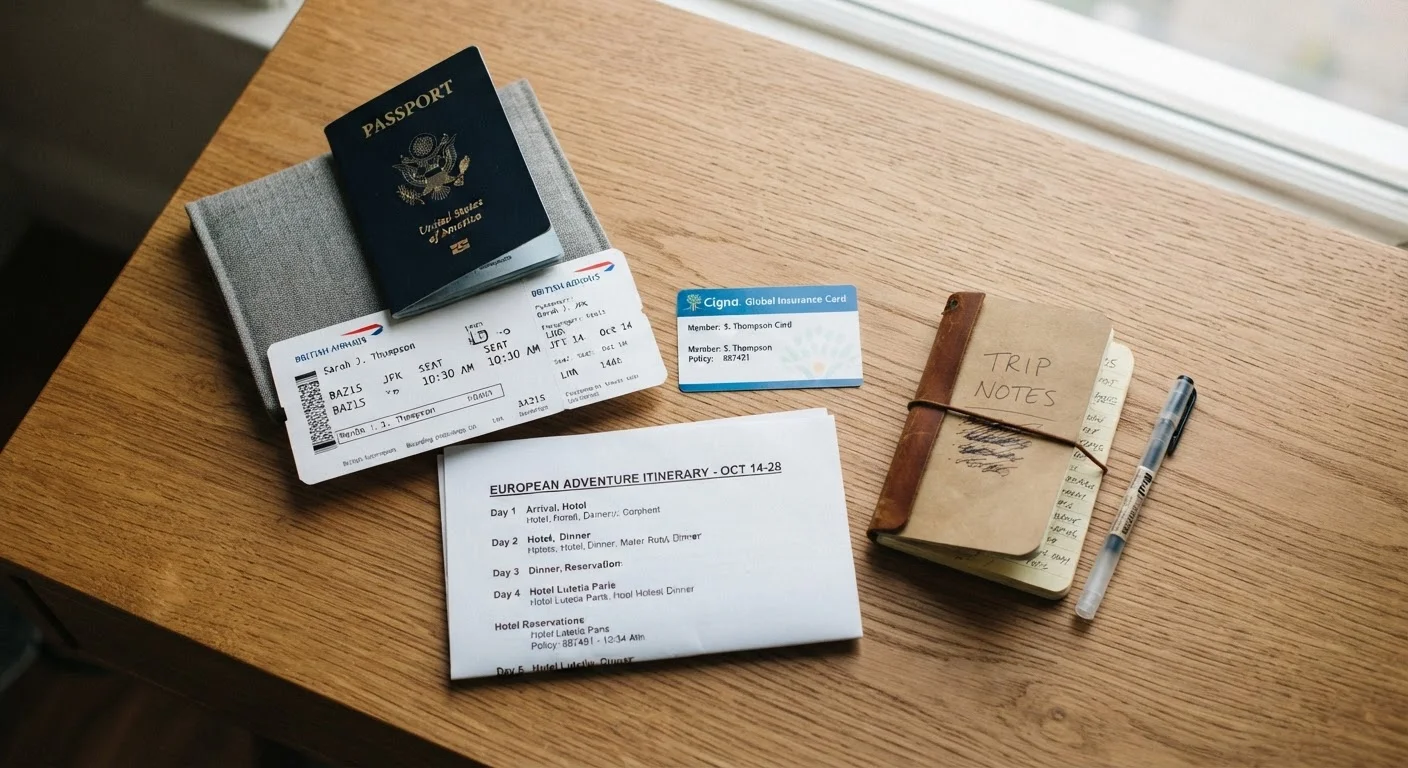

Your Passport: The Non-Negotiable Foundation
Before anything else - flights, hotels, packing - your passport is the single document that makes international travel possible. If you don't have one yet, the U.S. State Department recommends applying well in advance, as processing times can vary from several weeks to several months depending on demand. If you already have a passport, check the expiration date immediately.
Here's something that surprises many first-timers: a valid passport isn't always enough. Many countries require that your passport remain valid for at least six months beyond your planned return date. A passport expiring three months after your trip could get you denied boarding. Always verify the specific entry requirements for your destination.
Passport validity
The period during which your passport is legally recognized for travel. Many countries require at least six months of validity beyond your return date, not just the date of travel.
Visa
An official permission stamp or document issued by a foreign country allowing you to enter for a specified purpose and duration. Requirements vary by destination and nationality.
Customs declaration
A form you complete upon entering a country disclosing goods, food, or cash you're carrying. Accurate completion is required by law in most countries.
Duty-free allowance
The value or quantity of goods you can bring into a country without paying import taxes. Anything above this limit may be subject to a customs duty fee.
Foreign transaction fee
A charge added by banks or card issuers - typically 1-3% - on purchases made in a foreign currency. Some cards waive this fee, making them more cost-effective abroad.
Travel advisory
An official government warning or notice about safety conditions in a foreign country. The U.S. State Department issues these on a scale from Level 1 (exercise normal precautions) to Level 4 (do not travel).
For a deeper dive into building your trip from scratch - including passport applications and visa research - see our ground-up international trip planning guide.
Navigating Airports Like a Pro
International airports can feel overwhelming, but they follow a logical sequence once you understand the flow. On departure, the general order is: check-in and baggage drop → security screening → passport control (in some U.S. airports) → departure gates. Give yourself time - lines at security and check-in can be substantial, especially during peak travel periods.
On arrival at your destination, follow signs for Immigration (also called Passport Control), then Baggage Claim, then Customs. Keep your arrival card (distributed on the plane or available at kiosks) filled out and ready. Most airports also have currency exchange desks and ATMs airside - useful for getting your first handful of local cash.
Before you travel, run through a thorough preparation checklist. Our pre-trip checklist covers the easy-to-forget details that can derail an otherwise well-planned trip.
Customs, Immigration, and What to Declare
Immigration and customs are two distinct processes, and first-timers sometimes confuse them. Immigration is where an officer verifies your passport and travel documents - they're checking that you have legal permission to enter the country. Customs is where authorities check what you're bringing in, particularly goods that might be taxable or restricted.
Be honest on your customs declaration form. Most countries require you to declare food items, plant or animal products, and any goods purchased abroad that exceed their duty-free threshold. Attempting to sneak through undeclared items risks fines, confiscation, and significant delays - none of which you want at the start of a trip.
Entry Rules Change - Always Verify Officially
Visa requirements, health documentation rules, and customs limits can change with little notice. Never rely on a single source, especially third-party travel sites, for current entry information. Check the official embassy or consulate website of your destination country and cross-reference with the U.S. State Department's travel portal before finalizing any plans.
Entry rules differ dramatically by country and can change. Always verify current requirements through official government sources - the U.S. State Department's travel website (travel.state.gov) is a reliable starting point. Do not rely solely on travel blogs or third-party booking sites for regulatory information.
Currency, Cards, and Handling Money Abroad
Managing money abroad is one of the most practical skills a first-time international traveler can develop quickly. Start by researching the local currency of your destination before you leave - understanding denominations and approximate exchange rates helps you spot errors and avoid overpaying.
Notify your bank and credit card issuers of your travel dates and destination. Without this heads-up, your card may be frozen as a fraud precaution the moment it registers a foreign transaction. Look for cards that don't charge foreign transaction fees - those small percentages add up across a two-week trip.
Airport currency exchange desks are convenient but often offer less favorable rates than ATMs or local banks. Use them for a small emergency amount if needed, but plan to withdraw the bulk of your local currency from a bank ATM once you've settled in. Keep cash in multiple locations - wallet, day bag, hotel safe - as a basic precaution.
Safety Basics Every First-Timer Should Know
Staying safe abroad is largely about preparation and awareness rather than fear. Register your trip with the U.S. State Department's free Smart Traveler Enrollment Program (STEP) at step.state.gov - this lets the nearest U.S. embassy reach you in an emergency and keeps you informed of safety alerts in your destination.
Make digital copies of your passport, visa, travel insurance, and itinerary, and store them somewhere accessible (a secure cloud folder or emailed to yourself works fine). Leave a copy with a trusted contact at home. Keep the original passport secure - many travelers use a hotel safe or a money belt worn under clothing in busy areas.
Check the State Department's current travel advisories for your destination before and during your trip. Conditions can shift, and an updated advisory may affect your plans or simply give you useful context about areas to be more alert in.
For a detailed look at planning a specific region, our first-timer's guide to Southeast Asia covers health prep, local customs, and on-the-ground safety in depth. You can also browse our Trip Planning hub for destination-specific and logistics-focused guides across the board.