Which Countries to Consider First
Southeast Asia is not a single destination - it's eleven countries stitched together by geography, connected by budget airlines, and separated by dramatically different cultures, languages, and infrastructures. For first-time visitors from the U.S., narrowing your focus is the smartest move.
Thailand remains one of the most approachable entry points: English signage is common in tourist areas, the infrastructure for travelers is well-developed, and the country packs an enormous range of experiences - Bangkok's chaotic energy, Chiang Mai's temple-dotted hills, and the Gulf coast islands - into one itinerary. Vietnam draws travelers with its long, narrow geography that rewards north-to-south (or reverse) routes through strikingly different landscapes and food cultures. Bali, Indonesia often serves as a soft introduction for Americans looking for manageable infrastructure combined with genuinely exotic culture.
Countries like Laos, Cambodia, Myanmar, and the Philippines offer rich rewards but may involve more logistical complexity - inconsistent roads, limited English outside urban centers, or specific safety considerations worth researching. If you're comparing Southeast Asia with other Asia-first options, our look at Japan vs. South Korea as a first Asia trip offers a useful side-by-side perspective.
Visa on arrival
A visa you receive at the airport or border crossing when you land, rather than applying for one in advance. It often involves a fee payable in cash and a short processing wait.
Visa-free entry
Permission to enter a country for a limited period without any visa application or fee - simply on the strength of your passport. Duration limits vary by country and can change.
STEP program
The U.S. State Department's Smart Traveler Enrollment Program. Registering your trip allows the nearest U.S. embassy to contact you in an emergency and keeps you updated on local safety alerts.
Travel medicine clinic
A medical facility specializing in health preparation for international travel - including destination-specific vaccinations, preventive medications, and health risk counseling.
Grab
A widely used ride-hailing app across Southeast Asia, similar in function to Uber, that allows passengers to book and pay for rides through a smartphone app.
Longtail boat
A traditional wooden boat common in Thailand and other parts of Southeast Asia, named for its long propeller shaft. Frequently used for coastal, river, and island transport.
Visas and Entry: What Americans Need to Know
The visa picture across Southeast Asia is genuinely favorable for American passport holders - but it's also a moving target. Thailand, Vietnam, Malaysia, and Singapore have offered Americans visa-free entry for varying durations, while countries like Cambodia and Laos offer straightforward visa-on-arrival options. Indonesia's Bali typically offers visa-free short stays.
That said, do not rely on any static source - including this article - as your final authority. Entry rules change with little warning. The U.S. State Department's country-specific pages and each nation's official embassy website are the only sources you should trust before purchasing flights. Also check whether your passport needs at least six months of validity beyond your intended stay - a requirement common across much of the region.
For a broader framework on researching entry requirements before you book, see our guide on how to research a destination before you arrive. And if you want a comprehensive picture of what long-haul trip planning actually involves from start to finish, our end-to-end long-haul planning guide covers the full process.
Getting Around: Transport Within the Region
One of Southeast Asia's great practical strengths is how well-connected it is internally - if you know which tools to use. Budget carriers like AirAsia, VietJet, and others link major cities across the region for fares that can be startlingly low when booked in advance, making multi-country trips genuinely feasible within a few weeks.
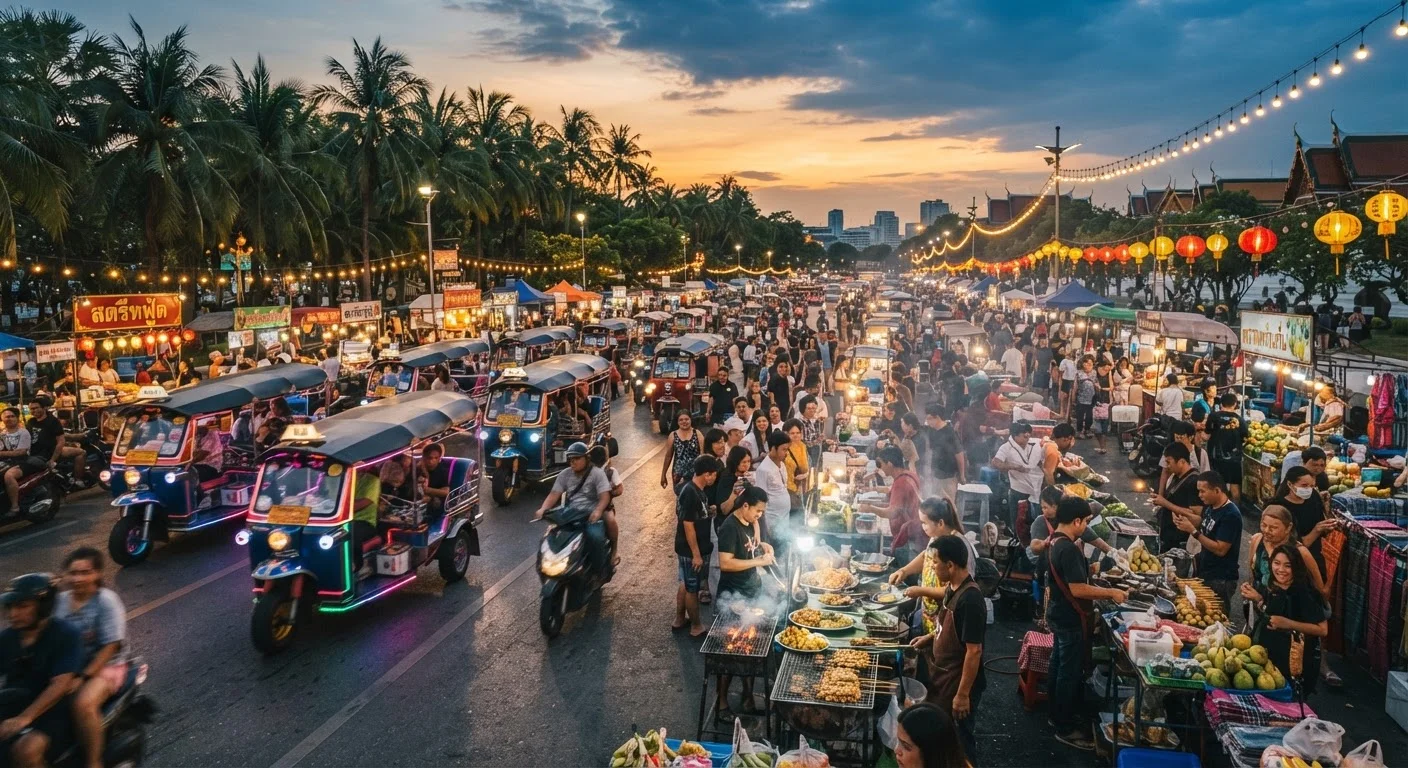
Within countries, the options multiply fast. Thailand and Vietnam both have extensive overnight sleeper trains that double as accommodation and are beloved by travelers for good reason - you wake up in a new city and skip a hotel night. In cities, ride-hailing apps (Grab dominates much of the region) offer metered, app-tracked rides that sidestep haggling and scams. Tuk-tuks and motorbike taxis are atmospheric and practical for short hops but agree on a price upfront.
Rural and island travel often means minivans, longtail boats, and ferries - services that run on local schedules and aren't always bookable online in advance. Build flexibility into your itinerary, especially when island-hopping, where weather genuinely disrupts ferry schedules.
Download Offline Maps Before You Land
Data SIMs are cheap and widely available at major airports across the region, but you won't have one the moment you step off the plane. Download offline maps for each city you're visiting before departure. It makes navigating from the airport - where transportation scams often target arriving travelers - significantly less stressful.
Money, Health Prep, and Cultural Expectations
Currency and cash: Southeast Asia uses a patchwork of currencies - Thai baht, Vietnamese dong, Indonesian rupiah, and so on. Exchanging money at airport counters is convenient but rates are poor; in-city banks and ATMs generally offer better rates. ATM fees can add up quickly, so withdraw larger amounts less frequently. Many budget guesthouses, local markets, and street vendors operate cash-only. Carry a mix and assume you'll need local bills daily.
Health preparation: Start the conversation with a travel medicine doctor or your primary care provider at least 4-6 weeks before departure. Recommended vaccinations for the region often include hepatitis A and typhoid; your provider will tailor recommendations based on your specific itinerary, activities, and existing health. Malaria prophylaxis may be relevant for rural or jungle itineraries. Traveler's diarrhea is extremely common - understanding prevention and management (including when to seek care) is genuinely important. Travel health insurance that covers medical evacuation is worth serious consideration. This article provides general travel information only and is not a substitute for advice from a qualified healthcare provider.
Cultural expectations: Temple etiquette is universal and important - cover shoulders and knees, remove shoes when indicated, and behave quietly. Displays of frustration or anger are deeply frowned upon across much of the region; keeping calm in difficult situations is both respectful and practically effective. In many Buddhist-majority countries, the monarchy and religious figures command profound respect - comments that might seem like casual criticism can be genuinely offensive or, in some countries, legally problematic. When in doubt, observe before you act, and follow the lead of locals around you.
For broader travel tips that apply across international trips, our hub is a solid resource to bookmark before you go.