Why Carry-On Only Changes the Way You Travel
Checked baggage fees, carousel wait times, and the ever-present risk of lost luggage have pushed millions of travelers toward a smarter approach: fitting everything into a single carry-on. Done right, it's genuinely liberating. You move faster through airports, skip the baggage claim scramble, and stay in full control of your belongings from departure to arrival.
The key insight is that packing light isn't about sacrificing comfort - it's about making smarter choices before you ever touch a zipper. Before you start, it helps to be clear on your airline's carry-on size limits (typically around 22 x 14 x 9 inches, though this varies by carrier) and to check the most current policies directly with your airline before travel.
If you're also trying to avoid overscheduling your trip itself, our piece on why overpacking your itinerary backfires pairs well with this mindset shift. And once your bag is sorted, use the pre-trip checklist to make sure nothing critical slips through the cracks.
What you will need
Build a Capsule Wardrobe That Works Harder
The single most powerful packing strategy isn't a technique - it's a philosophy. A capsule wardrobe means selecting pieces that mix and match with each other across multiple outfits, so seven days of looks don't require seven entirely separate sets of clothing.
Stick to a two- or three-color palette of neutrals (think navy, gray, black, olive, cream) with one or two accent pieces. Every top should work with every bottom you pack. Here's a realistic starting framework for a seven-day trip in a moderate climate:
- Tops: 4-5 items (mix of casual and slightly dressier options)
- Bottoms: 2-3 items (pants or jeans that pull double duty)
- Layers: 1 lightweight jacket or cardigan that doubles as a travel layer on the plane
- Shoes: 2 pairs maximum - wear the bulkier pair on travel day
- Undergarments and socks: 4-5 sets (quick-dry fabrics help enormously)
Merino wool and synthetic-blend fabrics are worth knowing about here: they resist odor, dry quickly, and pack compactly - useful qualities for extended wear between washes.
Fabric Choice Is a Packing Superpower
Quick-dry, wrinkle-resistant fabrics like merino wool blends, nylon, and moisture-wicking synthetics are the carry-on traveler's best allies. They compress well, bounce back from being packed, and can be rinsed and dry overnight. Investing in even a few pieces made from these materials meaningfully reduces what you need to bring.
Step-by-Step: Packing Your Carry-On
With your clothing list finalized, the way you pack matters just as much as what you pack. Follow these steps to fit a week's worth of clothes into a standard carry-on without forcing the zipper.
Lay Everything Out Before Packing
Spread every item you intend to pack on your bed. Take a hard look and remove anything that serves only one occasion or duplicates a function already covered by another piece. A ruthless edit here is the single biggest time-saver at every later step.
Separate Items Into Categories
Group your items: tops together, bottoms together, underwear and socks, shoes, and any accessories. This makes the next steps - rolling, bundling, and cubing - significantly faster and helps you spot redundancies at a glance.
Roll Casual Items, Bundle Wrinkle-Prone Ones
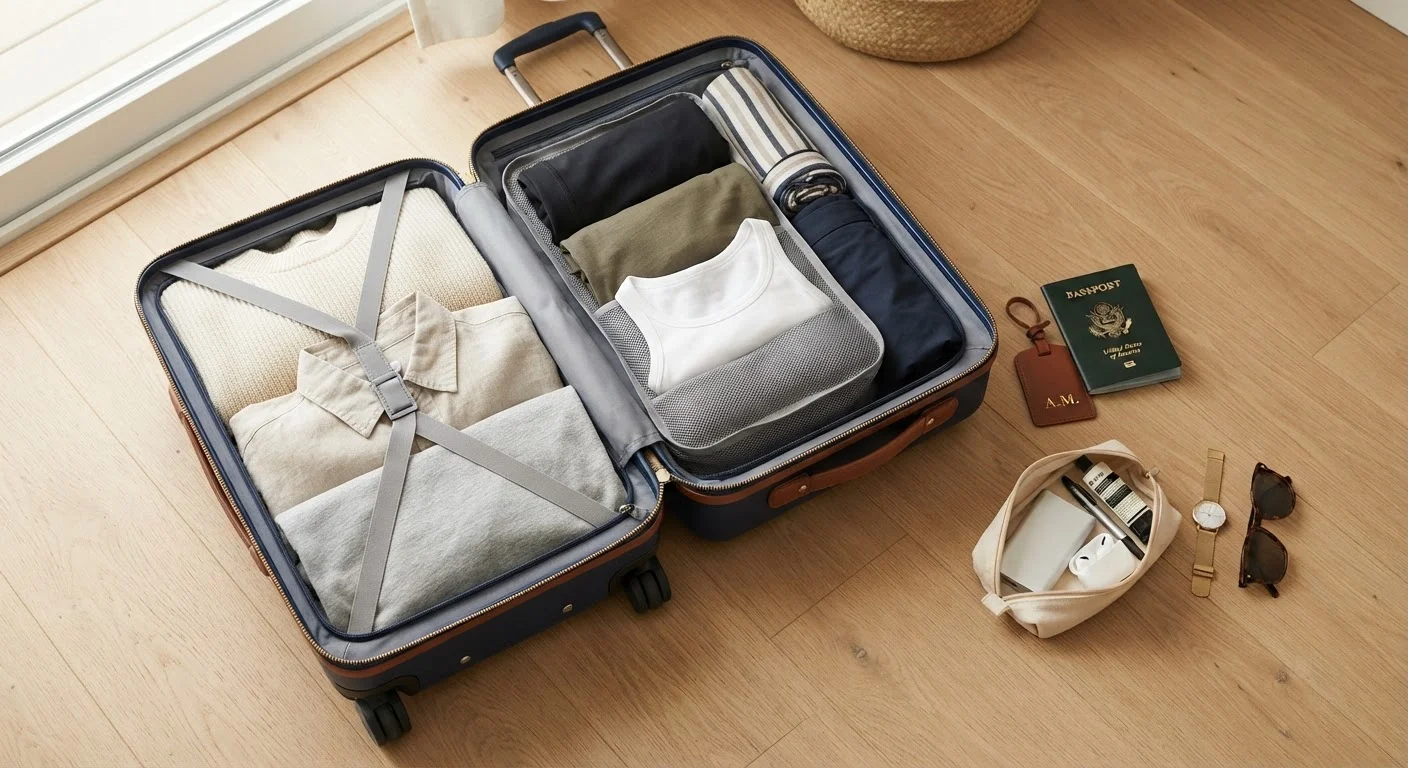
Tightly roll t-shirts, casual pants, underwear, and socks - rolling compresses air and lets you tetris pieces into corners. For button-down shirts, blazers, or dresses that wrinkle easily, use the bundle method: wrap garments around a soft core item (like a small pouch), creating a cocoon shape that limits fold-creases. Place bundles flat in the center of your bag.
Use Packing Cubes to Organize and Compress
Packing cubes act as internal organizers that also compress soft items slightly. Assign one cube per category (e.g., tops, bottoms, underwear). Compression cubes with a double zipper can reduce volume further, though they don't replace a true vacuum bag. Place heavier cubes near the wheels or base of the bag for better balance.
Pack Shoes and Hard Items Along the Edges
Shoes, toiletry bags, and any rigid items go along the sides or base - the structural frame of your carry-on. This keeps soft clothing from being deformed by hard edges and maintains a flatter, more manageable bag shape overhead.
Wear Your Bulkiest Items on Travel Day
Your heaviest shoes, thickest jacket, and any bulky sweater should be worn - not packed - on the day you travel. This alone can free up a substantial portion of your bag. It may feel slightly warm in the terminal, but that trade-off is well worth the space gained.
Plan for Mid-Trip Laundry
If you're staying four or more nights, plan one laundry session - either sink-washing quick-dry items overnight or locating a local laundromat. This effectively doubles your wardrobe without adding a single item to your bag. Many hotels and Airbnbs also offer laundry facilities; check before you go.
Making the Most of Your Personal Item
Most airlines allow a personal item (a backpack, tote, or small bag) in addition to your carry-on - and that's prime real estate. Reserve it for items you'll want during the flight: electronics, a book, snacks, and any liquids in your quart-sized TSA bag. But the base of a roomy backpack can also hold shoes, a lightweight day bag that folds flat, or a packable rain jacket without encroaching on your carry-on's clothing space.
Keep your passport, cards, and cash secure in a dedicated inner pocket of this personal item - accessible but protected throughout the journey.
Airline Policies Vary - Always Verify
Carry-on size limits, personal item dimensions, and weight restrictions differ between airlines and even fare classes on the same airline. Budget carriers in particular often have stricter rules. Always check the airline's current policy directly before your trip - policies can and do change, and gate-checked bags often incur fees.