
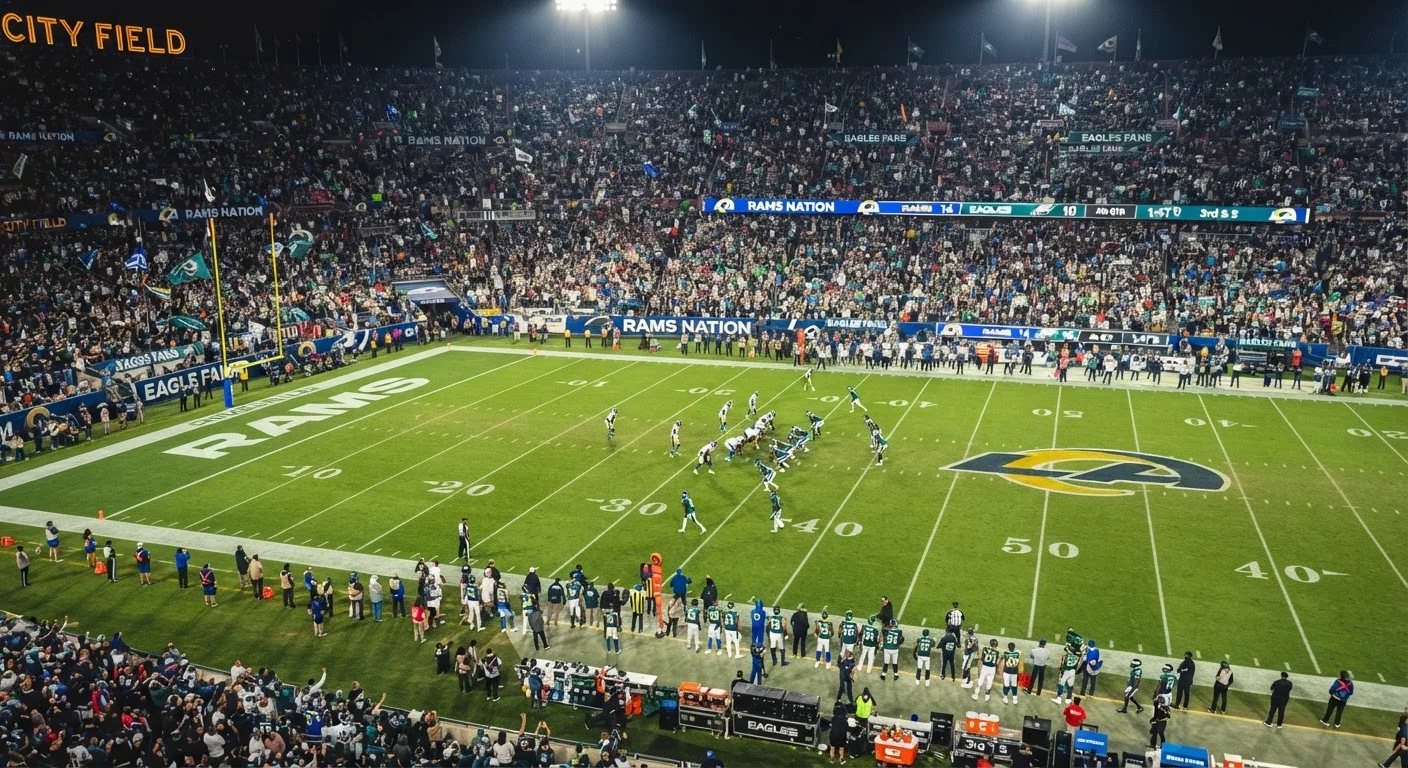
The Basic Objective: Moving the Ball and Scoring
At its core, American football is a territorial game. The offense - the team with the ball - tries to advance it down a 100-yard field and cross into the opponent's end zone to score a touchdown, worth 6 points. After a touchdown, the scoring team attempts either a point-after-touchdown kick (worth 1 point) or a two-point conversion, where they must cross the goal line again from the 2-yard line.
If the offense stalls before reaching the end zone, they can attempt a field goal - a kick through the upright posts - worth 3 points. The defense can also score by tackling an offensive ball carrier in their own end zone, which is called a safety and is worth 2 points.
For a deeper comparison of how this scoring system stacks up against other popular sports, see our comparison of soccer and American football.
Downs and Possession: The Engine of Every Drive
The most confusing concept for new fans is the down system. The offense gets four attempts - called downs - to advance the ball at least 10 yards. If they succeed, they earn a fresh set of four downs. If they fail after four attempts, the opposing team takes possession at that spot.
This is why you constantly hear announcers say things like "third and four" - meaning it's the third attempt with four yards still needed. Teams rarely use all four downs aggressively; on fourth down, most teams will either punt (kick the ball away to flip field position) or attempt a field goal if they're close enough.
10 yards
Distance needed to earn a new set of downs
This fundamental rule has been part of American football since the early 20th century and defines the entire offensive strategy of the game.
32
Teams in the NFL
The NFL's 32 franchises are split evenly into two conferences - the AFC and NFC - each with four four-team divisions.
18 weeks
Length of the NFL regular season schedule
Each team plays 17 regular-season games across 18 weeks, with one bye (rest) week built into each schedule.
Each play begins at the line of scrimmage - an imaginary line marking where the ball currently sits. The offense snaps (passes) the ball to start the play, and both teams have their roles from that moment forward. To understand who does what on each snap, our guide to football positions explains every role in detail.
Game Structure: Quarters, Clock, and Flow
An NFL game is divided into four 15-minute quarters. However, the clock stops frequently - after incomplete passes, when players go out of bounds, during penalties, and for timeouts - so a game typically takes around three hours from kickoff to the final whistle.
Each team gets three timeouts per half. These become strategically critical late in close games, as a team with timeouts can stop the clock and preserve time for a comeback. The two-minute warning - an automatic stoppage at the two-minute mark of each half - also slows the game down at its most dramatic moments.
Halftime lasts roughly 12 minutes in regular games (and much longer at the Super Bowl). If a game is tied at the end of regulation, it proceeds to overtime under special rules designed to ensure fairness for both teams.
Key Roles: Offense, Defense, and Special Teams
NFL rosters carry 53 players, but only 11 are on the field at a time. The three distinct units are:
- Offense: Responsible for moving the ball and scoring. Led by the quarterback (QB), who calls plays and either throws passes or hands the ball to a running back.
- Defense: Tasked with stopping the offense from advancing. Includes linemen who rush the QB, linebackers who cover the middle of the field, and defensive backs who guard receivers.
- Special Teams: Takes the field for kicks, punts, and field goal attempts. Often overlooked but critically important for field position.
Knowing these units makes it much easier to follow the action. If you enjoy learning team structures, you might also enjoy our first-time basketball fan's guide, which breaks down another American sport in similar fashion.
Common Rules New Fans Should Know
A few rules trip up nearly every new fan:
- Pass interference: A defender cannot illegally contact a receiver who is trying to catch a pass. If called in the end zone, the offense gets the ball at the one-yard line.
- Holding: Offensive players cannot grab or tackle defenders who don't have the ball. It's one of the most frequent penalties in the game.
- Fumble vs. incomplete pass: If a ball hits the ground after a runner loses it - that's a fumble, and either team can recover it. If a pass hits the ground before being caught - that's an incomplete pass, and the offense simply replays the down.
- Challenge and replay: Head coaches can challenge certain calls by throwing a red flag onto the field, triggering a video review by officials.
Many of these rules confuse seasoned fans too. Our breakdown of misunderstood sports rules goes deeper on why these calls matter.