The Court, the Clock, and the Basic Object of the Game
Basketball is played on a rectangular hardwood court by two teams of five players each. The goal is straightforward: put the ball through the opponent's elevated hoop (the basket) more times than they do before time runs out.
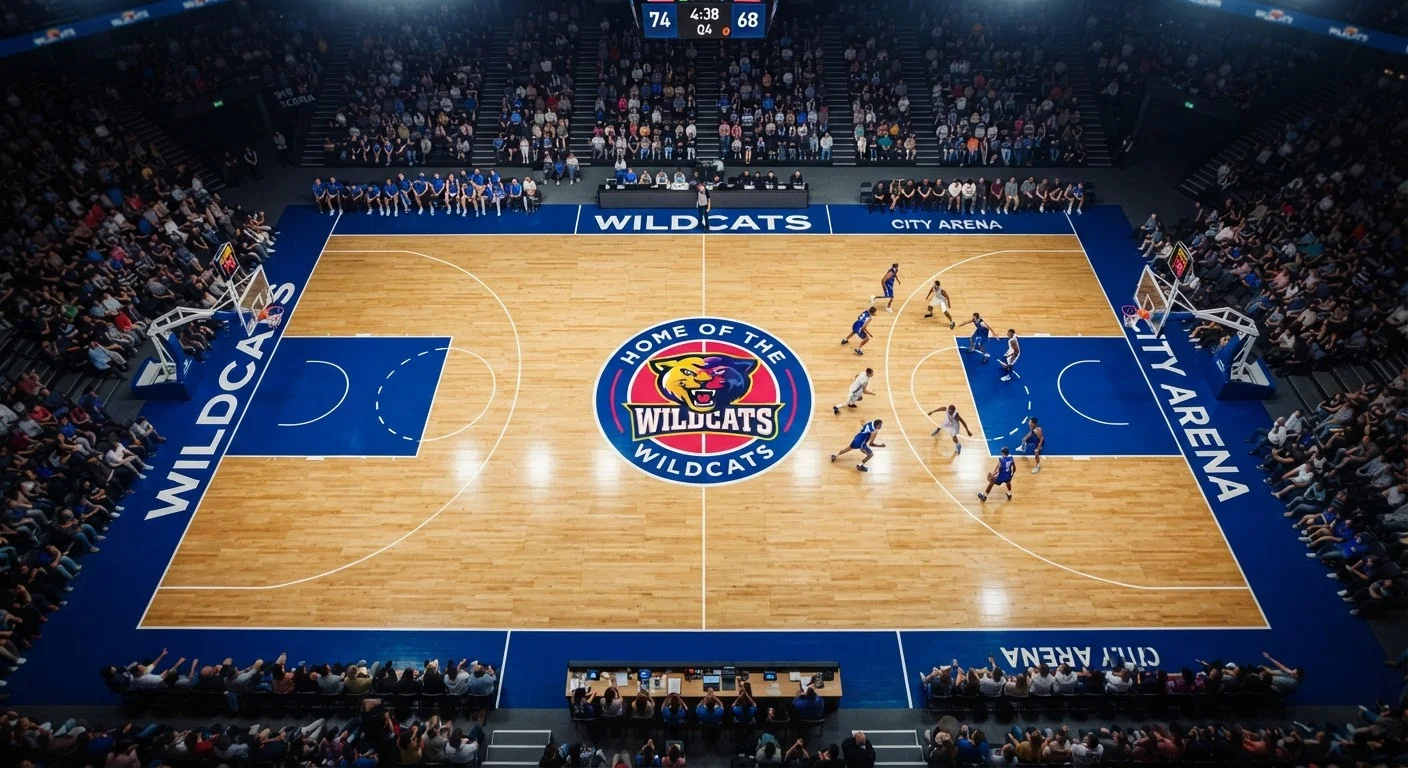
The court is divided at half-court by a midline. Each team defends one basket and attacks the other. Key landmarks every new fan should recognize include the three-point arc (the curved line beyond which shots are worth three points), the free-throw line (where uncontested penalty shots are taken), and the paint - the rectangular shaded area beneath each basket also called the lane or the key.
NBA games are divided into four 12-minute quarters. Possession changes rapidly, and the pace is governed largely by the shot clock - a 24-second timer that forces teams to attempt a shot before it expires. This single rule is what gives basketball its relentless rhythm. If you're new to other sports too, the pace here is notably faster than, say, a baseball game.
How Scoring Works
Basketball has three scoring values, and knowing which applies transforms what you see on the court into a meaningful decision:
- 1 point - A free throw, awarded when a player is fouled in the act of shooting. Taken uncontested from the free-throw line.
- 2 points - Any field goal made from inside the three-point arc during live play.
- 3 points - A shot made from behind the three-point arc. These long-range attempts have become central to modern NBA strategy.
When a player is fouled while attempting a shot, they receive free throws equal to the point value of the shot attempted - two free throws for a two-point attempt, three for a three-point attempt. If the fouled shot goes in anyway, one bonus free throw is added. That sequence is called an and-one.
Watch the Free-Throw Percentage
A player's free-throw percentage is one of basketball's purest individual statistics - it measures shooting skill with no defense and no time pressure. When a team intentionally fouls a poor free-throw shooter late in a close game (a tactic called 'Hack-a-[player]'), it's because the math works in the fouling team's favor. Noticing this strategy in the fourth quarter is a sign your basketball IQ is growing.
The Five Positions Explained
Each team's five players on the court fill roles that blend physical traits with tactical responsibilities. Modern basketball has blurred these boundaries, but the traditional framework remains a useful map:
Point Guard
The primary ball-handler who directs the offense, calls plays, and typically has the sharpest passing vision on the team.
Shooting Guard
Usually one of the team's best perimeter scorers, often relied upon to create their own shot off the dribble or catch-and-shoot.
Small Forward
A versatile wing player who contributes on both ends - scoring, defending multiple positions, and driving to the basket.
Power Forward
Traditionally a physical interior player who rebounds and scores near the basket; today often expected to stretch the floor with three-point shooting.
Center
The tallest player on the team, anchoring the paint on defense, protecting the rim, and scoring around the basket.
Paint / The Key
The rectangular shaded zone beneath each basket. Defenders cannot stand here for more than three seconds without actively guarding an opponent.
Today's NBA prizes versatility - a player who can guard multiple positions, shoot from the perimeter, and handle the ball is enormously valuable regardless of their nominal role. But understanding the traditional five gives you the vocabulary to follow broadcast commentary and player discussions, including the complex NBA Draft process where teams select future talent.
Rules Every New Fan Should Know
Basketball has a compact rulebook for how much action it generates. These are the calls you'll hear most often:
- Traveling
- Taking more than two steps without dribbling. Results in a turnover - possession goes to the other team.
- Double dribble
- Dribbling with both hands simultaneously, or picking up a dribble and then dribbling again. Also a turnover.
- Personal foul
- Illegal physical contact - pushing, holding, or hitting an opponent. Players who accumulate six fouls in the NBA are disqualified from that game.
- Technical foul
- Called for unsportsmanlike conduct or rule infractions unrelated to contact, such as arguing with officials. Opponents receive a free throw and retain possession.
- Goaltending
- Interfering with a shot while the ball is on its downward arc toward the basket. The basket is automatically awarded to the offense.
If you find basketball's rules easier to follow than some other sports, you're not alone - compared to American football's rulebook, basketball's violations have a cleaner, more intuitive logic.
How to Read a Game in Real Time
New fans naturally track the ball - but experienced viewers watch what happens away from it. Off-ball movement, screen-setting, and defensive rotations are where games are actually won and lost.
A few things worth watching deliberately:
- The pick-and-roll: Look for one player planting their feet to block a defender while a teammate drives past. The screener then cuts to the basket as a secondary option. This two-man action is basketball's most universal offensive tool.
- Help defense: When a ball-handler beats their defender, watch the nearest defender step over to contest. This leaves another offensive player open - that rotation decision happens in a fraction of a second.
- The shot clock: When it winds below eight seconds, offenses often scramble into isolation plays or forced shots. Late-clock situations reveal how much a team trusts particular players.
With these frameworks in mind, a game that once looked like chaotic running transforms into a structured chess match. The more possessions you observe with intent, the faster your basketball literacy builds.