The Offense: Moving the Ball
The offense has one goal: advance the ball and score. Eleven players with distinct responsibilities make that possible. For a broader look at how the whole game fits together, see The NFL Explained.
| Players per team on field | 11 (offense) vs. 11 (defense) (NFL Official Rules) |
| Active roster size (NFL) | 53 players (NFL Official Rules) |
| Offensive skill positions | Quarterback, Running Back, Wide Receiver, Tight End |
| Defensive position groups | Defensive Line, Linebackers, Defensive Backs |
| Special teams positions | Kicker, Punter, Long Snapper, Returner |
| Most positions on one team | Up to 22 distinct positional roles |
Quarterback (QB)
The quarterback is the offense's decision-maker. After receiving the snap from the center, the QB reads the defense, then hands off, scrambles, or throws. Elite quarterbacks process defensive alignments in under two seconds.
Running Back (RB)
Running backs carry the ball on rushing plays, catch passes out of the backfield, and block for the quarterback. The halfback is the primary ball carrier; the fullback leads as a blocker.
Wide Receiver (WR)
Receivers line up on the edges and run precise routes to get open downfield. They are typically the fastest players on the team and require exceptional hands and route-running discipline.
Tight End (TE)
Tight ends are hybrid players - blocking like linemen on run plays while also releasing as pass catchers. Their dual role makes them one of the most strategically versatile positions in the modern game.
Offensive Line (OL)
Five linemen - center, two guards, and two tackles - protect the quarterback and create running lanes. The center also snaps the ball to begin every play. Though rarely highlighted in box scores, the offensive line controls the tempo of every single play.
The Defense: Stopping the Offense
Defensive players are assigned to counter offensive formations, disrupt plays, and force turnovers. Three position groups form the standard defensive structure.
Line of Scrimmage
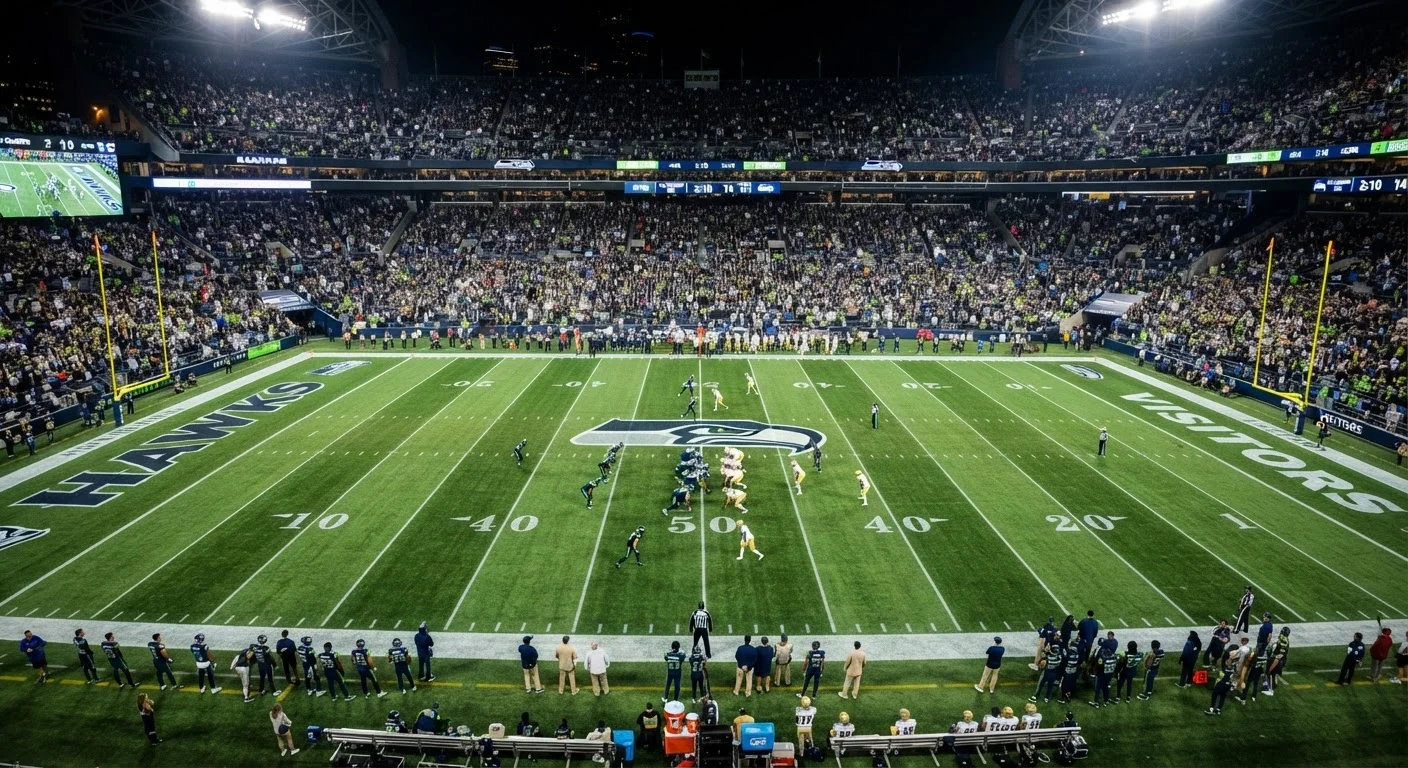
The imaginary line across the field where the ball is placed before each play begins. Both offense and defense line up on opposite sides of it.
The protected area formed by offensive linemen behind which a quarterback stands and looks to throw. Maintaining the pocket is a core blocking responsibility.
Blitz
A defensive strategy where extra players - beyond the standard four - rush the quarterback. It can create pressure but may leave receivers more open.
Route
A predetermined path a receiver runs after the snap to get open for a pass. Common routes include slants, curls, go routes, and post patterns.
Snap
The act of the center hiking the ball to the quarterback (or punter/holder) to officially start a play.
Coverage
The defensive strategy used to guard receivers and prevent completions. Man coverage assigns a defender to a specific player; zone coverage assigns defenders to field areas.
Defensive Line (DL)
Defensive tackles occupy the interior, clogging run lanes and pushing into the backfield. Defensive ends rush the edge, applying pressure on the quarterback. A sack - tackling the QB behind the line - is their signature impact play.
Linebackers (LB)
Linebackers are the defense's all-purpose athletes. They stop the run, rush the passer, and drop into pass coverage depending on the play call. Inside linebackers (ILB) anchor the middle; outside linebackers (OLB) often serve as edge rushers in modern schemes.
Defensive Backs (DB)
Cornerbacks (CB) shadow wide receivers in man coverage or hold zones near the sideline. Safeties patrol the deep middle - the free safety (FS) reads the field broadly while the strong safety (SS) plays closer to the line and handles physical run support. Interceptions, pass deflections, and run-stopping tackles are the defensive back's contributions.
Special Teams: The Third Phase
Special teams operate on kicking plays - kickoffs, punts, field goal attempts, and extra points. Though they occupy only a small portion of game snaps, special teams can swing field position and momentum dramatically.
Kicker (K)
The kicker handles kickoffs and field goal attempts. Accuracy at distances beyond 50 yards is increasingly expected at the professional level.
Punter (P)
On fourth down when a team opts not to go for it, the punter kicks the ball deep to flip field position. Hang time and directional kicking are as important as raw distance.
Long Snapper (LS)
This specialist snaps the ball for punts and field goals. A poor snap can ruin either play; elite long snappers are valued precisely because their job is invisible when done well.
Returner
The kick returner and punt returner receive kicks and attempt to advance them. Explosive open-field speed, vision, and ball security are essential - a fumbled return can instantly change a game.
Curious how these positions translate outside the professional game? Flag Football vs. Tackle Football breaks down how rules and roles shift in non-contact versions of the sport.