
The Core Rules: How Each Game is Played
At their heart, both flag and tackle football share the same objective - advance the ball down the field, score touchdowns, and prevent the opposing team from doing the same. The fundamental rules around downs, yardage, and scoring are nearly identical. The defining difference is how a ball carrier is stopped.
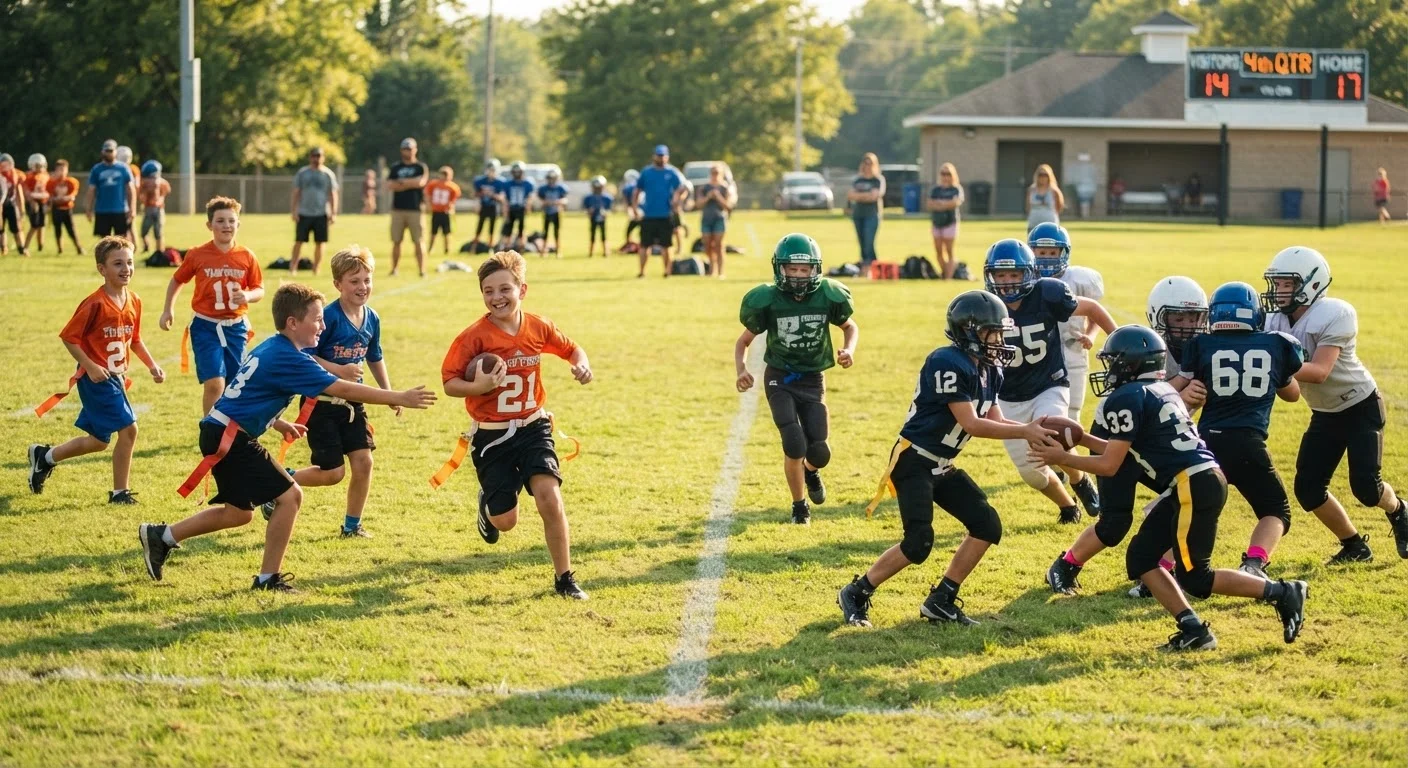
In flag football, each player wears a belt with two detachable flags. A play ends when a defender pulls one of those flags from the ball carrier. There is no blocking in most youth flag formats, and physical contact is largely prohibited. This creates a faster, more spread-out game that emphasizes throwing, catching, and open-field running.
In tackle football, a play ends when the ball carrier is brought to the ground by an opponent - requiring full physical contact. Offensive and defensive linemen engage in blocking and pass-rushing on every snap. The game is more physical, more structured around body positioning, and demands extensive coaching on safe technique.
For a deeper look at how player roles differ within the tackle game, see our field guide to football positions.
| Criterion | Flag Football | Tackle Football |
|---|---|---|
| Stopping the ball carrier | Pulling a flag belt | Physical tackle to the ground |
| Contact level | Non-contact or minimal | Full contact |
| Protective equipment | Flag belt, mouthguard | Helmet, pads, full gear |
| Injury risk | Lower overall risk | Higher, especially concussions |
| Blocking | Generally not allowed | Central to the game |
| Recommended starting age | 5 and up | Varies; often 10-12 minimum |
| Skill emphasis | Passing, routes, coverage | Full positional skill set |
| Accessibility | High - low cost, broad participation | Moderate - gear and league costs |
Safety and Injury Risk: What the Research Suggests
Injury risk is the most discussed distinction between the two formats, especially for youth players. Tackle football carries measurable physical risk due to collisions - research consistently identifies concussions, sprains, and fractures as concerns, particularly when proper technique is not taught or enforced.
Flag football significantly reduces contact-related injuries by design. Studies comparing injury rates between the two formats have found that flag football results in substantially fewer traumatic injuries. However, flag football is not without risk - ankle sprains, muscle strains, and overuse injuries can still occur.
~15x
Injury rate difference, tackle vs. flag
Research published in sports medicine literature has estimated tackle football injury rates significantly exceed those in flag football, particularly for youth players.
5M+
U.S. flag football participants
USA Football and related governing bodies estimate millions of Americans participate in flag football leagues annually, across youth and adult divisions.
2028
Olympic debut for flag football
Flag football is scheduled to make its Olympic debut at the Los Angeles 2028 Games, reflecting its growing global recognition as a legitimate competitive sport.
Medical and sports science organizations generally recommend delaying full-contact tackle football for younger children, citing concerns about developing musculoskeletal systems and neurological vulnerability. Parents considering tackle football for youth athletes are strongly encouraged to speak with a pediatrician or sports medicine professional before enrolling a child.
This article provides general sports information and is not medical advice. Always consult a qualified healthcare provider regarding a child's readiness for contact sports.
Skill Development: What Each Format Builds
A common misconception is that flag football is merely a watered-down substitute. In reality, it develops a specific - and valuable - set of football skills. Because there is no blocking, players must rely on route running, precise passing, and defensive coverage concepts. Quarterbacks, wide receivers, and defensive backs often thrive in flag formats because the open game rewards their core skill sets.
Tackle football adds a critical physical layer: blocking, shedding blocks, tackling mechanics, and the ability to operate under physical pressure. Linemen - positions that barely appear in flag formats - develop entirely in tackle football environments. The game's complexity increases substantially when collisions are part of every play.
Flag football is increasingly used as a deliberate developmental step. Many youth organizations position flag as the ideal introduction to football before transitioning players to tackle at middle-school or high-school age. This mirrors how other sports structure youth participation to match physical development. For more on how kids engage with physical activity differently than adults, see how children and adults stay active differently.
Choosing the Right Format: A Guide for Parents and Players
There is no single right answer - the best format depends on a player's age, physical maturity, competitive goals, and personal comfort with contact. Here are the most important factors to weigh:
- Age and development: Younger players generally benefit from starting in flag football to learn concepts before introducing contact.
- Coaching quality: In tackle football especially, the quality and philosophy of the coaching staff directly affects injury risk. Prioritize programs that emphasize proper technique.
- Equipment standards: Tackle football requires helmets, shoulder pads, and other protective gear. Ensure any program follows current equipment certification standards.
- Player interest and readiness: A child who is uncomfortable with physical contact will not thrive - or be safe - in a tackle environment before they're ready.
- League structure: Both formats have well-organized recreational and competitive leagues across the U.S., from local parks departments to national governing bodies.
Football also shares physical demands and conditioning overlap with other popular sports, which is worth considering for multi-sport athletes. Our article on the physical demands of playing different sports back-to-back covers this in detail.