Why Small Spaces Demand a Different Approach
In a large home, disorganization can spread out and hide. In a small apartment or compact house, clutter has nowhere to go - it surfaces immediately and affects how every room feels. That visibility is actually an advantage: when a system breaks down, you know right away.
But it also means that organizing strategies designed for spacious homes often fall flat. Bulky storage furniture can overwhelm a room. Generic advice to "add more shelving" ignores the fact that wall space may already be spoken for. What works in a small home is precision - fewer, smarter systems that match exactly how you live.
For a grounding in the vocabulary behind these systems - terms like dead zones, zone systems, and the one-in-one-out rule - see our home organizer's vocabulary guide. Understanding the concepts makes applying them much easier.
Declutter Before You Organize
This is the step most people skip - and the reason their organizing efforts don't stick. No container, shelf, or drawer system can compensate for having more possessions than your space can reasonably hold. The first task is always reducing volume.
Work through each room category by category rather than room by room. Clothing, kitchen tools, books, and paperwork each need their own pass. Ask whether each item is genuinely used, whether it serves your current life (not a past or hypothetical one), and whether its absence would actually be noticed.
Be realistic about storage limits. If your coat closet fits eight coats comfortably, that's the household's coat budget. Holding onto twelve creates daily friction every time the door opens.
When assessing what to keep, handle the item and ask whether it earns its square footage - not just whether you like it. In a small home, affection isn't enough justification if something isn't actively used.
Small spaces have a hard storage ceiling. Every item retained displaces another, so the bar for keeping things needs to be higher than in a larger home.
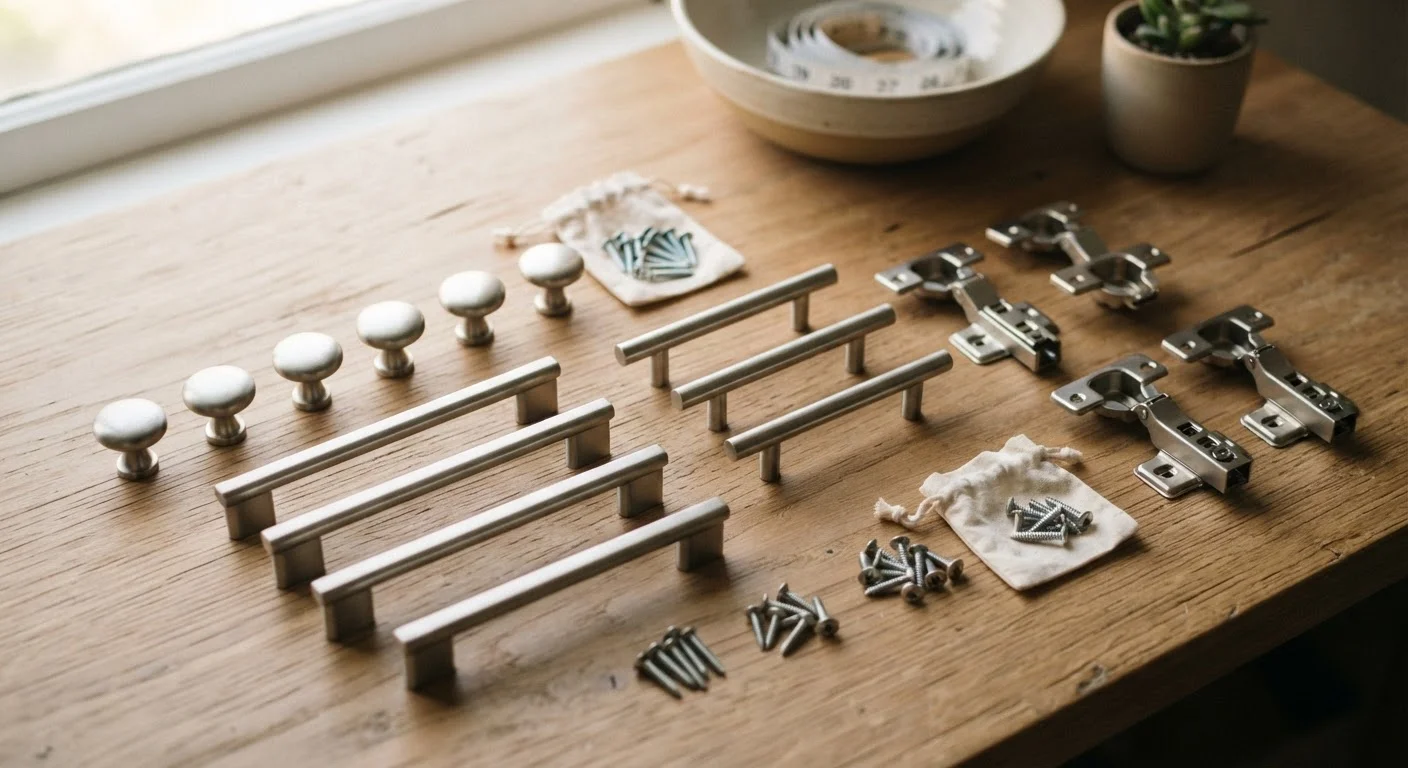
Before buying any storage product, measure the exact space it needs to fill and write down the dimensions. Buying by eye in a small home almost always results in returns or wasted money on ill-fitting containers.
Storage containers that don't fit precisely often create more disorder than they solve, and in tight spaces there's little margin for approximation.
If decluttering feels overwhelming for anyone in your household, our guide on getting your whole household on board offers practical approaches for shared spaces.
Vertical Space and Hidden Storage
Most small-home residents underuse the vertical dimension of their rooms. Walls above eye level, the space between a cabinet top and the ceiling, and the backs of doors all represent legitimate storage territory.
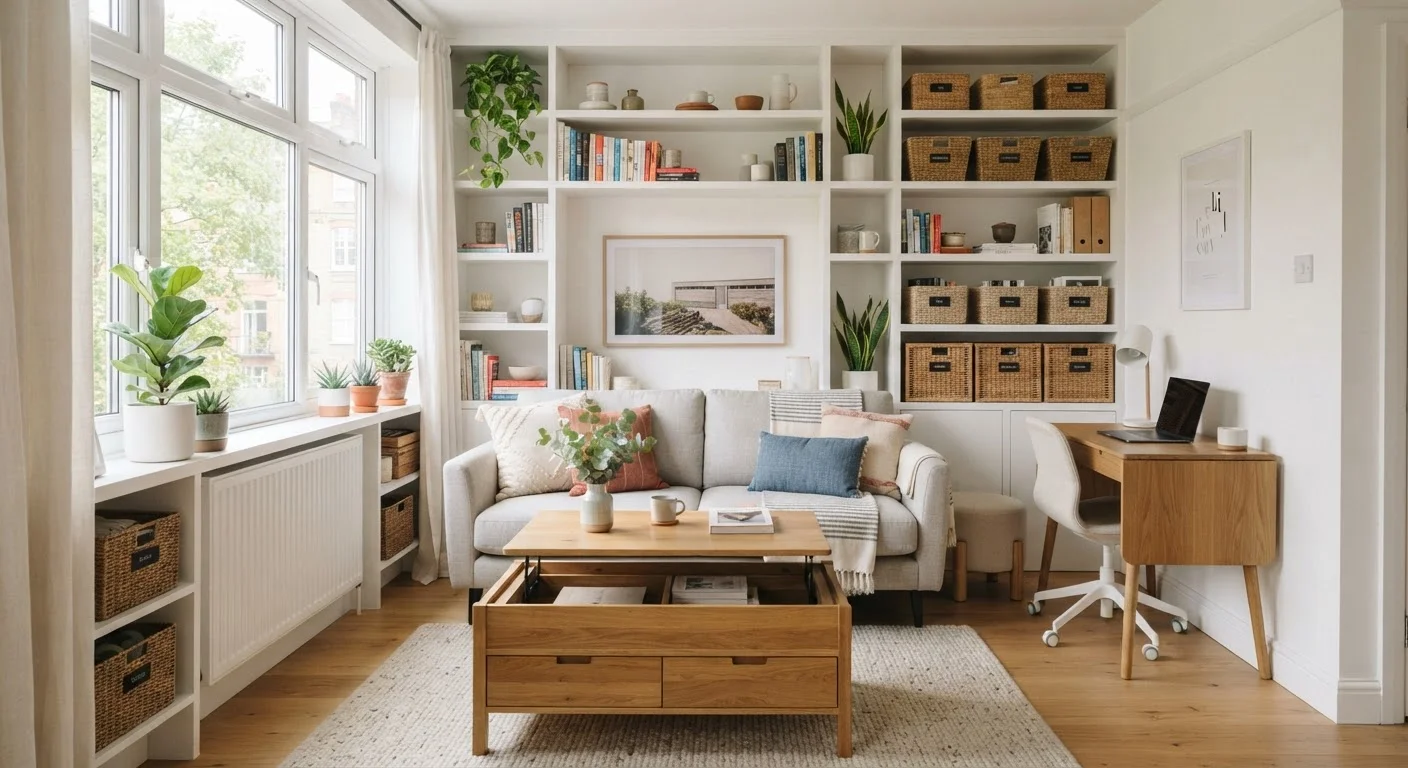
- Floor-to-ceiling shelving maximizes wall real estate without consuming floor area. Open shelving works well for frequently accessed items; closed cabinets reduce visual clutter.
- Over-door organizers on pantry, bathroom, and bedroom doors create storage without any permanent installation in most cases.
- Bed risers and platform beds with drawers turn underbed space into a meaningful storage zone for off-season clothing or bedding.
- Toe-kick drawers - shallow pull-out drawers fitted beneath kitchen cabinets - are a lesser-known option that uses space most kitchens waste entirely.
Hidden or dual-purpose storage is equally valuable. Ottoman benches with lift-top lids, window seats with interior compartments, and dining benches with built-in storage all keep belongings accessible without adding visual weight to a room.
Zone Your Rooms for Multiple Functions
In a small home, a single room often serves three purposes: a living room doubles as a home office and a guest room, or a bedroom also functions as a reading nook and workout space. Without deliberate zoning, these functions bleed into each other and the space feels chaotic.
Zoning means giving each function a defined area - even if that area is just a corner - with its own storage and visual boundary. A small desk tucked against one wall with a dedicated lamp and supply drawer signals "work zone" clearly. A yoga mat rolled up in a specific corner keeps fitness gear from migrating to the couch.
Visual cues like rugs, lighting, and shelf placement help the brain read zones as distinct, which reduces the mental noise of living in a multifunctional space. This principle contrasts with a strictly minimalist approach - you can explore both sides in our piece on the upsides and downsides of minimalist home organization.
Room-by-Room Strategies
General principles only go so far. Here are focused tactics for each area of a compact home:
Kitchen
Prioritize counter clearance - a clear counter makes a small kitchen feel twice as large. Store appliances used less than weekly inside cabinets or on a high shelf. Use drawer dividers for utensils and nest bowls and pans efficiently. A magnetic knife strip on the wall frees up an entire drawer.
Bathroom
Limit products to what you genuinely use within a month. Over-toilet shelving and recessed medicine cabinets add storage without floor footprint. Decant frequently used products into uniform containers to reduce the visual noise of mismatched packaging.
Bedroom
The bedroom closet is often a small home's most mismanaged space. Double-hang rods for short items (jackets, folded pants) can nearly double hanging capacity. Shelf dividers keep stacks of clothing from toppling. A consistent folding method - many people find vertical folding useful for drawers - lets you see everything at once rather than digging.
Entryway
A compact entryway sets the tone for the whole home. A wall-mounted hook system, a narrow bench with shoe storage below, and a small tray for keys and mail can contain the daily drop-zone chaos without requiring a dedicated mudroom.
Maintaining the System Over Time
The most elegant organizing system fails if there's no habit to sustain it. In a small home, clutter accumulates faster because there's less buffer space, so maintenance needs to be more frequent - not more intensive.
A brief daily reset (10 minutes or less) to return items to their designated homes prevents the slow drift that makes monthly overhauls feel necessary. A weekly scan of high-traffic surfaces - the kitchen counter, the entryway, the bathroom ledge - catches accumulation before it becomes a project.
Seasonal reassessment is worthwhile too. Twice a year, revisit whether your systems still match how you're actually living. Life changes, habits shift, and a system that worked perfectly a year ago may now be fighting against how the household actually functions.
If your household includes multiple people, consistent maintenance depends on everyone understanding the systems. Our guide on involving your whole household in organizing addresses exactly this challenge. Small spaces work best when everyone who lives in them takes shared ownership of keeping them functional.