Why a Shared Vocabulary Matters
Home organization advice is everywhere, but the terminology can feel inconsistent or unclear. What one blogger calls a "landing zone" another calls a "drop zone" - and knowing the difference between decluttering and organizing can save you hours of wasted effort. This reference guide defines the core concepts used by professional organizers so you can apply them with confidence in your own space.
If you're completely new to intentional organizing, our beginner's overview covers the foundational mindset before you dive into terminology.
Vertical space
The usable storage area above typical counter or floor height, including shelves, wall hooks, and stacked containers. Most homes have significantly underused vertical space.
Dead zone
A storage area that's technically accessible but awkward to reach - such as the back of a deep cabinet or the top of a tall shelf. Best reserved for infrequently used items.
Zone system
An organizing method that divides a room into distinct activity-based areas, with items stored where they are used. This reduces time spent searching and returning items.
One-in-one-out rule
A simple volume-control practice: when a new item enters the home, one existing item leaves. It prevents gradual accumulation without requiring major periodic purges.
Landing zone
A designated spot near an entry point - typically a hook, shelf, or tray - for high-traffic items like keys, bags, and mail. It prevents everyday clutter from spreading inward.
Decluttering
The process of reducing the number of items you own by removing things that are unused, redundant, or no longer serving a purpose. Distinct from organizing, which arranges what remains.
Prime real estate
Storage locations that are easy to see and access at eye or waist level. High-frequency items should always occupy these spots for maximum efficiency.
Like with like
The principle of storing similar items together in one location regardless of their original source. It prevents duplicates and makes finding things faster.
Four-box method
A sorting technique where every item is assigned to one of four categories during a sort: Keep, Donate, Trash, or Relocate. It forces a decision on each item.
Paper flow
The path paper documents travel through a home, from arrival to action to filing or disposal. A managed paper flow system typically includes an inbox, action folder, and filing point.
Space and Layout Concepts
Understanding how physical space works is the foundation of any organizing system.
- Vertical space: The usable area above counter height or floor level - shelves, wall-mounted hooks, stackable bins, and over-door organizers all exploit vertical space. Most rooms have far more of it than homeowners use.
- Dead zone: Any area that is technically accessible but rarely used because it's awkward to reach - the back corner of a cabinet, the space under a bed near the wall, or the top shelf of a closet. Identifying dead zones helps you decide what belongs there (infrequently used items) versus what doesn't.
- Prime real estate: Storage locations that are easy to see, reach, and access at eye or waist level. High-frequency items should always occupy prime real estate.
- Landing zone (or drop zone): A dedicated spot near an entry point - often a hook, tray, or small shelf - where items like keys, bags, and mail are intentionally placed when you arrive home. A well-designed landing zone prevents clutter from migrating deeper into the house.
Thinking spatially about your home connects naturally to broader improvement projects. The Home Improvement hub covers layout and storage upgrades that can support better organization long-term.
Systems, Rules, and Methods
Professional organizers rely on structured frameworks - not just tidying - to create lasting order.
| Common organizing mistake | Organizing before decluttering |
| One-in-one-out rule purpose | Controls volume without periodic major purges |
| Prime real estate location | Eye level to waist height |
| Dead zone best use | Infrequent or seasonal items |
| Zone system benefit | Items stored where they're actually used |
- Zone system: Dividing a room or home into dedicated areas based on activity or category. A kitchen might have a baking zone, a coffee zone, and a meal-prep zone. Items live where they're used, reducing the friction of finding and returning them.
- One-in-one-out rule: For every new item brought into the home, one existing item is removed. This rule keeps volume in check without requiring periodic major declutters.
- Decluttering vs. organizing: Decluttering means reducing the number of items you own. Organizing means creating systems for the items that remain. Organizing before decluttering is a common mistake - it tends to produce elaborate systems for things you didn't need in the first place.
- Like with like: Storing similar items together regardless of where they came from. All batteries in one place, all spare lightbulbs together - this principle reduces duplicate purchases and failed searches.
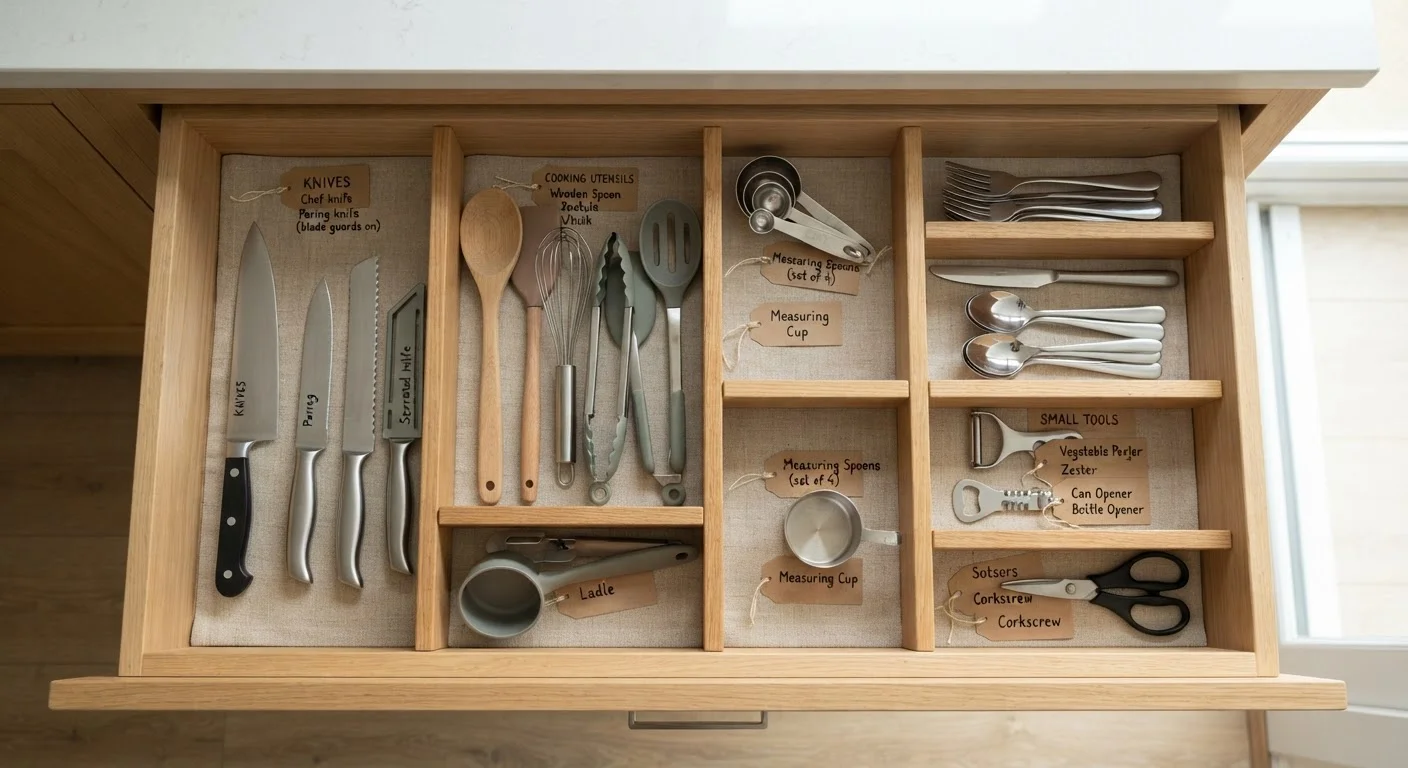
- Drawer dividers: Physical inserts - adjustable or fixed - that create designated compartments inside a drawer. They prevent items from shifting, mixing, or becoming buried. Pairing dividers with labeling is standard practice.
Getting your household to actually follow these systems is its own challenge. Practical strategies for shared-space organizing can help when you're not the only one using the space.
Sorting and Decision Frameworks
Much of organizing happens in the decision-making phase, before a single bin is purchased.
- The four-box method: During a sort, every item goes into one of four boxes - Keep, Donate, Trash, or Relocate. It forces a decision on each item rather than allowing indefinite deferral.
- Frequency of use: How often you use an item should determine where it lives. Daily-use items go in prime real estate; seasonal or rarely used items go in dead zones or off-site storage.
- Sentimental clutter: Items kept not for practical use but for emotional attachment. These require a separate decision framework - many organizers suggest consolidating them into a single dedicated container rather than letting them scatter throughout the home.
- Paper flow: The path paper documents take through your home - incoming mail, bills, school forms, receipts. A managed paper flow system includes an inbox, an action folder, a filing system, and a shredding or recycling point.
If your organizing projects extend to cabinetry and built-ins, cabinet hardware terminology is a useful companion reference for communicating with contractors or planning upgrades yourself.