Why Good Intentions Don't Equal Lasting Order
Most people who organize their homes do so with genuine commitment. They clear out closets, buy matching bins, and label everything neatly. Within weeks - sometimes days - entropy returns. This isn't a character flaw. It's a design problem.
The organizing approaches that tend to fail share a common trait: they're built around an idealized end state rather than the reality of how people actually live and move through a home. A beautiful pantry with 30 labeled jars works if you have time to refill and relabel everything. For most households, it doesn't survive a busy Tuesday.
Durable organization, by contrast, is built around behavior - specifically, making the right behavior the path of least resistance. Before exploring specific practices, it helps to understand what you're actually trying to solve. If you're new to intentional organizing, the first-timer's overview covers the foundational mindset shifts worth knowing.
The Core Principles of Systems That Last
Effective organizational systems share a handful of structural qualities. They aren't about perfection - they're about predictability and low maintenance.
Design every system around the laziest possible version of your routine.
If a system requires effort or thought to maintain, it will be abandoned during busy or stressful periods - exactly when you need it most. The easier a habit is to complete, the more likely it becomes automatic. Friction is the enemy of consistency.
Give everything a designated home before worrying about how it looks.
Clutter almost always accumulates in places where items don't have an assigned location. When something doesn't belong anywhere specific, it ends up anywhere convenient. Function must precede aesthetics.
Build in a regular, short reset rather than relying on periodic overhauls.
Infrequent deep-organizing sessions create high-effort, high-stress events that most people dread and delay. Small weekly resets keep systems from degrading to the point of overwhelm. Prevention is easier than recovery.
Reduce the number of decisions required to put something away.
Decision fatigue is a real factor in why things get left out. When storage requires sorting, remembering, or choosing between options, the item stays on the counter. Simpler categorization leads to more consistent follow-through.
Match your system's complexity to your household's actual tolerance for maintenance.
Highly detailed systems with many sub-categories work well for people who enjoy organizing. For most households, simpler is more durable. Overengineered systems collapse when life gets busy.
It's also worth questioning the assumptions you might be carrying into the process. Many common beliefs about organizing - like needing more storage, or that one big purge will fix everything - don't hold up. The organizing myths article is a useful companion read before committing to a new approach.
Getting Your Household to Actually Use the System
Even a perfectly designed system collapses if only one person in the household maintains it. Shared spaces require shared ownership - and that means designing systems with input from everyone who uses them, not just the person who set them up.
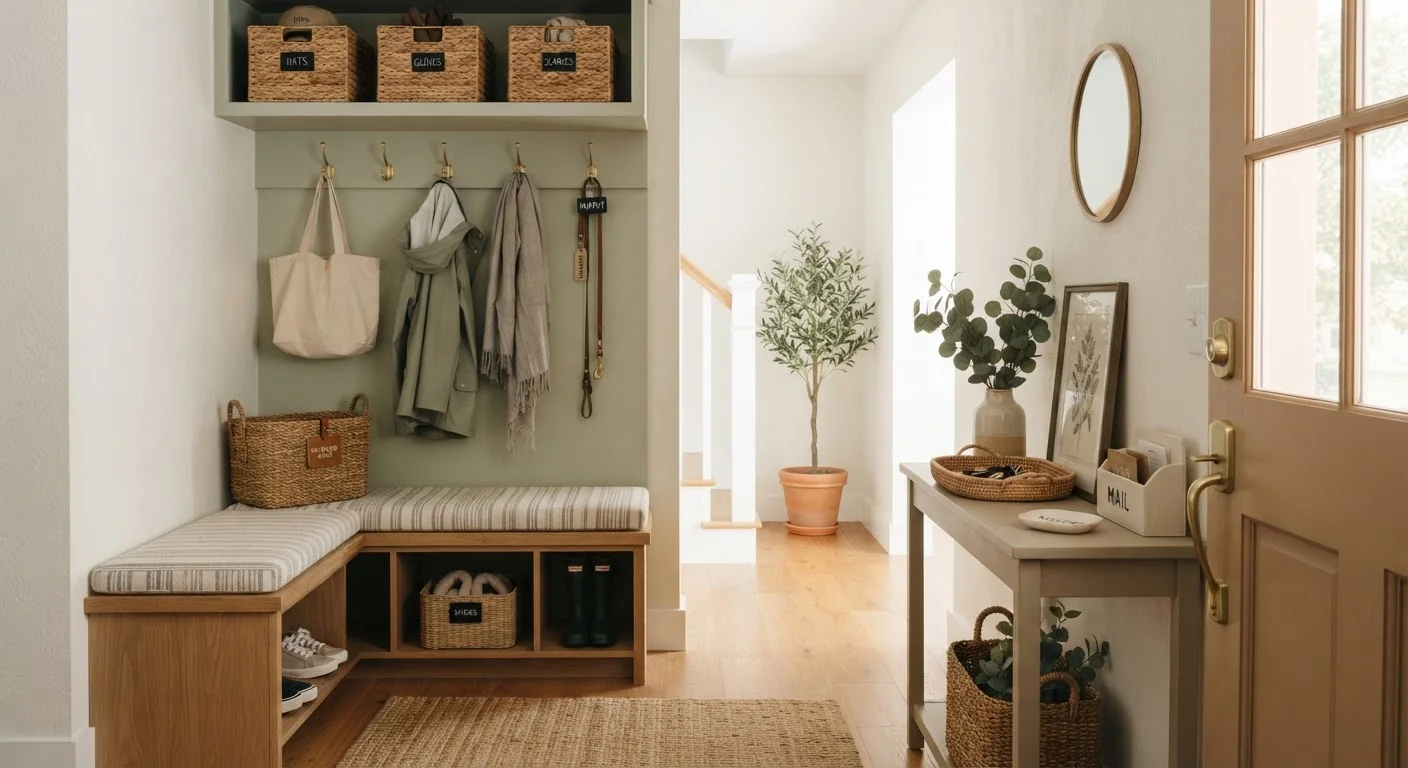
This doesn't mean every system has to be a group decision. But high-traffic areas - the entryway, the kitchen counter, the bathroom cabinet - benefit enormously from buy-in. If you're navigating this in a household with resistant partners or kids, the household buy-in guide offers practical strategies that don't rely on enforcement.
For households with neurodivergent members, standard systems may need significant adaptation. Organizing approaches for neurodivergent households explores strategies designed to work with different cognitive styles rather than against them.
Choosing the Right Framework for Your Household
There's no universal system that works for every home. The frameworks that endure are the ones matched to a household's actual habits, space constraints, and decision-making style.
Two of the most widely discussed organizing philosophies - the KonMari Method and the SPACE System - take very different approaches to how you categorize, process, and store belongings. Understanding where they differ helps you pick the elements most likely to stick in your home. See how these two philosophies compare for a side-by-side breakdown.
If you're working with limited square footage, the strategies that apply in a larger home may need to be scaled and adapted significantly. Small-space organizing strategies covers approaches that prioritize function without requiring abundant storage.
The clearest predictor of whether a system lasts isn't how good it looks on day one - it's whether maintaining it requires less effort than letting it slide. Build for that, and the results tend to follow.