What Home Organization Actually Means
Home organization is the practice of giving every item in your home a logical, consistent place - so you can find things easily, move through your space comfortably, and spend less mental energy managing your surroundings. It is not about making your home look like a design magazine or owning as little as possible.
For most first-timers, the biggest misconception is that organization is a one-time overhaul. In reality, it's a set of systems and habits you build gradually. Think of it less as a project and more as a skill you develop over time. Once you understand the core ideas, the whole process becomes much less daunting.
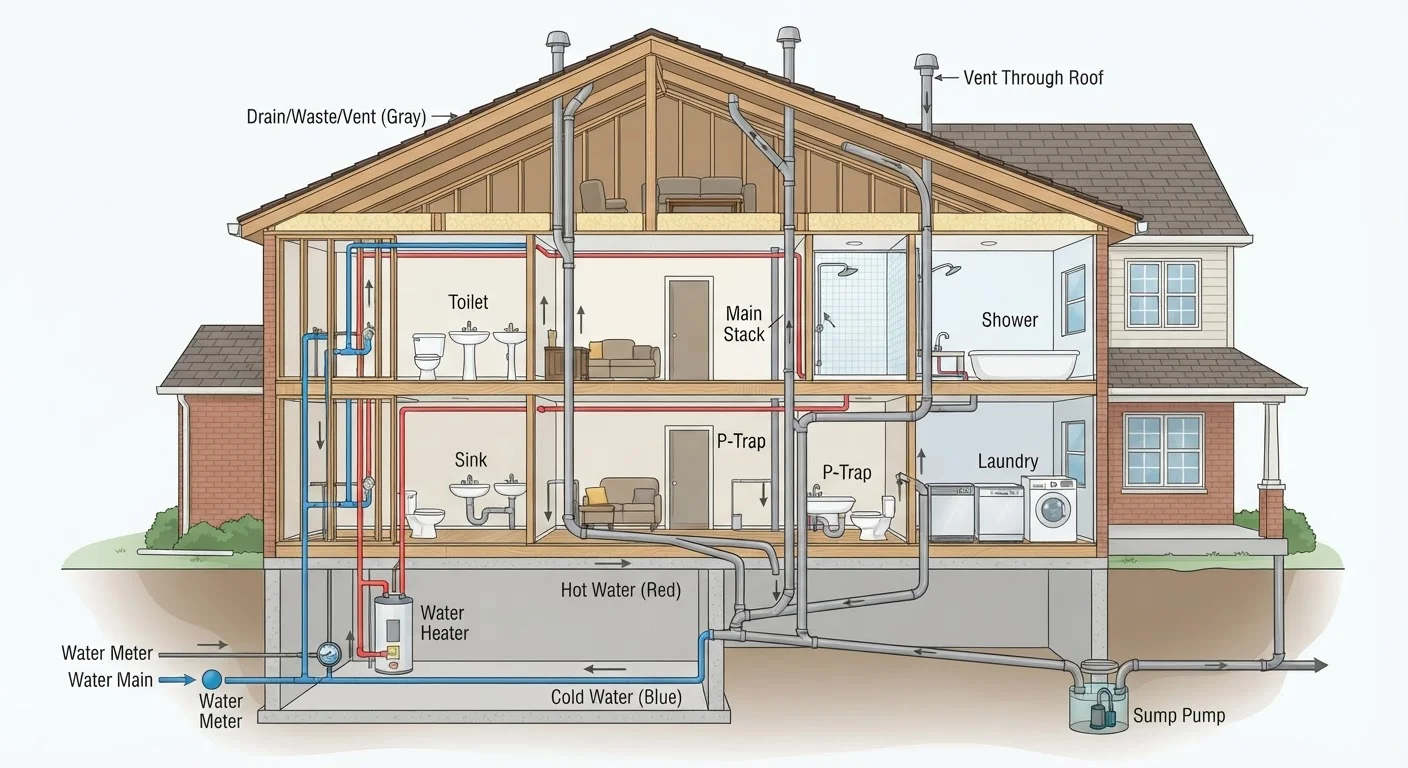
If you're also new to managing your home's physical systems, our first-timer's orientation to home plumbing is a useful companion - understanding your home's infrastructure helps you plan storage and access points more thoughtfully.
Decluttering
The process of deciding which items to keep, donate, or discard before organizing begins. It comes first - always.
Zone system
A method of dividing a room or space into dedicated areas based on activity or category, so similar items are always stored together.
One-in, one-out rule
A habit where every new item brought into the home is matched by removing one existing item, preventing gradual clutter buildup.
Dead zone
A space in your home - such as a high shelf or awkward corner - that's difficult to access and often accumulates forgotten or rarely used items.
Daily reset
A short, regular routine - usually a few minutes each evening - of returning items to their assigned spots to prevent disorder from accumulating.
Vertical space
The usable area on walls and in shelving above floor level, often underutilized by beginners but valuable for expanding storage without expanding footprint.
Core Principles Every Beginner Should Know
A few organizing principles apply across almost every room and situation. Internalizing these before you touch a single bin will save you time and frustration.
- Declutter before you organize. Sorting items into neat containers before deciding what to keep means you're just organizing clutter. Go through what you own first and remove anything broken, unused, or truly unwanted.
- Group like with like. Items that serve the same purpose should live near each other. This makes finding and returning things intuitive - batteries with batteries, cleaning supplies with cleaning supplies.
- Store things where you use them. The closer something is to where it's actually used, the more likely it is to get put back. A mail tray near the front door beats one tucked in a back office.
- One-in, one-out. When something new enters your home, something else leaves. This keeps clutter from accumulating silently over time.
For a deeper look at organizing vocabulary - terms like zone systems, dead zones, and vertical space - the home organizer's vocabulary guide is a plain-language reference worth bookmarking.
Essential Tools and Supplies to Get Started
You don't need a cart full of matching containers to get started. A focused set of basic supplies handles the vast majority of organizing tasks in any home.
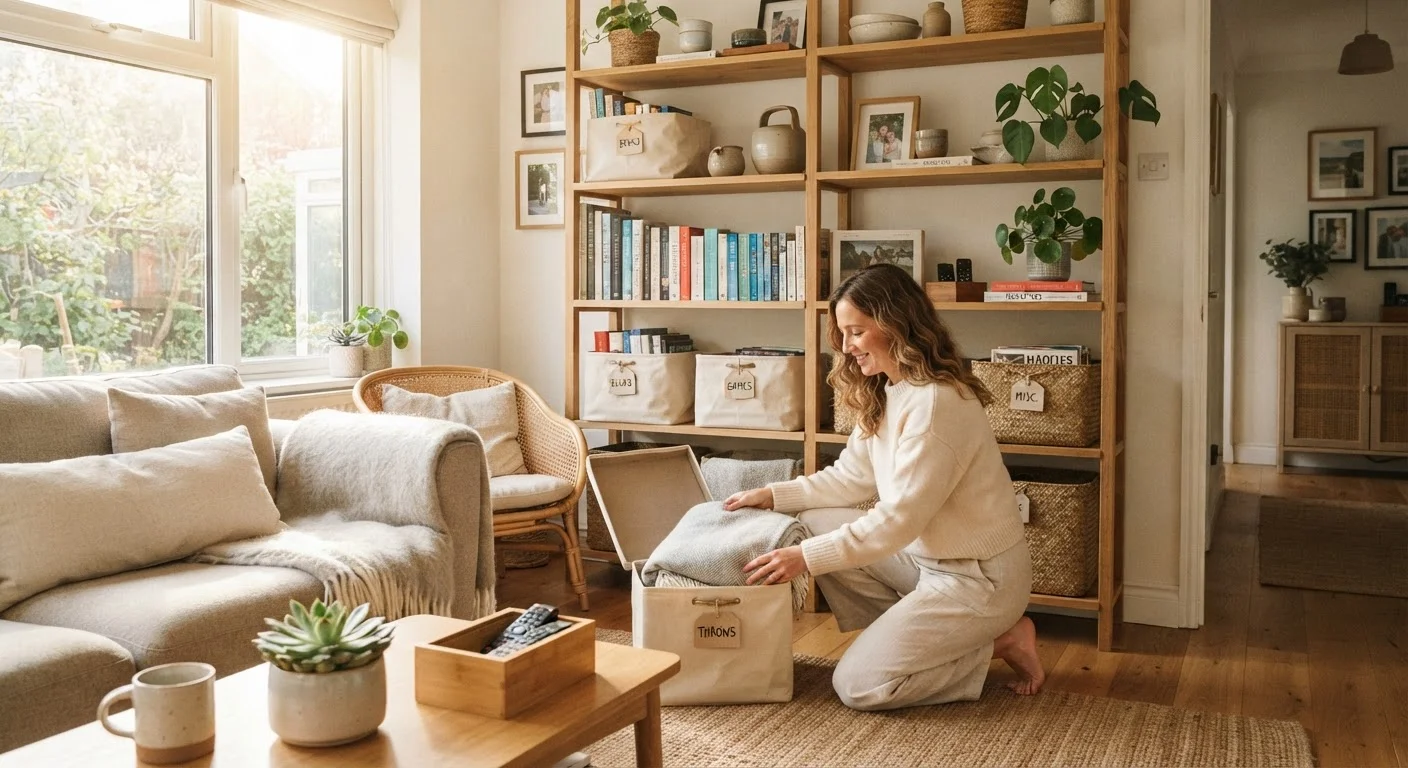
- Labels and a label maker (or masking tape and a marker). Labeling containers removes guesswork and makes it easier for everyone in the household to put things back correctly.
- Bins and baskets in a few standard sizes. Shallow bins work well in drawers; deeper baskets suit shelves and closets. Wait until after you've decluttered to buy these - you'll know exactly what you need.
- Drawer dividers. These subdivide large drawers into smaller zones so different categories don't intermingle.
- A donation box or bag. Keep one accessible while you sort. The act of physically placing items in it makes the decision feel final and frees you to move on.
Resist the urge to spend heavily upfront. Many effective organizers use repurposed shoeboxes, food containers, and shelf risers made from inexpensive materials. Buy only what a specific problem calls for.
How to Take Your First Step Without Getting Overwhelmed
The most common reason people stall is trying to tackle too much at once. The solution is intentional scope: choose one small, clearly bounded area and finish it completely before moving on.
Good starting points for beginners include a bathroom vanity drawer, a kitchen junk drawer, or an entryway catch-all. These areas are small enough to complete in under an hour and impactful enough that you'll notice the improvement immediately.
Follow this repeatable sequence for any area you tackle:
- Empty the space completely.
- Sort everything into keep, donate, and discard piles.
- Clean the empty space before returning anything.
- Return only the keep items, grouped logically.
- Add a container or label if it genuinely helps.
Once you've built confidence with small wins, our room-by-room decluttering guide walks you through a logical order for tackling larger spaces so momentum keeps building.
Take a Before Photo
Before you start on any area, snap a quick photo with your phone. It's easy to forget how cluttered a space looked once it's done. That before-and-after comparison is a powerful motivator when you're deciding whether to keep going.
Building Habits That Actually Stick
The most organized home in the world will revert to chaos within weeks if no maintenance habits exist. The good news: the habits that work are small and low-effort.
A daily reset - five to ten minutes before bed to return items to their assigned spots - prevents accumulation from getting ahead of you. Dealing with mail and paperwork immediately rather than piling it eliminates one of the most common clutter sources in American homes.
It also helps to involve everyone who shares the space. Systems designed without input from other household members tend to get ignored. When people help shape the system, they're more invested in maintaining it. Our guide on getting your whole household on board covers practical approaches for making shared organizing work without conflict.
Finally, schedule a light review of your systems every few months. Life changes - a new hobby, a growing child, a home office - and your organization should adapt alongside it. Treating your setup as flexible rather than fixed is what keeps it functional long-term.