What Makes a Grain 'Whole'
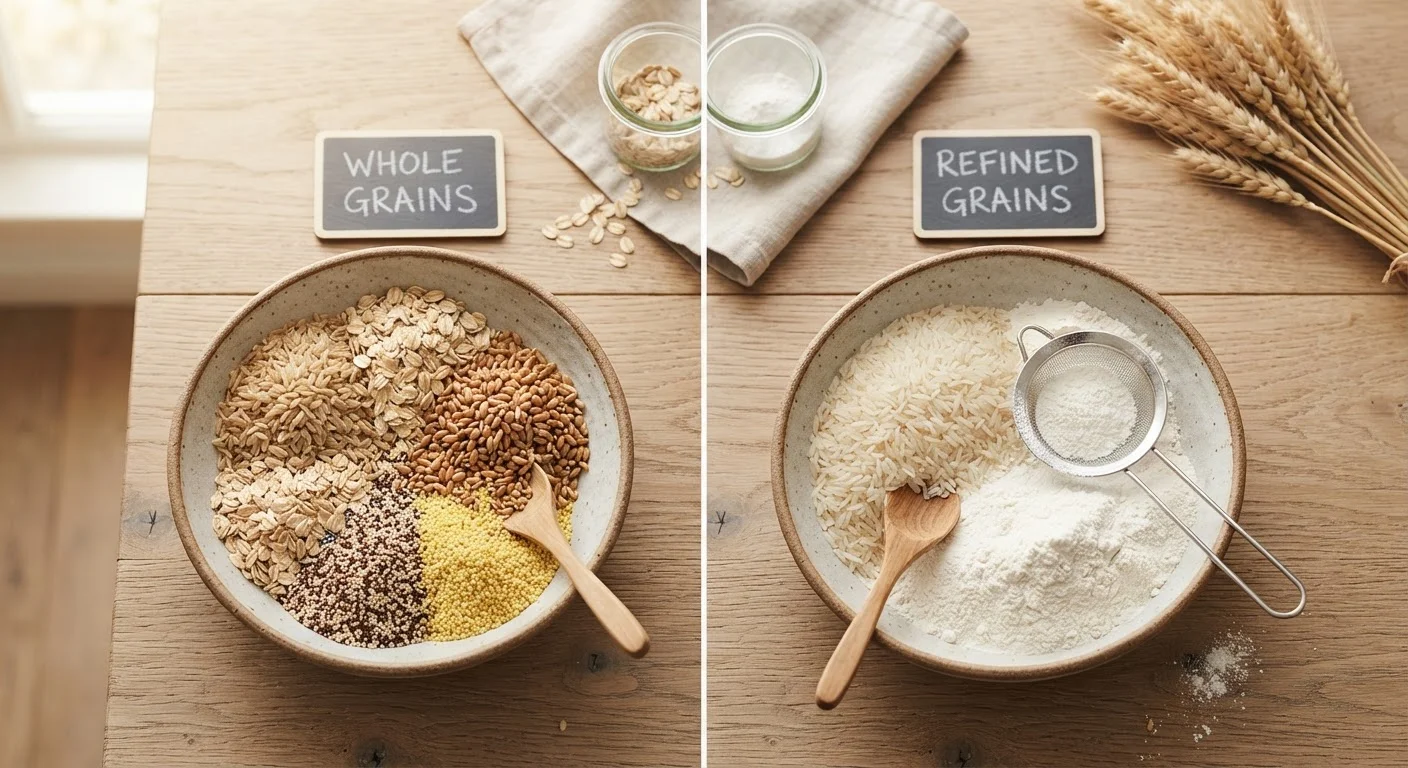
Every grain kernel - whether wheat, oat, rye, or rice - starts with the same three-part structure: the bran (the outer protective layer), the germ (the nutrient-dense core that would become a new plant), and the endosperm (the starchy middle that fuels germination). A grain is classified as whole when all three layers remain intact after processing.
Refined grains undergo milling that removes the bran and germ, leaving almost exclusively the starchy endosperm. This extends shelf life and produces a finer, lighter texture that many people prefer - but it also strips away a substantial portion of the grain's original nutritional content.
The distinction isn't just academic. The bran contributes most of the fiber; the germ houses B vitamins like folate and thiamin, vitamin E, and healthy fats; both layers contain phytochemicals and minerals such as magnesium, zinc, and iron. When they're milled away, those nutrients go with them.
What's Actually Lost in Refinement
Milling isn't a minor trim. Studies reviewed by the Whole Grains Council and cited in USDA dietary guidance indicate that refining wheat can remove roughly 75% of its fiber, around 70% of several B vitamins, and significant shares of iron, zinc, and beneficial plant compounds like lignans and phytic acid.
| Criterion | Whole Grains | Refined Grains |
|---|---|---|
| Kernel layers retained | Bran, germ, endosperm | Endosperm only |
| Dietary fiber | High | Low (most removed) |
| B vitamins (natural) | Full complement present | Mostly removed; some added back if enriched |
| Magnesium & zinc | Good natural source | Significantly reduced |
| Phytochemicals | Present (lignans, phenols) | Largely absent |
| Glycemic impact | Generally lower | Generally higher |
| Shelf life | Shorter (oils in germ go rancid) | Longer |
| Texture | Denser, heartier | Lighter, finer |
The U.S. government requires manufacturers to enrich certain refined grain products - adding back iron and four B vitamins (thiamin, riboflavin, niacin, and folic acid) - to offset some of the nutritional loss. Enrichment is genuinely valuable and has helped reduce folate-deficiency-related birth defects. However, enrichment does not restore fiber, magnesium, vitamin E, or the full complement of phytochemicals lost during milling.
When evaluating packaged products, keep in mind that terms like "multigrain" or "wheat bread" don't indicate whole grain content. For clarity on how to read those labels, see what food packaging health claims really mean.
What the Research Shows About Health Outcomes
Large epidemiological studies - including analyses from the Nurses' Health Study and the Health Professionals Follow-up Study - have found consistent associations between higher whole grain consumption and lower risks of cardiovascular disease, type 2 diabetes, and certain digestive conditions. The Dietary Guidelines for Americans recommend that at least half of all grains consumed be whole grains.
~25%
Proportion of Americans meeting whole grain recommendations
USDA dietary intake data indicate most Americans fall well short of the recommendation to make half their grains whole.
~75%
Fiber lost when wheat is refined
Estimates from nutritional analyses reviewed by the Whole Grains Council suggest milling removes the large majority of a grain's original fiber content.
3+ servings/day
Whole grain intake linked to cardiovascular benefit in research
Multiple large cohort studies have associated three or more daily servings of whole grains with reduced cardiovascular disease risk compared to lower intake.
Researchers attribute these associations partly to fiber's role in slowing glucose absorption and supporting gut microbiome diversity, and partly to the combined effect of the vitamins, minerals, and phytochemicals that whole grains deliver as a package rather than in isolation.
It's worth noting that most of this evidence is observational. It shows correlation, not causation, and reflects overall dietary patterns rather than any single food. Still, the consistency of findings across diverse populations strengthens the case for whole grains as a generally beneficial choice within a balanced diet.
This article is for general informational and educational purposes only and is not a substitute for personalized medical or dietary advice. Consult a qualified healthcare provider or registered dietitian for guidance specific to your health needs.