Why Food Label Language Is Designed to Persuade
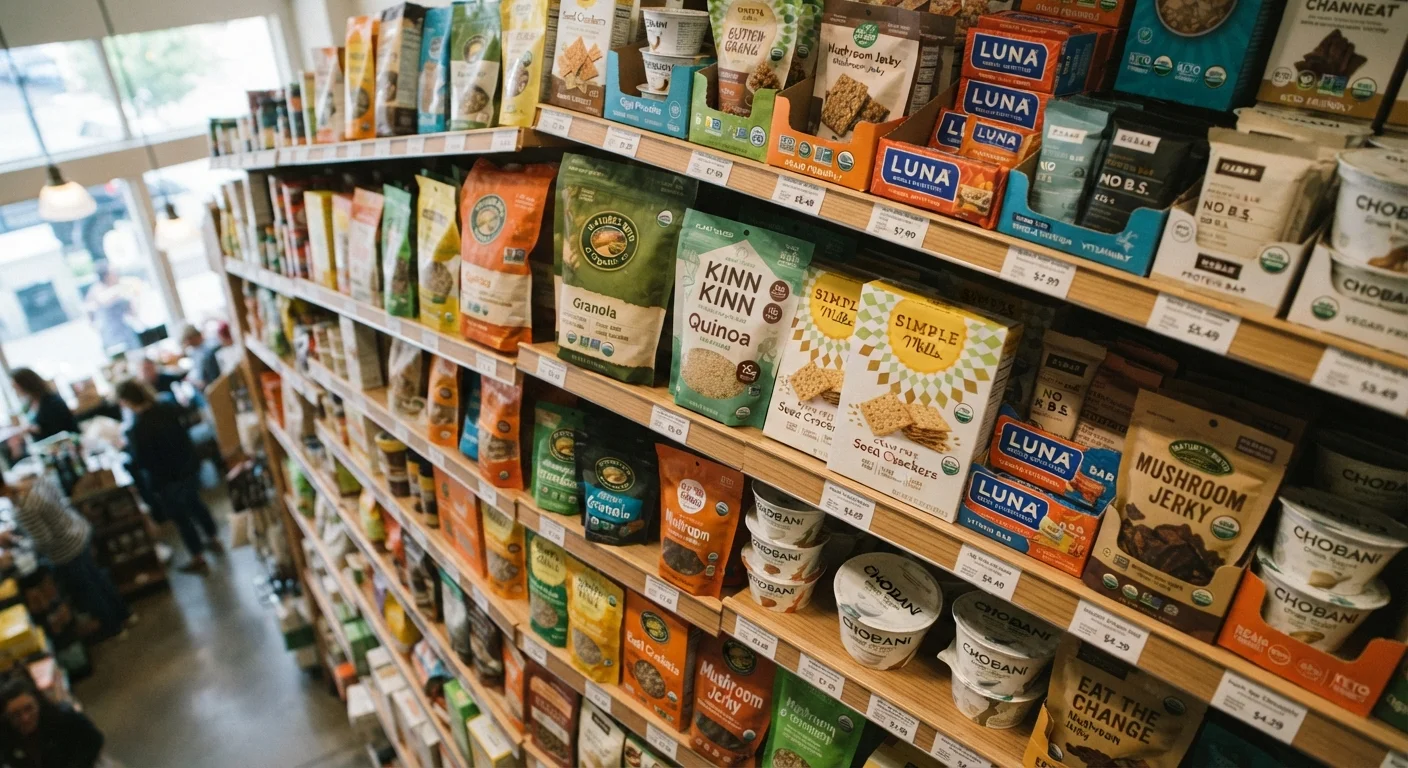
Walk down any grocery store aisle and the packaging practically shouts at you: heart-healthy, antioxidant-rich, clean, guilt-free. These phrases tap into real nutritional concerns, but they operate in a regulatory environment that is far less uniform than most shoppers realize. The FDA tightly controls some label claims, loosely defines others, and leaves entire categories of language effectively unregulated.
Understanding the difference between a legally defined claim and a marketing phrase is one of the most practical nutritional skills an everyday shopper can develop. It requires less time than you'd think - mostly a habit of reading the back of the package instead of only the front. The mistakes below are the most common traps that catch even health-conscious shoppers off guard.
Front Labels Are Marketing, Not Medicine
Health claims printed on the front of food packaging are primarily designed to attract buyers - not to provide clinical guidance. The FDA regulates some claims strictly, others loosely, and some not at all. Never rely on front-of-package language alone to assess the nutritional quality of a food. Turn the package over and read the Nutrition Facts panel and ingredient list every time.
Common Label Mistakes - and How to Avoid Them
Each of the following errors stems from a reasonable assumption that the food industry has learned to exploit. Recognizing the pattern makes the correction straightforward.
Treating 'natural' as a meaningful health endorsement.
Why it happens: The word 'natural' evokes wholesomeness and minimal processing, and many shoppers assume it signals a higher nutritional standard or regulatory approval.
Assuming 'multigrain' means the same thing as 'whole grain.'
Why it happens: Both terms sound nutritionally similar, and packaging often uses them interchangeably in design and color schemes, reinforcing the confusion.
Believing 'low fat' automatically means fewer calories or better health.
Why it happens: Decades of public health messaging positioned dietary fat as a primary driver of weight gain, leading many shoppers to associate reduced fat with healthier food overall.
Equating a 'health claim' on packaging with a medical endorsement.
Why it happens: Authorized health claims - such as those linking calcium to bone health - appear official, and shoppers may not realize that 'qualified health claims' carry weaker, sometimes tentative scientific support.
Ignoring serving size when evaluating nutrient content claims.
Why it happens: Shoppers focus on the nutrients listed rather than first checking the serving size, which can be set unrealistically small to make a product appear lower in calories or sodium.
For readers interested in how these labeling issues connect to broader eating patterns, our article on persistent nutrition myths provides useful context on how marketing language has shaped - and sometimes distorted - public understanding of healthy eating.
~80%
Shoppers influenced by front-of-pack claims
Research published in peer-reviewed nutrition journals has consistently found that a large majority of grocery shoppers report front-of-package health claims influence their purchasing decisions.
"Natural"
Term with no FDA formal definition
As of the FDA's most recent policy guidance, the term 'natural' on food labels lacks an official regulatory definition, meaning its use is essentially uncontrolled by specific standards.
2x+
Sugar increase common in low-fat versions
Consumer nutrition analyses have documented that reduced-fat food products frequently contain significantly more added sugar per serving than their full-fat counterparts to compensate for lost flavor.
Building a More Reliable Grocery Habit
Front-of-package claims are a starting point, not a verdict. The most reliable information on any packaged food is always on the Nutrition Facts panel and the ingredient list - both of which are federally mandated to meet specific formatting and accuracy standards. A product without a single health claim on its front label can still be an excellent nutritional choice, while one plastered with buzzwords may deliver little of value.
If you eat a varied, mostly whole-food diet, precise label parsing matters less. But when you're choosing between packaged options - cereals, breads, snack foods, condiments - these distinctions become meaningful. Developing the habit of checking serving size, total ingredients, and added sugars takes under a minute and reliably outperforms trusting front-panel language alone.
This article is for general informational and educational purposes only and is not a substitute for professional medical or dietary advice. Consult a registered dietitian or qualified healthcare provider for guidance tailored to your individual health needs.