What Makes a Fat Saturated or Unsaturated?
All dietary fats are made of fatty acid chains - long strings of carbon atoms bonded to hydrogen atoms. The distinction between saturated and unsaturated comes down to chemistry: saturated fats have no double bonds between carbon atoms, meaning they are fully "saturated" with hydrogen. Unsaturated fats contain one or more double bonds, which creates kinks in their molecular structure.
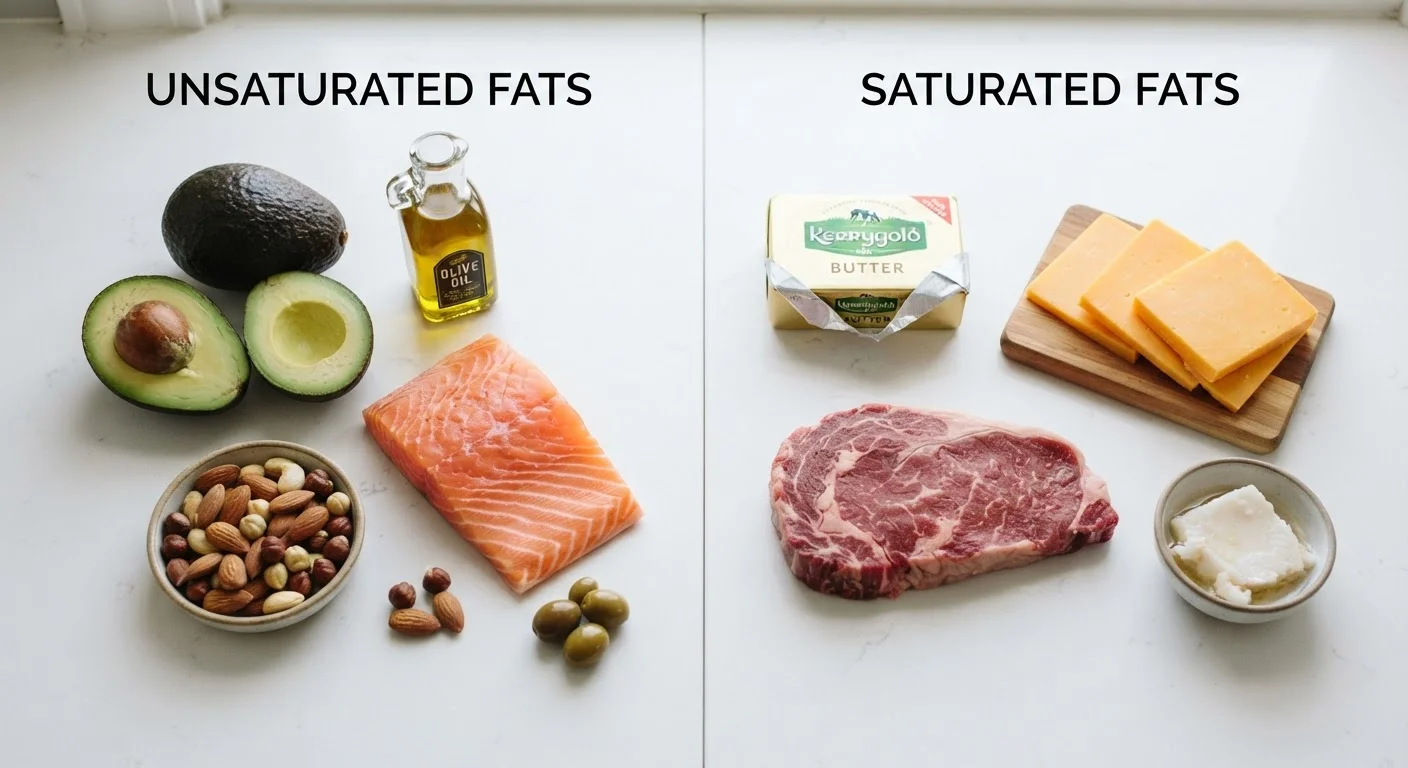
That structural difference has real-world consequences. Saturated fats tend to be solid at room temperature - think butter or coconut oil. Unsaturated fats are typically liquid - olive oil, canola oil, and most nut oils are familiar examples. Within unsaturated fats, there are two main subcategories: monounsaturated fats (one double bond) and polyunsaturated fats (multiple double bonds). Omega-3 and omega-6 fatty acids are both polyunsaturated types.
For a broader look at how fats fit alongside protein and carbohydrates, see our plain-language macronutrients guide.
How Each Fat Type Affects the Body
The body uses all types of fat for energy, cell membrane structure, hormone production, and absorption of fat-soluble vitamins (A, D, E, and K). The differences emerge in how each type influences blood lipids and long-term cardiovascular risk.
Saturated fat tends to raise LDL cholesterol (often called "bad" cholesterol) in the bloodstream. Elevated LDL is associated with increased risk of cardiovascular disease, which is why most health authorities - including the American Heart Association and the Dietary Guidelines for Americans - recommend limiting saturated fat to roughly 10% or less of total daily calories. It is worth noting that not all saturated fatty acids behave identically, and research continues to examine whether food sources matter as much as the fat type itself.
Unsaturated fat, by contrast, has a generally favorable effect on blood lipid profiles. Monounsaturated fats (found in olive oil, avocados, and many nuts) can help lower LDL without reducing HDL ("good") cholesterol. Polyunsaturated fats - especially omega-3s from fatty fish, walnuts, and flaxseed - are linked to reduced triglycerides and anti-inflammatory effects supported by substantial clinical evidence.
| Criterion | Saturated Fat | Unsaturated Fat |
|---|---|---|
| Chemical structure | No double bonds; fully hydrogen-saturated | One or more double bonds in carbon chain |
| State at room temperature | Solid (e.g., butter, coconut oil) | Liquid (e.g., olive oil, canola oil) |
| Primary food sources | Red meat, dairy, tropical oils | Avocados, nuts, seeds, oily fish, plant oils |
| Effect on LDL cholesterol | Tends to raise LDL levels | Tends to lower or maintain LDL levels |
| Effect on HDL cholesterol | May raise HDL modestly | Monounsaturated fats maintain or raise HDL |
| Guideline recommendation | Limit to ~10% or less of daily calories | Encouraged as primary dietary fat source |
| Anti-inflammatory properties | Limited or neutral | Omega-3s have well-documented anti-inflammatory effects |
A Nuance Worth Knowing: What You Replace Matters
One of the most important findings from recent nutrition research is that what replaces saturated fat in your diet is as significant as the reduction itself. Studies suggest that swapping saturated fat for refined carbohydrates and added sugars does not meaningfully reduce cardiovascular risk - and may worsen other metabolic markers.
The more beneficial swap, according to current evidence, is replacing saturated fat with unsaturated fat sources: choosing olive oil over butter, or snacking on a handful of almonds rather than processed foods high in both saturated fat and refined starch. This pattern is a cornerstone of the Mediterranean-style diet, which has among the strongest evidence bases for long-term heart health outcomes.
This nuance is also a reminder that nutrition is rarely about single nutrients in isolation. Our piece on persistent nutrition myths explores how oversimplified rules can sometimes lead to worse food decisions.
This article is for general informational purposes only and does not constitute medical or dietary advice. Consult a registered dietitian or qualified healthcare provider for guidance tailored to your individual health needs.