
What Are Macronutrients?
Every food you eat is made up of nutrients. Some - like vitamins and minerals - are needed in tiny amounts. Others, called macronutrients, are required in much larger quantities because they supply the energy and raw materials your body relies on to function every day.
There are three macronutrients: protein, carbohydrates, and fat. Together, they account for essentially all the calories in food. Each one carries out distinct jobs in the body, and none of them is optional - despite what popular diet culture sometimes implies.
Macronutrient
A nutrient the body needs in relatively large amounts to supply energy and support essential functions. The three macronutrients are protein, carbohydrates, and fat.
Amino acids
The building blocks of protein. Some amino acids are 'essential,' meaning your body cannot make them and must get them from food.
Glucose
A simple sugar that is the body's primary source of quick energy. It is produced when carbohydrates are digested and broken down.
Dietary fiber
A type of carbohydrate that the body cannot fully digest. It supports digestive health and helps you feel full longer.
Unsaturated fat
A type of fat found in plant foods and fish that is generally considered beneficial for heart health at typical dietary amounts.
Complete protein
A protein source that contains all nine essential amino acids in adequate amounts. Most animal-based foods are complete proteins.
It's worth noting that macronutrients work alongside micronutrients. For a look at how vitamins and minerals fit into the bigger picture, see our quick-reference guide to vitamins and minerals.
Protein: The Body's Builder
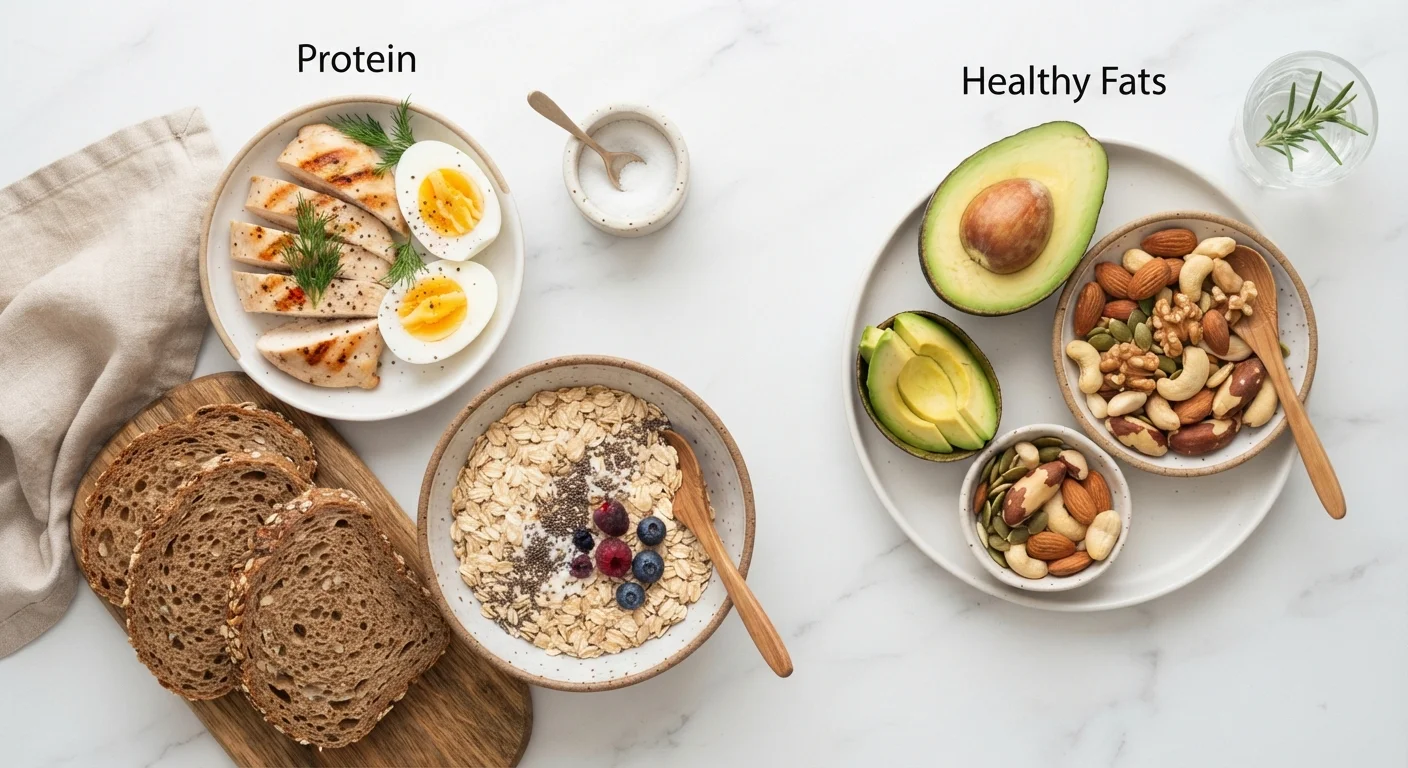
Protein is made up of smaller units called amino acids. Your body uses these amino acids to build and repair tissues, produce enzymes and hormones, support immune function, and maintain muscle mass. Protein also provides 4 calories per gram, though energy is a secondary role - your body prefers to use protein for structural work.
Foods high in protein include meat, poultry, fish, eggs, dairy products, legumes (beans, lentils), tofu, tempeh, and certain grains like quinoa. Animal sources tend to be complete proteins, meaning they contain all essential amino acids. Many plant sources are incomplete on their own, but eating a varied diet across the day covers these gaps effectively.
Getting Enough Protein From Plants
If you eat mostly plant-based foods, you can still meet your protein needs by combining a variety of sources throughout the day - such as legumes, whole grains, nuts, and soy products. Rigid food combining at every single meal is not necessary; dietary variety across the day is what counts.
Protein needs vary by age, activity level, and health status. A registered dietitian can help you estimate the right amount for your individual circumstances.
Carbohydrates: The Body's Preferred Fuel
Carbohydrates - often shortened to carbs - are the body's first-choice energy source. When you eat carbs, they are broken down into glucose, which fuels your brain, muscles, and virtually every cell in your body. Like protein, carbohydrates deliver 4 calories per gram.
Carbohydrates exist on a broad spectrum. At one end are complex carbohydrates found in whole grains, legumes, vegetables, and fruit - these digest slowly, support steady energy levels, and often deliver fiber, vitamins, and minerals alongside the glucose. At the other end are simple, refined carbohydrates such as added sugars and white flour products, which digest quickly and offer little additional nutritional value.
Fiber - a type of carbohydrate the body cannot fully digest - deserves special mention. It supports digestive health, contributes to feelings of fullness, and is associated with reduced risk of several chronic conditions according to well-established research.
Many popular nutrition beliefs mischaracterize carbohydrates as universally problematic. Our article on common nutrition myths addresses several of these misconceptions with evidence-based context.
Fat: Essential, Not the Enemy
Dietary fat has a complicated reputation, but the science is clear: fat is an essential macronutrient. It provides 9 calories per gram - the most of any macronutrient - and supports a wide range of critical functions, including hormone production, absorption of fat-soluble vitamins (A, D, E, and K), insulation, and the structural integrity of every cell membrane in your body.
Type of fat matters significantly. Unsaturated fats - found in olive oil, avocados, nuts, seeds, and fatty fish - are broadly considered beneficial for cardiovascular and metabolic health. Saturated fats, found mainly in animal products and some tropical oils, have a more nuanced evidence base; current guidance generally suggests moderating intake. Trans fats, produced industrially through partial hydrogenation, are consistently linked to adverse health effects and are largely phased out of the food supply in the United States.
Why Balance Between Macros Matters
No single macronutrient is a villain or a miracle cure. The evidence consistently points toward a varied, whole-food diet that includes meaningful amounts of all three - rather than dramatic cuts in any one category - as the most sustainable foundation for good health.
That said, individual needs genuinely differ. Someone who is physically active, managing a health condition, pregnant, or in older age may have specific protein, carbohydrate, or fat requirements that differ from general guidelines. These situations call for personalized guidance from a qualified healthcare professional or registered dietitian.
For practical strategies on assembling meals that honor these principles, our guide on building a balanced plate translates macronutrient knowledge into everyday meal structure.
This article is for general informational and educational purposes only and is not a substitute for professional medical or dietary advice. Always consult a qualified healthcare provider or registered dietitian for guidance specific to your health needs.