The Core Idea Behind Functional Fitness
At its simplest, functional fitness asks: does this training help me do the things I actually need to do? Picking up a bag of groceries, standing up from a low chair, reaching overhead to grab something from a shelf - these actions require coordination across multiple muscle groups and joints working together. Functional training is specifically designed to strengthen those integrated movement patterns.
This contrasts with approaches that isolate a single muscle - say, a biceps curl machine - which builds that muscle but doesn't necessarily improve how your body functions as a connected system. That's not to say isolation exercises are without value, but functional fitness prioritizes movement that translates outside the gym. You can explore how this fits into a broader approach to staying active in our guide to active living.
Start With Movement Quality, Not Load
When beginning functional training, focus first on performing each movement pattern correctly before adding resistance or complexity. Poor form under load is a common source of injury. If you're new to exercise or returning after a break, consider working with a certified fitness professional to establish safe technique.
What Functional Training Actually Looks Like
Functional exercises tend to fall into a handful of foundational movement categories:
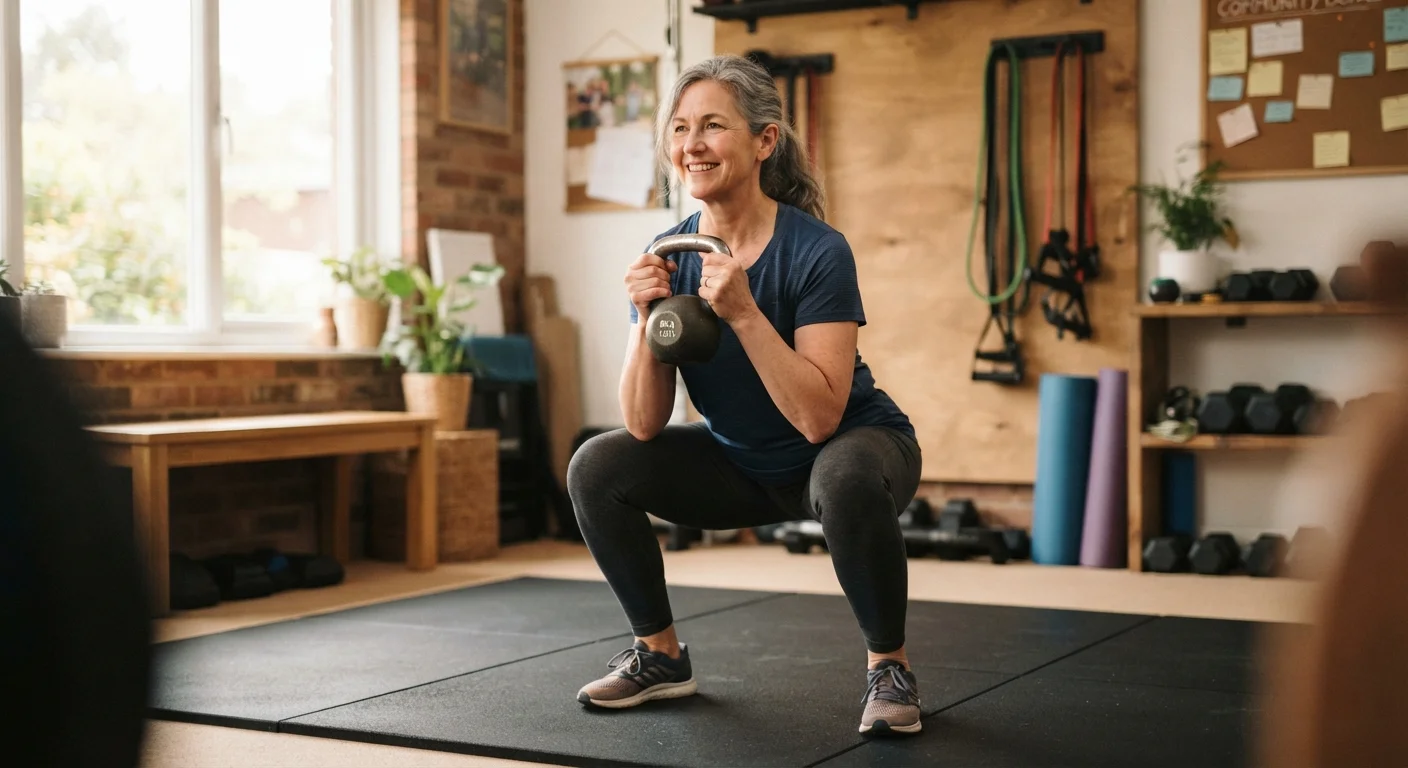
- Squat patterns - bodyweight squats, goblet squats; mimic sitting and standing
- Hinge patterns - deadlifts, Romanian deadlifts; mimic picking objects up from the floor
- Push patterns - push-ups, overhead press; mimic pushing open a door or placing items on a shelf
- Pull patterns - rows, band pull-aparts; counter-balance pushing and support posture
- Carry patterns - farmer's carries; mimic lugging bags or groceries
- Balance and stability work - single-leg stands, step-ups; crucial for fall prevention and uneven terrain
Many of these require little to no equipment, making them accessible for home practice. For a broader look at how low- and moderate-intensity movement fits together, see this breakdown of exercise intensity.
~30%
Muscle mass lost between ages 30-80 without intervention
Research in the field of sarcopenia (age-related muscle loss) estimates significant muscle decline across adulthood, underscoring why maintaining strength through movement matters over a lifetime.
1 in 4
Adults over 65 who fall each year in the U.S.
According to the CDC, falls are a leading cause of injury among older adults, highlighting the relevance of balance and functional strength training for this population.
150 min
Weekly moderate activity recommended for adults
The U.S. Department of Health and Human Services' Physical Activity Guidelines for Americans recommend at least 150 minutes of moderate-intensity aerobic activity per week, alongside muscle-strengthening activities on two or more days.
Why It Matters - Especially as You Age
Functional capacity - the ability to perform everyday physical tasks without difficulty - naturally declines with age if it isn't actively maintained. Muscle mass, joint mobility, and balance all tend to decrease over time, and these changes can affect independence and quality of life. Functional training directly addresses those vulnerabilities.
This doesn't mean functional fitness is only for older adults. Building strong movement foundations earlier in life is protective in itself. But the relevance becomes more tangible with age: research on aging populations consistently identifies strength, balance, and mobility as key contributors to healthy aging and the ability to live independently. Our guide to movement after 60 explores how these principles apply as the body changes. Similarly, staying fit after 50 covers practical adaptation strategies.
“The goal of exercise should be to maintain the ability to do the things you want to do in life - not just to look a certain way or perform a specific sport. Functional capacity is what lets people remain independent and engaged as they age.”
— American College of Sports Medicine, Professional organization for exercise science and sports medicine
How Functional Fitness Fits Into Your Routine
Functional fitness isn't a rigid program - it's a training philosophy that can be layered into almost any routine. You might apply it by swapping one isolation exercise for a compound movement, adding balance challenges to existing workouts, or simply paying more attention to movement quality during everyday tasks.
It's worth noting that functional training is not the same as athletic or sport-specific training, which has different goals around peak performance. For a comparison, see the athletic training hub. Functional fitness sits in a different space - it's about sustainable, everyday capability rather than elite output.
If some of the terminology here is unfamiliar, the physical activity glossary is a useful reference. As always, if you have existing health conditions, injuries, or haven't exercised in some time, speak with a qualified healthcare professional before starting any new exercise program.
This article is for general informational and educational purposes only and does not constitute medical advice. Always consult a qualified healthcare professional before beginning any new exercise program, particularly if you have existing health conditions or concerns.