Why Readers Track - and What They're Actually Looking For
Most readers don't pick up a tracking habit because they want data. They pick it up because they want to feel like reading is going somewhere. A list of finished books, a shelf of spines, a filled-in log - these are ways of making an invisible activity visible, of saying: this happened, and it mattered.
But tracking also does something more practical. It surfaces patterns readers don't notice in real time: that you abandon thrillers halfway through but finish every memoir you start, that your reading pace drops in the fall, or that an entire year passed without a single book by a woman author. As this piece on what reading more really means argues, the framing behind your reading ambitions shapes everything - and tracking is one of the clearest mirrors for that framing.
None of these methods require you to be a data enthusiast. They just ask you to pay a little attention.
| Most common tracking method | Dedicated reading apps (e.g., Goodreads, StoryGraph) |
| Key data points readers log | Title, author, start/finish date, format, genre, rating |
| Spreadsheet advantage | Fully customizable columns; supports sorting and filtering |
| Physical journal advantage | Tactile, personal, no screen required |
| App advantage | Automatic stats, social features, ISBN lookup |
| Biggest pattern tracking reveals | Genre ruts, seasonal dips, format preferences, author diversity |
The Main Tracking Formats: A Practical Rundown
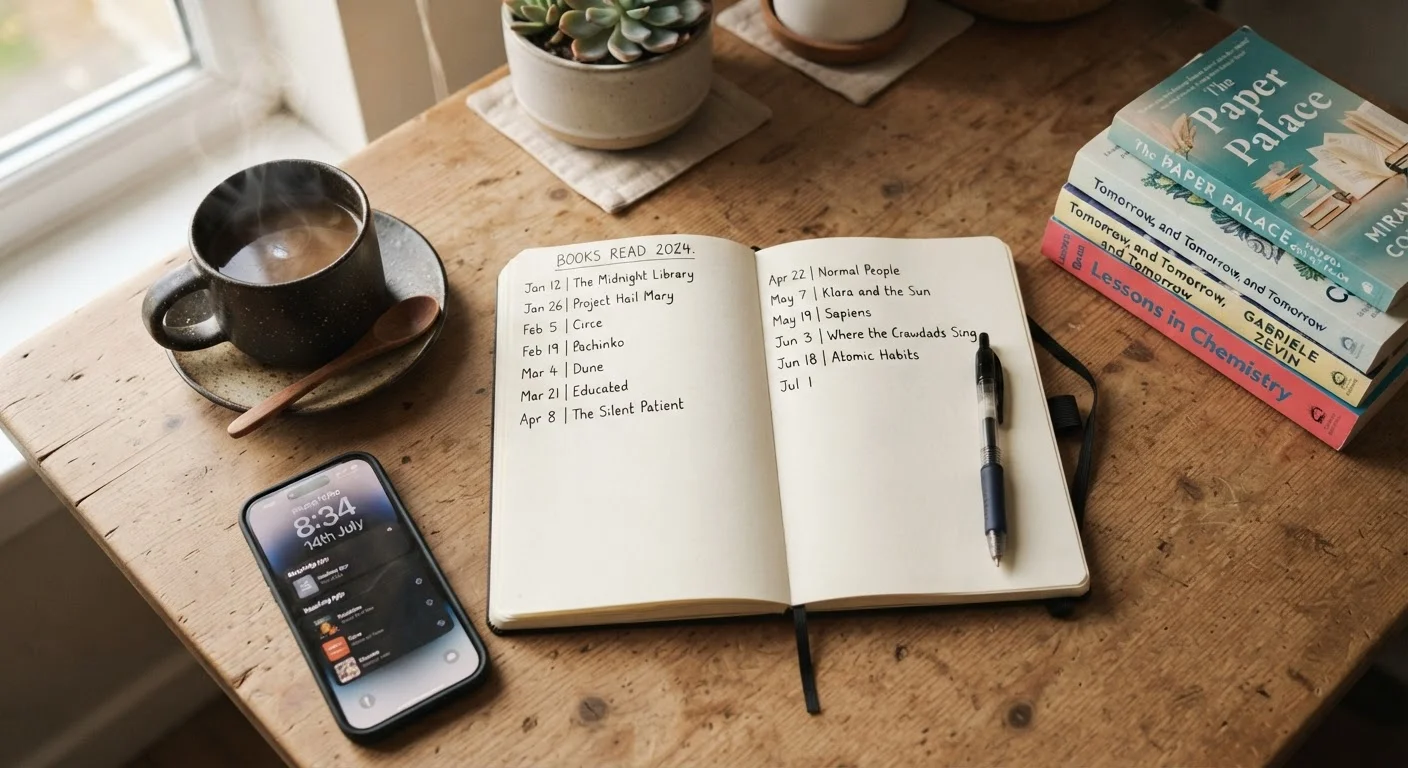
Physical journals and notebooks are the oldest method and still beloved by readers who find the act of writing by hand to be part of the pleasure. A simple ruled notebook can hold titles, authors, start and finish dates, and brief impressions. The limitation is searchability - flipping through years of notes to find a half-remembered book is slow - but the tactile record has its own satisfying weight.
Spreadsheets (in tools like Google Sheets or Excel) sit at the intersection of flexibility and effort. You design the columns, so you track exactly what matters: genre, format, page count, star rating, source (gift, library, purchase). Spreadsheets let you sort and filter, which is where useful patterns begin to emerge. The tradeoff is setup time and the blank-page problem of building your own system from scratch.
Dedicated reading apps handle much of that friction automatically. Platforms like Goodreads, StoryGraph, and Literal log books by ISBN or title lookup, calculate reading speed, generate year-in-review stats, and connect you with other readers. StoryGraph in particular has gained attention for its mood- and pace-based filtering - useful if you track how a book felt, not just whether you finished it. If you're curious about making a reading log worth keeping, apps lower the barrier to entry significantly.
Annual reading challenges like those hosted on Goodreads or through independent book clubs impose a number-based goal - say, 24 books in a year - and track progress automatically. They're motivating for some readers and anxiety-producing for others. The key question is whether a count-based goal aligns with how you actually read. For readers who prefer depth over speed, goals that reflect how you actually read may be a better fit than a raw number.
No tracking at all is also a legitimate choice. Some readers find that logging pulls them out of the experience of reading, turning a pleasure into a performance metric. If tracking makes books feel like obligations, it may be working against you.
What Your Tracking Data Actually Tells You
The value of a reading log isn't the log itself - it's what you notice when you look back. A year of records might show that you read prolifically in certain seasons and barely at all in others, which connects to the real dynamics explored in why reading streaks break down. It might reveal a genre rut - five consecutive books from the same narrow corner of the literary landscape - or a gap in authors you've never explored.
Tracking format matters here too. If you're also curious how audiobooks and print compare as experiences, logging format alongside title can reveal whether you retain or engage differently depending on how you consumed a book. Some readers discover they finish audiobooks at twice the rate but return to print for nonfiction - a pattern that's invisible until the data exists.
The best tracking system is the one you'll actually sustain. That might be a $2 notebook or a feature-rich app. What matters is that it fits naturally into how you already read, rather than adding friction to something that's supposed to be enjoyable. Building that kind of sustainable foundation is exactly what the anatomy of a sustainable reading habit covers in depth.