The Confusion That Sends Readers to the Wrong Shelf
Walk into any bookstore and you'll find a section labeled "Young Adult." Browse almost any reading app and YA appears in a dropdown menu alongside Romance, Mystery, and Sci-Fi. It's easy to assume they're all the same kind of thing - that YA is a genre the way a thriller or a fantasy novel is a genre. But that assumption quietly misleads readers every day, steering them away from books they'd love and toward ones that don't fit.
The mix-up is understandable. Genre and category are terms that get used interchangeably in casual conversation, but in the world of publishing, they mean something quite different. Understanding where YA actually fits in that system doesn't just satisfy literary curiosity - it changes how confidently you can find your next read. See our overview of major literary genres to understand what a true genre classification actually looks like.
Myth
Young Adult is a genre, the same way mystery or fantasy is a genre.
Fact
YA is an age category defined by its intended audience, not by the conventions of its stories.
Publishers use age categories - Children's, Middle Grade, Young Adult, New Adult, Adult - to signal who a book was written for. Genre labels like fantasy, thriller, or romance describe what kind of story it is. A YA fantasy and an adult fantasy are both fantasy novels; only one was marketed toward teenage readers. Conflating the two leads readers to filter by audience instead of by the kind of story they actually want.
Myth
All YA books have the same kind of story and tone.
Fact
YA spans nearly every genre and tonal range, from cozy contemporary romance to dark dystopian horror.
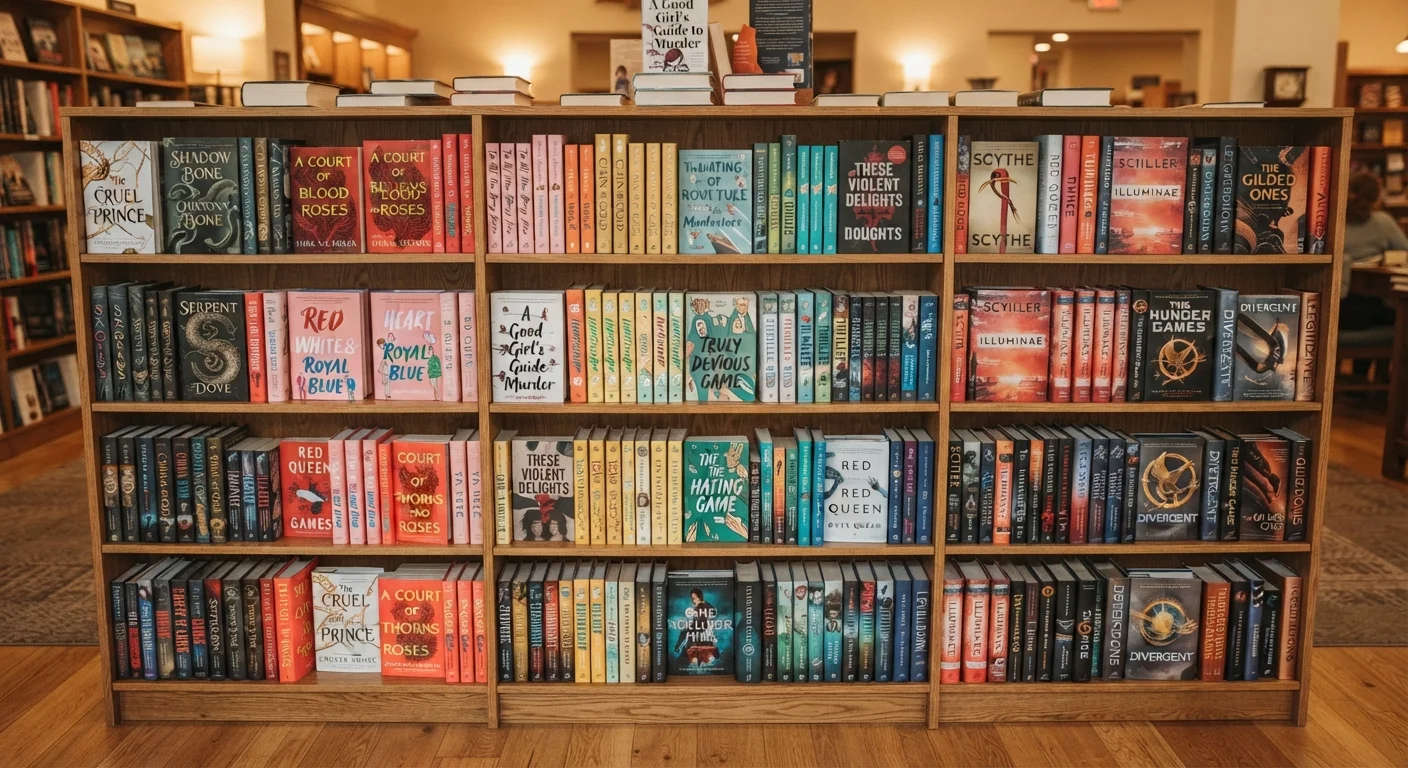
Because YA is a category rather than a genre, it contains the full spectrum of storytelling. A reader can find YA fantasy epics, YA mystery-thrillers, YA literary realism, YA science fiction, and YA horror - all shelved in the same section. The common thread is protagonist age and coming-of-age themes, not plot type or emotional register. Expecting a consistent "YA tone" across all these genres sets readers up for repeated mismatches.
Myth
YA is only for teenagers - adults reading it are unusual.
Fact
A substantial portion of YA readership is adults, and that has been true for many years.
Surveys of reading habits have consistently found that a large share of people who buy and read YA novels are adults over 18. Age categories describe a publisher's intended marketing target, not a hard boundary on who will enjoy a book. Adults often find that coming-of-age themes resonate regardless of their own age, and that YA's typically propulsive pacing and emotional directness are features rather than limitations.
Myth
If a book is shelved in YA, it must be simpler or less literary than adult fiction.
Fact
YA includes complex, award-recognized literary work that engages with serious themes.
The YA category has produced novels that address grief, trauma, systemic injustice, war, and identity with considerable depth and craft. Some YA novels have received recognition from literary institutions and crossover praise from critics who primarily cover adult fiction. Equating "young adult" with "simple" conflates the category with a quality judgment - one that doesn't hold up when you actually read across the shelf.
What Makes Something a Genre - and What Makes YA Different
A genre, at its core, is defined by the conventions of the story itself: the setting, the plot structure, the emotional promise, the character types. A mystery delivers a puzzle and a resolution. A romance centers a love story with a satisfying emotional payoff. A fantasy builds a world governed by rules that don't exist in our own. These conventions let readers know what kind of reading experience they're walking into.
Young Adult, by contrast, is defined by its intended audience. Publishers use the YA label to signal that a book was written with readers roughly between the ages of 12 and 18 in mind. The protagonists are typically teenagers. The themes - identity, first love, belonging, coming-of-age - are weighted toward that life stage. But here's the thing: a YA novel can be a fantasy, a contemporary romance, a psychological thriller, a dystopian sci-fi epic, or a quiet literary character study. The category tells you who the book was written for. The genre tells you what kind of story it is.
This is why genre labels serve a practical function that age categories simply can't replace - they describe the story's architecture, not its marketing shelf.
Why the Distinction Matters for Real Readers
If a reader tells themselves they "don't like YA," they may be cutting off access to an enormous range of storytelling. They might love dark fantasy, but dismiss a critically acclaimed YA dark fantasy novel without a second look. They might be drawn to sharp psychological suspense, unaware that some of the most inventive thriller writing of the past decade has landed in the YA section. The category label has become, for some readers, a blanket filter - when the more useful filter would be genre, tone, and subject matter.
The reverse is also true. A reader who gravitates toward YA because they enjoy a particular coming-of-age energy might be frustrated when one YA pick is a romance and the next is a horror novel with gore they weren't expecting. That's not YA being inconsistent - that's two entirely different genres wearing the same category label.
For anyone trying to build a reading life around genuine taste rather than shelf labels, a genre self-assessment is a far more useful tool than deciding whether you're a "YA reader" or not. And the conversation about where YA sits relative to adult literary fiction is more nuanced than it first appears - genre fiction and literary fiction overlap more than most readers realize, and that's just as true within the YA category as anywhere else.
55%
YA book buyers who are adults
A widely cited Publishers Weekly analysis found that more than half of YA buyers in the U.S. were over 18 years old.
100+
Subgenres represented in the YA category
Major library cataloguing systems list over a hundred distinct genre and subgenre tags applied to books shelved in the Young Adult section.