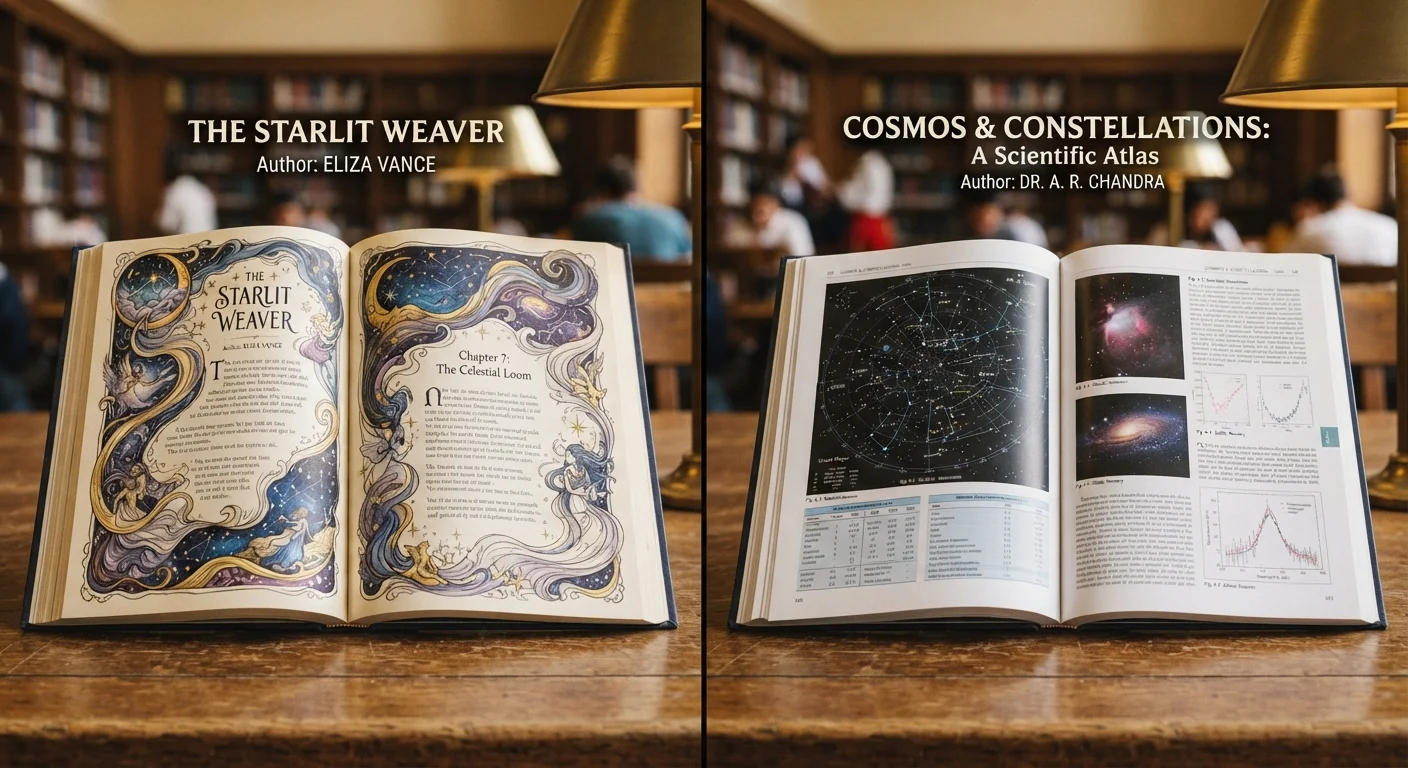

Two Movements, One Century of Confusion
Ask someone to explain the difference between modernism and postmodernism, and you're likely to get a long pause followed by something about Virginia Woolf and, maybe, a shrug. These two literary movements are among the most discussed - and most muddled - in American classrooms. Part of the problem is that the terms get used casually, as if they simply mean "old experimental" and "newer experimental." They don't.
Understanding what a literary movement actually is helps here. Movements aren't just aesthetic trends - they're collective responses to historical and philosophical conditions. Modernism and postmodernism each responded to the particular crises of their era, and those crises were genuinely different.
Modernism rose from the ruins of World War I, the rapid growth of cities, Freud's theories of the unconscious, and the collapse of Victorian moral certainty. Writers like T.S. Eliot, Woolf, and Joyce felt that traditional literary forms - neat plots, reliable narrators, tidy moral resolutions - simply couldn't hold the weight of modern experience anymore. They sought new forms to capture something true.
What Modernism Was Actually About
The modernists were, at heart, idealists in crisis. They believed that meaning existed - that beneath the noise and fragmentation of modern life, there was something real to be found. The challenge was finding a form capable of expressing it. Stream of consciousness, nonlinear time, multiple perspectives, mythic underpinning: these weren't stylistic tricks. They were attempts to get closer to actual human experience, to the way memory and perception really work.
Woolf's Mrs Dalloway unfolds across a single London day, but it spirals through decades of feeling. Joyce's Ulysses maps one man's wandering mind against an entire literary tradition. The ambition was enormous, and it was earnest. Modernist writers were trying to rescue meaning from a world that seemed to be losing its grip on it.
| Criterion | Modernism | Postmodernism |
|---|---|---|
| Historical roots | World War I, industrialization, Freud | World War II, Cold War, mass media |
| Attitude toward meaning | Meaning exists but is hard to reach | Meaning is unstable or constructed |
| Narrative style | Stream of consciousness, interior monologue | Metafiction, pastiche, unreliable narrators |
| Emotional register | Earnest, anguished | Ironic, playful, often dark |
| Relationship to tradition | Breaks from tradition to find new truth | Deconstructs tradition as a concept |
| Key authors | Woolf, Joyce, Eliot, Faulkner | Pynchon, DeLillo, Vonnegut, Wallace |
| View of the self | Fragmented but real and searchable | Fluid, constructed, possibly fictional |
This seriousness of purpose is what separates modernism most clearly from what came after. Even at its most fragmented, modernist writing is reaching for something. It anguishes. It cares.
What Postmodernism Pushed Back Against
Postmodernism, which emerged more forcefully after World War II and gained momentum through the 1960s and 70s, took modernism's doubt and turned it up several notches. If modernism said the old forms couldn't hold truth, postmodernism asked a more unsettling question: what if there is no stable truth to hold?
Writers like Thomas Pynchon, Don DeLillo, Kurt Vonnegut, and later David Foster Wallace built works that were self-aware about their own status as fiction. Characters know they're in stories. Narrators undermine themselves. History and conspiracy blur. Plots spiral into labyrinthine irresolution, not because life is hard to represent, but because representation itself is the problem.
The mood shifted too. Where modernism often anguished, postmodernism often played - though not always happily. The playfulness could mask real dread. DeLillo's White Noise is darkly comic about consumerism and death. Vonnegut's Slaughterhouse-Five makes ironic jokes about events too terrible for straightforward grief. The irony isn't cynicism for its own sake - it's a coping mechanism for a world that seemed to have proven, twice over, that grand narratives lead to catastrophe.
This matters for readers navigating the sometimes blurry line between literary and genre fiction, since postmodernism helped dissolve the wall between high and low culture, borrowing freely from pulp, TV, and advertising.
Why the Distinction Still Matters
Knowing which movement a work belongs to changes how you read it. A modernist novel rewards you for looking for the deeper pattern, the hidden coherence beneath the surface. A postmodernist novel may be asking you to notice that there is no pattern - or that you're the one constructing it.
These Movements Overlap More Than They Seem
Some writers and works straddle the line between modernism and postmodernism, and scholars continue to debate where certain authors belong. Samuel Beckett, for instance, is claimed by both camps. The labels are useful tools for understanding broad tendencies - not rigid boxes that every work fits cleanly into. Reading about how literary history shapes our view of authors can help put these categories in perspective.
Neither movement is inherently more sophisticated or more enjoyable than the other. They're different instruments playing different music. Some readers find postmodernism's ironic distance exhilarating; others find it exhausting. Some readers love the emotional intensity of modernism; others find it overwrought.
What both movements share is a conviction that literature isn't just entertainment - it's a way of thinking about reality. That conviction connects them, even as everything else divides them. As single books have shown throughout literary history, ideas can travel from a writer's desk to the culture at large, reshaping what stories mean and how we tell them.
If you want to go deeper into how these and other traditions fit together, a mapped overview of the major literary genres can help orient you across the wider landscape of what's out there to read.