
The Legal Landscape Across the U.S.
As of recent years, a majority of U.S. states have enacted laws banning handheld device use while driving. Several states go further, restricting all phone use - including hands-free - for novice or teen drivers. Penalties range from fines to points on your license depending on your state.
Hands-free use (via Bluetooth, speakerphone placed securely, or vehicle-integrated systems) is generally permitted for adult drivers nationwide, though specific rules vary. Drivers should check their state's Department of Motor Vehicles or transportation authority for current regulations, as laws continue to evolve.
What's important to understand is that legal does not automatically mean safe. Legality sets a floor, not a ceiling, for responsible driving behavior.
What Research Says About Handheld Devices
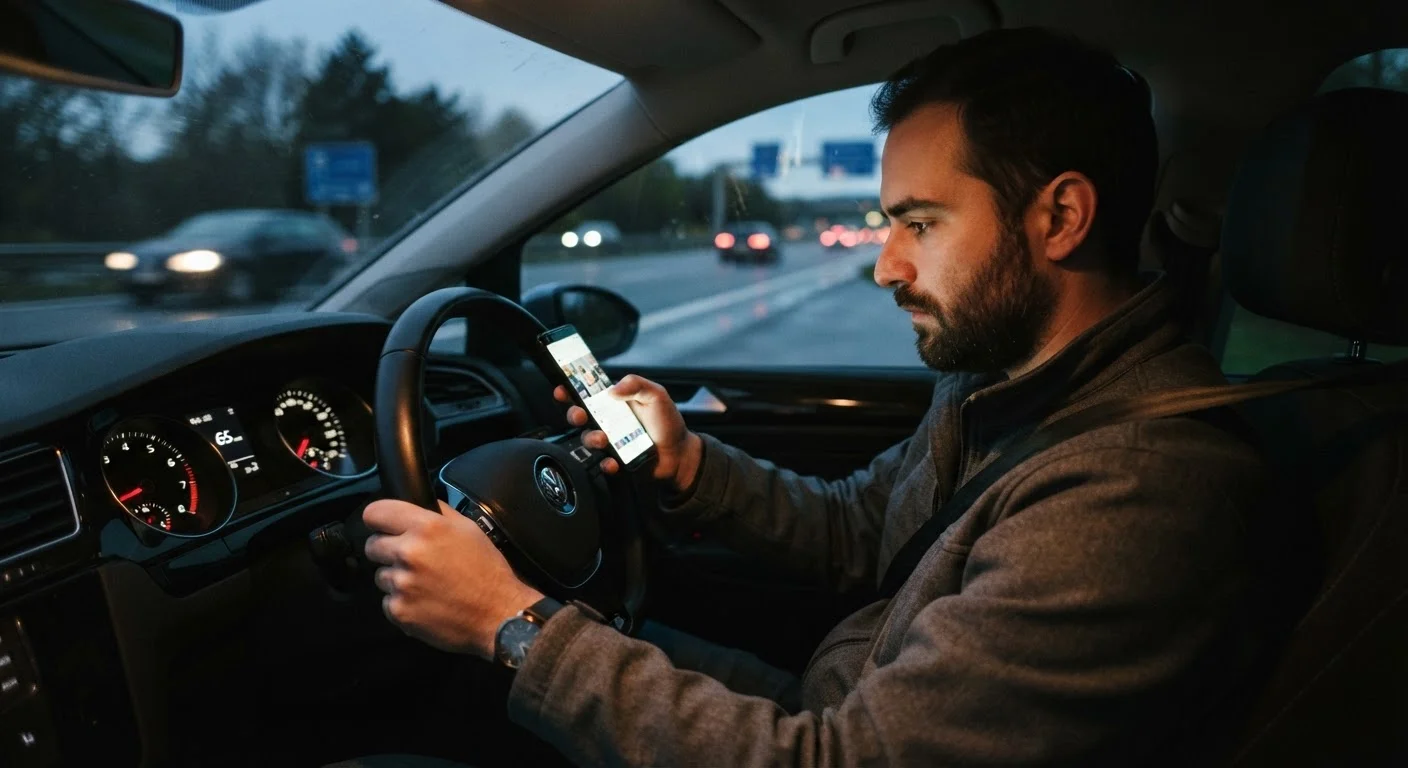
The evidence against handheld phone use while driving is substantial. Studies conducted by the National Highway Traffic Safety Administration (NHTSA) and independent researchers have linked handheld phone use to significantly elevated crash risk. Physically holding a phone removes one hand from the wheel, reduces steering control, and demands that your eyes leave the road - sometimes for several seconds at a time.
Texting while driving is particularly hazardous. Reading or composing a text at highway speed means your eyes are off the road long enough to travel the length of a football field without actively watching where you're going. This combination of visual, manual, and cognitive distraction is considered among the most dangerous driver behaviors studied.
For a broader look at how distraction risk differs across driving environments, see our article on highway vs. city driving risk profiles.
| Handheld Devices | Hands-Free Devices | |
|---|---|---|
| Legal status (most U.S. states) | Banned for all drivers | Permitted for adult drivers |
| Manual distraction | High - one hand off wheel | Minimal - both hands free |
| Visual distraction | High - eyes leave road | Low - eyes remain forward |
| Cognitive distraction | High - significant mental load | Moderate - still elevated vs. no phone |
| Crash risk vs. no phone use | Substantially increased | Measurably increased |
| Recommended by safety researchers | No | Only when stopping isn't possible |
The Cognitive Distraction Problem with Hands-Free
Hands-free devices eliminate the manual and visual components of phone distraction - but not the cognitive component. Research from the AAA Foundation for Traffic Safety found that using a hands-free device while driving still places a measurable mental demand on the brain, reducing the driver's attention to the road even when both hands are on the wheel and eyes are forward.
This phenomenon, sometimes called inattention blindness, occurs when the brain is engaged in a demanding conversation and effectively fails to process visual information that is right in front of the driver. Studies have shown drivers using hands-free phones missed traffic signals, pedestrians, and hazards they would otherwise have noticed.
Voice-command systems - even built-in vehicle infotainment controls - can also introduce distraction, particularly when they fail to recognize commands correctly and require repeated attempts. Distracted driving myths that equate "hands on the wheel" with full attention are among the most persistently dangerous misconceptions drivers carry.
Comparing the Two: A Practical Summary
When weighing handheld against hands-free use, the difference in physical risk is clear. Handheld use adds manual and visual distraction on top of cognitive load - a triple burden. Hands-free reduces two of those three distraction types but leaves cognitive distraction largely intact.
Neither approach returns a driver to the same attentional state as driving without any phone interaction. Conversations with passengers, by contrast, tend to be less distracting because passengers naturally pause when driving conditions become demanding - a social dynamic a phone caller cannot observe or respond to.
The practical takeaway: if a call cannot wait, hands-free is the meaningfully safer legal option. But the evidence-based recommendation from safety researchers is to pull over safely and stop the vehicle before engaging in any phone conversation.
Making Smarter Choices Behind the Wheel
Awareness of these findings is the first step toward safer habits. A few evidence-informed practices worth considering:
- Enable "Do Not Disturb While Driving" mode on your phone - most smartphones offer this feature natively.
- Set up an automatic reply message so callers and texters know you're driving and will respond later.
- If a call is truly urgent, find a safe place to pull off the road before responding.
- Be especially cautious in complex driving situations - heavy traffic, adverse weather, unfamiliar roads - where cognitive reserves are already stretched.
Understanding distraction risk isn't about guilt or fear - it's about making informed decisions. The evidence gives drivers a clear picture; what to do with that picture is a choice every driver makes every time they get behind the wheel.