The Gap Between What You Budgeted and What You Actually Spent
Almost every traveler has landed home to discover their trip cost noticeably more than planned - and not because of a single splurge. Overspending abroad usually happens through a series of small, avoidable decisions that compound quietly over a two-week trip. The good news: most of these traps follow predictable patterns, which means they're entirely sidesteppable once you know what to watch for.
If you want to build a realistic financial foundation before you leave, our guide to building a travel budget that holds up on the road walks through how to estimate real costs - not just headline prices. This article tackles the spending mistakes that undermine even careful budgets once you're actually traveling.
Accepting dynamic currency conversion (DCC) at payment terminals.
Why it happens: When a terminal abroad asks "Pay in USD or local currency?" choosing USD feels safer and more familiar - but it's actually a trap. The terminal's conversion rate is set by the merchant or payment processor, not your bank, and it typically includes a markup of 3-7% above the interbank rate.
Exchanging currency at the airport instead of using local ATMs.
Why it happens: Airport currency exchange booths are conveniently located and feel like a logical first stop. Most travelers assume the rates are standard - they're not. Airport booths regularly charge margins of 10-15% above mid-market rates, and some add flat service fees on top.
Ignoring resort fees, destination charges, and mandatory gratuities on hotel bookings.
Why it happens: Advertised hotel rates are often stripped of mandatory add-ons. Resort fees - daily charges for amenities like pools, gym access, or Wi-Fi - are disclosed in fine print but rarely appear in comparison search results. Travelers only discover them at check-in.
Underestimating the daily cost of food, transport, and incidentals.
Why it happens: Most travelers plan big expenses - flights, hotels, major attractions - but underestimate how quickly daily meals, local transport, entry fees, and small purchases add up. A coffee, a museum ticket, and a taxi can quietly consume $50-$80 before lunch.
Using a single payment card with foreign transaction fees.
Why it happens: Many standard bank and credit cards charge 1-3% on every foreign transaction - a fee that's easy to overlook because it appears as a small line item rather than a clear deduction. Over a two-week international trip with daily card use, this adds up to a meaningful sum.
Buying travel data, tours, or experiences impulsively at inflated tourist-area prices.
Why it happens: Fatigue, excitement, and limited time create pressure to buy on the spot - a tour from a street kiosk, a last-minute excursion from the hotel concierge desk, or a "tourist SIM" from an airport shop. These are almost always significantly more expensive than alternatives booked in advance or purchased from local providers.
Habits That Keep Your Spending on Track
Avoiding overspending abroad isn't about being frugal - it's about being intentional. A few consistent habits make a significant difference over the course of any trip.
Check your statements daily. Even five minutes each evening reviewing your bank app catches errors, foreign transaction fees, and double charges before they stack up. Many travelers only look at their finances after returning home, when disputes are harder to resolve.
Carry a backup payment method. If your primary card is blocked, lost, or declined, having a second card from a different network (and ideally a different bank) avoids the panic-driven decisions - like paying 15% above market rate at a hotel currency desk - that blow budgets in a single afternoon. Our guide to protecting your cards and cash while traveling covers how to store and secure backup funds without making them a target.
Research tipping and service-charge norms by country. In some destinations, a service charge is already embedded in your bill; adding a tip on top is optional. In others, tipping in local cash is culturally preferred over adding it to a card. Neither approach is wrong - but not knowing the local norm can mean consistently over- or underpaying.
Set a daily cash allowance. For markets, small restaurants, and transport, cash remains king in many destinations. Withdrawing a set amount every few days from a local ATM (using a card with no foreign ATM fees) gives you a tangible spending limit that's much easier to track than a running card tab.
One Card Is Not Enough
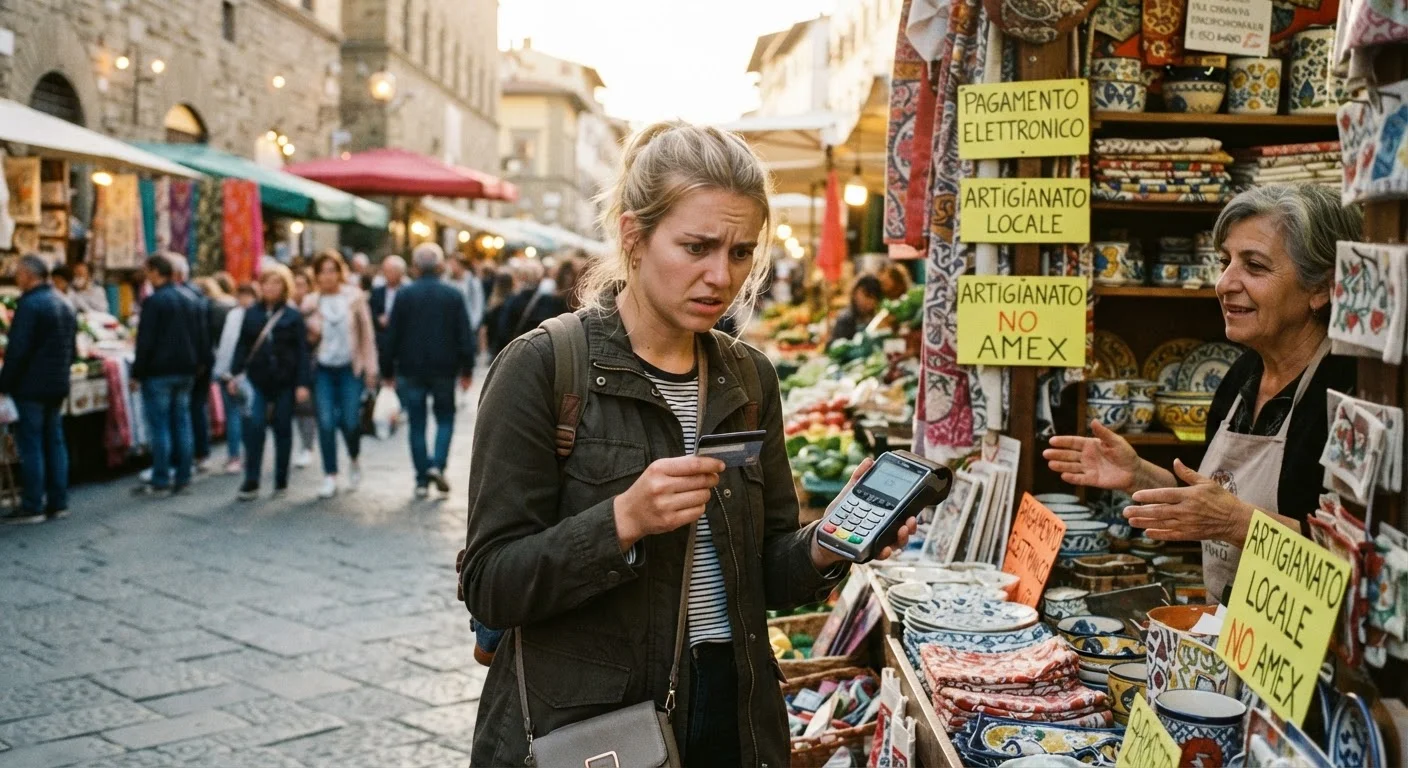
Relying on a single debit or credit card abroad is a common and costly gamble. Cards get blocked for fraud alerts, swallowed by ATMs, or simply declined without warning. If that's your only card, you may face steep fees borrowing cash through hotel desks or wire services. Carry at least two cards from different networks and store them separately.
Staying connected helps with budgeting too - real-time banking notifications only work if you have data. See our breakdown of international roaming versus local SIM cards to choose the most cost-effective option for your destination.