Why Appalachian Back Roads Reward the Patient Traveler
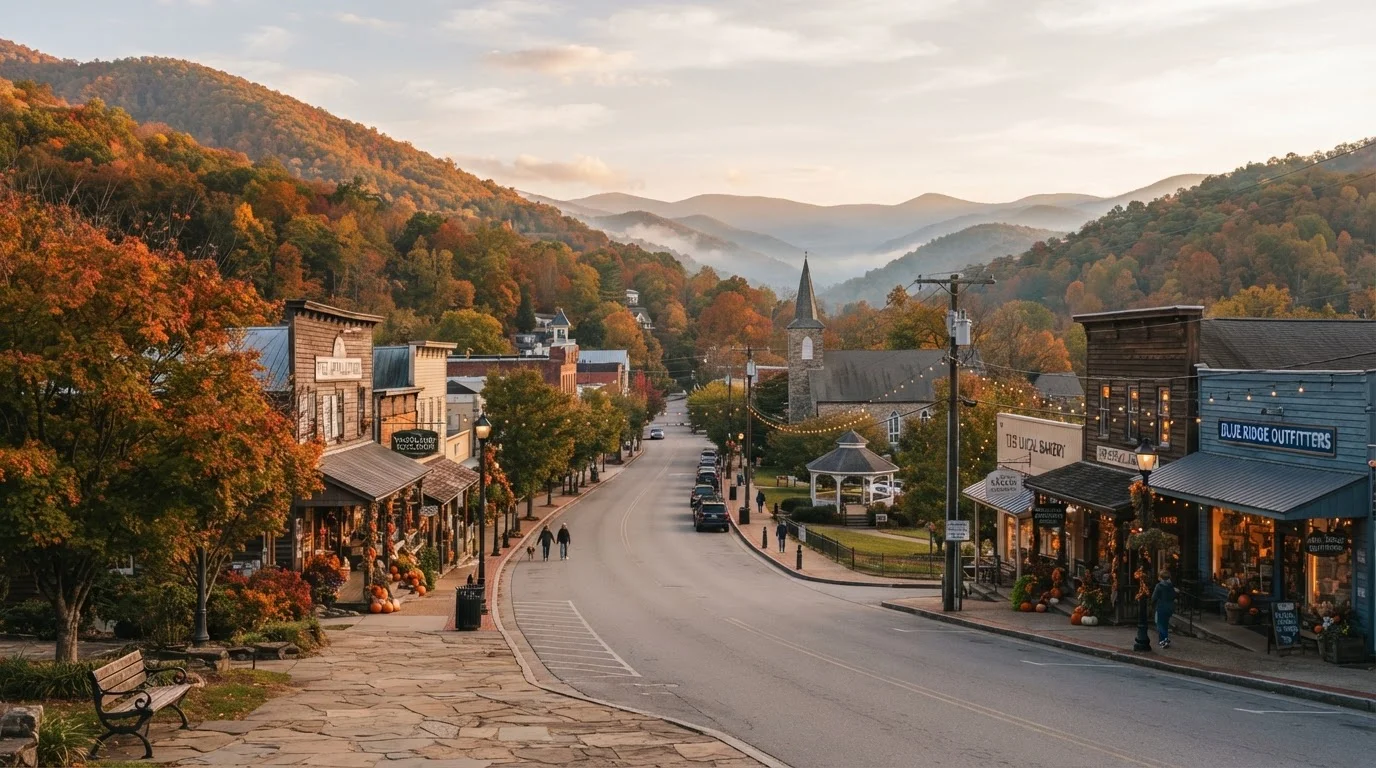
The Appalachian Mountains stretch more than 1,500 miles through the eastern United States, and most travelers rush through on their way to famous parks or popular resort towns. But tucked into the hollows and river valleys between those well-worn stops are small communities that have quietly cultivated something rare: authentic mountain character that hasn't been smoothed over for tourist convenience.
These towns reward travelers who are willing to adjust their pace - who stop at the weaving cooperative before the trailhead, eat supper at the diner that's been there for decades, and ask locals what the next valley over looks like in October. If you're still deciding whether mountains suit your travel style at all, our guide to choosing between a mountain or beach vacation anchor can help you think through the tradeoffs. For those already mountain-curious, the towns below are a strong place to begin.
Give Yourself Two Nights Minimum
The towns on this list reveal themselves slowly. A single overnight leaves just enough time to eat and sleep - not enough to wander a studio, catch live music, or ask the person behind the counter where the locals actually hike. Booking two nights almost always transforms a pleasant stop into a genuinely memorable experience.
Appalachian Towns Worth Your Time
Hot Springs, North Carolina
Sitting where the Appalachian Trail crosses the French Broad River, Hot Springs is a tiny town - roughly 500 residents - that punches well above its weight for hikers and paddlers. Mineral spring soaking tubs line the riverbank, offering a legitimately restorative stop for AT thru-hikers and weekend visitors alike. The town has a handful of independently owned outfitters, a well-regarded small-town restaurant scene for its size, and direct trailhead access into the Pisgah National Forest. Spring and early summer are especially vivid here, when wildflowers carpet the surrounding ridges.
Hot Springs sits where the Appalachian Trail meets the river - a rare convergence that shapes the whole town's character.
Abingdon, Virginia
Abingdon is one of the oldest English-speaking settlements west of the Blue Ridge, and its well-preserved downtown reflects that history without feeling like a museum. The Virginia Creeper Trail - a 34-mile rail-trail running through mountain meadows and trestle bridges - draws cyclists and walkers who typically end their ride in town. The Barter Theatre, which has operated continuously since 1933, stages professional regional theater throughout the year. Visitors who linger beyond the trail find a community that balances living history with an active arts scene.
The Virginia Creeper Trail delivers riders directly into Abingdon's historic downtown - a natural beginning and end to a day well spent.
Lewisburg, West Virginia
Named a Coolest Small Town by one national publication and consistently appearing on similar lists, Lewisburg earns its reputation without relying on a single signature attraction. The compact downtown holds independent bookstores, galleries, a farmers market, and restaurants sourcing from nearby farms. The Carnegie Hall arts center (unrelated to the New York venue) hosts concerts and exhibits year-round. Nearby Lost World Caverns offers a quick geological detour that surprises most visitors who hadn't planned for it. Lewisburg rewards a full two-night stay more than a drive-through.
Lewisburg's walkable downtown rewards two full days of unhurried exploration - bookstores, galleries, and farm-fresh food all within a few blocks.
Burnsville, North Carolina
Set in Yancey County near the Black Mountains - home to Mount Mitchell, the highest peak east of the Mississippi - Burnsville has cultivated a notable craft and arts community for decades. The town square retains the feel of a working mountain town rather than a curated shopping experience, and several working studios are open to visitors by appointment or during organized studio tours. The surrounding county has extensive hiking access, including sections of the Mountains-to-Sea Trail. It's a quieter alternative to the busier craft towns along the same stretch of western North Carolina.
Burnsville sits in the shadow of the East's highest peak and hosts working artists who still welcome visitors into their studios.
Elkins, West Virginia
Elkins serves as a practical gateway to the Monongahela National Forest and the Spruce Knob-Seneca Rocks National Recreation Area - making it a useful base for serious outdoor exploration. But the town itself has more going on than pure logistics. The Augusta Heritage Center at Davis & Elkins College runs intensive traditional music and craft workshops throughout the summer that are open to participants and interesting to observe for curious visitors. The downtown has a lived-in, unpretentious quality that feels like genuine West Virginia rather than a polished tourism product.
Elkins pairs direct Monongahela National Forest access with a traditional music heritage that gives the town real cultural depth.
Marshall, North Carolina
Marshall sits in a tight bend of the French Broad River in Madison County - a geography so compact that the old courthouse and Main Street buildings practically lean over the water. The town is small enough to walk entirely in an afternoon but has attracted a cluster of independent food and craft businesses in recent years. Madison County more broadly has a deep ballad-singing and old-time music tradition, and visitors who time their trips around local music events or community gatherings get a window into a cultural heritage that has been documented but rarely commodified. It's a town that still feels like it belongs primarily to its residents.
Marshall's tight river-bend geography and deep music traditions make it one of the most distinctly Appalachian towns still off the main circuit.
Making the Most of Your Visit
A few practical notes before you pack the car: road conditions on mountain routes can change quickly, especially after heavy rain or winter storms - always check state transportation websites before heading into higher elevations. Accommodations in these smaller towns can sell out well ahead of fall foliage season (generally mid-October in most of this region), so plan accordingly. And while most of these communities warmly welcome visitors, they aren't amusement parks - they're working towns where residents live year-round. Spending money at locally owned shops, staying at independent inns, and following posted trail and park guidelines goes a long way toward keeping these places worth visiting for everyone.