
Where Each Oil Comes From
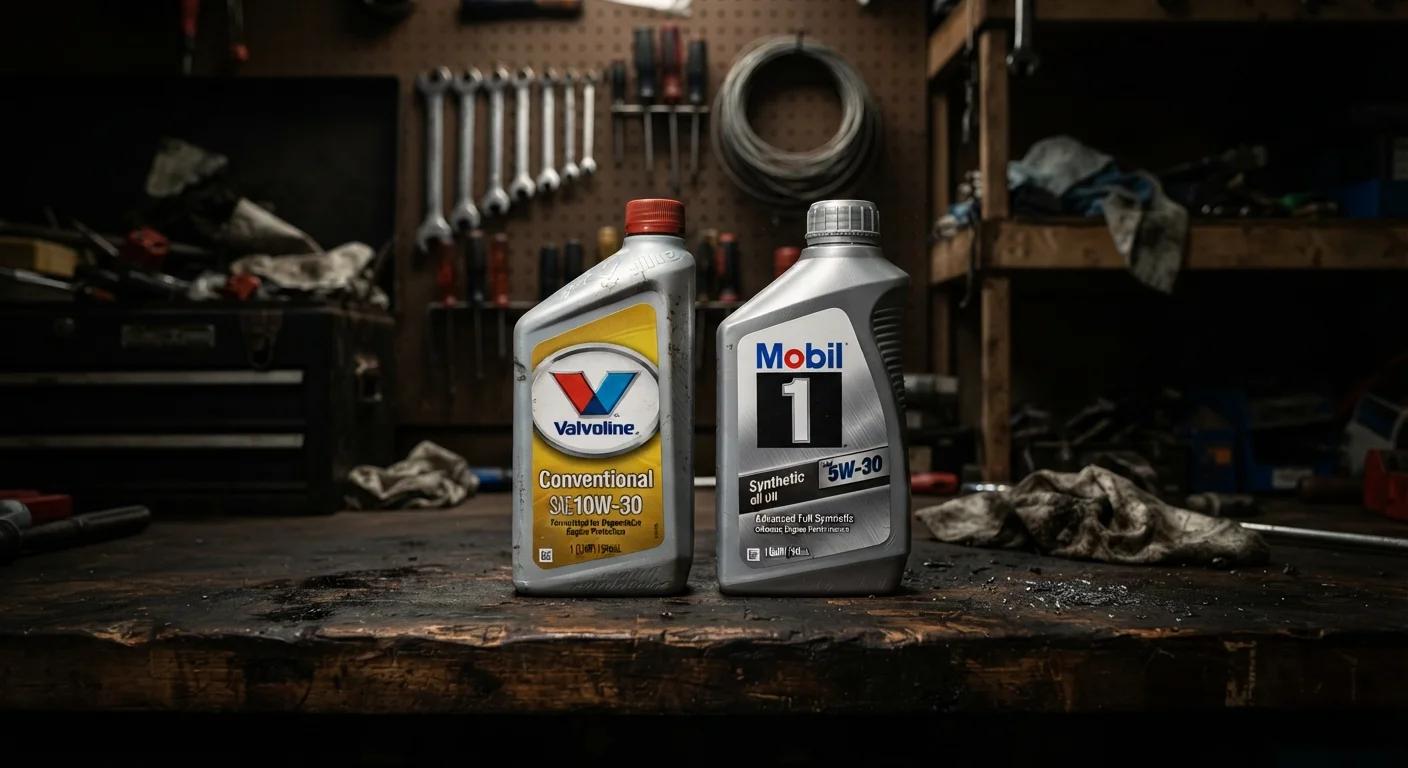
The fundamental difference between synthetic and conventional motor oil starts at the molecular level. Conventional oil - sometimes called mineral oil - is refined directly from crude petroleum. The refining process removes many, but not all, impurities and results in molecules that vary somewhat in size and shape. That variability is a natural consequence of working with a raw material pulled from the earth.
Synthetic oil, by contrast, is either built from scratch using chemical processes or heavily processed from a base petroleum stock to achieve a far more uniform molecular structure. This engineered consistency gives synthetic oil more predictable behavior across a wider range of temperatures and operating conditions. It's not a "fake" oil - it still lubricates, cools, and cleans your engine - but its molecules are designed to do those jobs more efficiently than conventional oil's naturally occurring counterparts.
How They Perform Inside Your Engine
Once oil enters an engine, its job is to create a thin, protective film between moving metal parts, carry away heat, and suspend contaminants until the next oil change. Both oil types do this, but they do it with differing levels of effectiveness under stress.
| Criterion | Synthetic Motor Oil | Conventional Motor Oil |
|---|---|---|
| Origin | Chemically engineered or highly processed | Refined from crude petroleum |
| Molecular consistency | Highly uniform | Naturally variable |
| Cold-weather flow | Flows faster at low temperatures | Can thicken in cold conditions |
| Heat resistance | Resists thermal breakdown well | More susceptible to breakdown under heat |
| Typical change interval | Often 7,500-15,000+ miles (per manufacturer) | Often 3,000-5,000 miles (per manufacturer) |
| Cost per quart | Higher | Lower |
| Sludge resistance | Strong | Moderate |
Synthetic oil resists thermal breakdown better than conventional oil, meaning it maintains its viscosity - the measure of a fluid's resistance to flow - through more heat cycles. Cold-start performance is another area where synthetics stand out: the more uniform molecular structure allows synthetic oil to flow quickly through engine passages even at very low temperatures, reducing wear during those critical first seconds after ignition. Conventional oil can thicken noticeably in cold weather, temporarily leaving some engine surfaces under-lubricated.
Synthetic oil also tends to resist oxidation and sludge buildup more effectively over time, which is part of why it supports longer change intervals. For a deeper look at how change intervals have evolved, see our guide to oil change intervals.
What Your Owner's Manual Actually Says
No comparison article - this one included - can tell you which oil your specific engine needs. That determination belongs to your vehicle's manufacturer, and they've published it in your owner's manual. Most manuals specify a viscosity grade (such as 5W-30 or 0W-20) and will clearly indicate whether synthetic is required, recommended, or simply permitted.
Many automakers building engines with tight tolerances, turbochargers, or direct injection have mandated full synthetic oil. Using conventional oil in an engine that requires synthetic is not a harmless substitution - it may void portions of your powertrain warranty and leave precision components without the protection they were designed around.
A Note on High-Mileage Engines
Vehicles with significant mileage - generally considered 75,000 miles or more - may benefit from high-mileage oil formulations, which are available in both synthetic and conventional versions. These formulas typically include additives designed to condition aging seals and gaskets. If your older vehicle has developed minor oil leaks or burns oil between changes, a high-mileage formulation may be worth discussing with your mechanic before committing to a standard synthetic or conventional product.
If you're uncertain about your vehicle's requirements or are considering switching from one oil type to the other, consult a qualified mechanic who can review your engine's service history and specifications before making a change.
The Cost Question: Per Quart vs. Per Year
Conventional oil is noticeably cheaper per quart than synthetic - a gap that matters if you're watching your maintenance budget closely. However, cost-per-quart is only part of the equation. Synthetic oil's longer service life means fewer oil changes per year for many drivers, which reduces labor costs, disposal fees, and the time spent at the shop.
Whether synthetic ends up costing more or less annually depends heavily on your vehicle's specified change interval, how many miles you drive per year, and the labor rates in your area. Running accurate numbers on your own situation - rather than defaulting to either "cheaper is better" or "more expensive means better" - will give you the clearest answer. Understanding oil change intervals is a practical starting point for that calculation.